

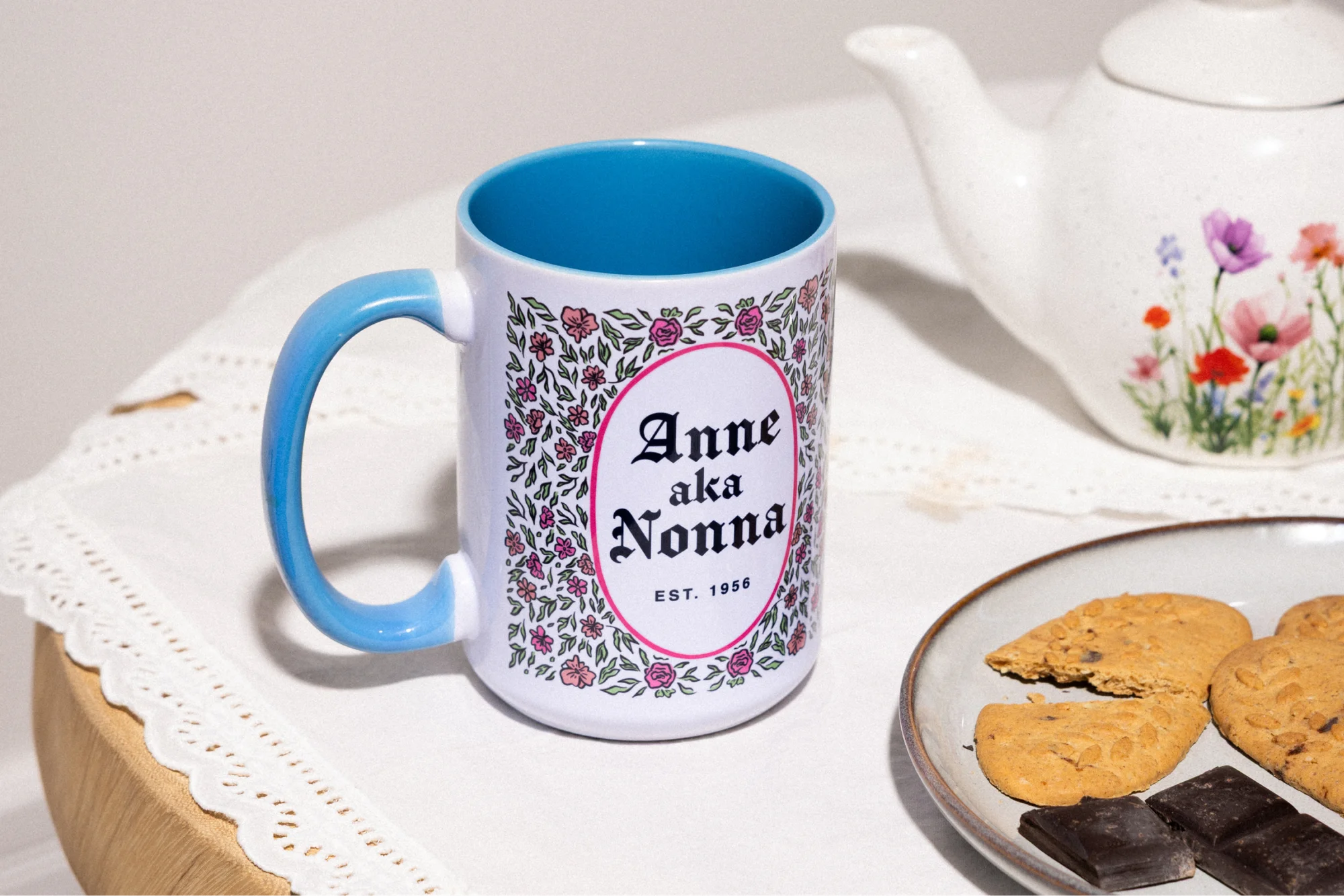
Sublimation, UV, and five other methods can all put a design on a mug, but each uses different equipment, materials, and curing steps, with real differences in durability and cost.
This article covers how to print on a mug with five popular methods, plus two specialty techniques, so the entire process matches the mug's material and the order size.
Disclaimer
This post may contain affiliate links, which means we may earn a commission if you make a purchase through those links. This comes at no additional cost to you.
Key takeaways
- Print on Demand automates custom coffee mug production and shipping, so sellers can skip the mug press, sublimation printer, and other equipment.
- Printify’s Catalog offers custom mugs in various materials and shapes for different audiences.
- Dye sublimation and UV printing produce vibrant, durable prints for intricate designs and photo mugs.
- Digital, transfer, and direct screen printing offer more versatility but aren’t as durable as sublimation.
- Pad printing and laser engraving cover what those five methods miss, like tiny logos on curved surfaces and permanent etching.
- Printify handles printing and shipping, so merchants build a mug printing business around their designs, not their equipment.
How to make your own custom-printed mug in just a few steps

Forget the heat press, sublimation printer, sublimation paper, cooling rack, and other gear that mug printing at home requires. Printify's Print Providers run these processes for you.
Here's how to print on a mug with Printify.
Step 1: Sign up for Printify and pick your mug
Create a free Printify account and access over 2,000 customizable products.
Head to the Catalog, find custom mugs under Home & Living, filter by Print Provider, target market location, or printing method, then choose a blank mug and click Start designing.
From stainless steel to tumbler travel mugs, the Printify Catalog includes a full range of custom mugs:
- Ceramic mugs
- Custom coffee mugs
- Color-changing mugs
- Two-tone accent mugs
- Enamel mugs
- Metallic mugs
- Latte mugs
- Frosted glass mugs
- Heart-shaped mugs
- Mason jars
- Beer mugs
Tip
Explore other drinkware, such as shot glasses and custom pint glasses, to round out your product line.
Step 2: Create your design
Here are a few ways to get the perfect image before printing mugs.
- Outsource professionals. Use sites like Fiverr and Upwork to commission logos, patterns, or images for a fee.
- Create designs yourself. Use software like Adobe Express or Printify's Product Creator, complete with AI, pattern, and text editing features, to build a design from scratch.
- Use Shutterstock. Printify partners with Shutterstock to give you access to millions of photos and designs directly in the Product Creator. Each design does come with a licensing fee, but you don’t pay it until an order comes in, and many are under a dollar.
- Use Printify's free templates. Our dedicated design team is constantly adding to the library of free templates inside the Product Creator.
Step 3: Customize your mug
The Product Creator turns a blank mug into a one-of-a-kind product.
Upload your previously made designs, a photo, or logo, or build patterns, AI images, and text elements directly in the editing tool. Then, scale, flip, and adjust the placement to fit the mug's surface.
Step 4: Save and order the product
Once the design looks right, click Save, then place a sample order to check the print quality before it reaches a customer.
Printify sets no minimum order quantity, so merchants can order one mug or a hundred for a collection, personalized gifts, or corporate orders.
Tip
Order samples before listing custom-printed mugs for sale to confirm the print quality and the overall fulfillment process.
Step 5: Publish to your online store
To start selling online mugs, integrate an eCommerce store with Printify. Pick a channel, build a storefront with its tools, then connect it under My stores and Add new store. Printify integrates with major marketplaces, including Etsy, Shopify, and Amazon.
List personalized mugs with Printify's descriptions, measurements, and mockups directly on the store. Customizable mockup backgrounds add a stronger, more consistent look across product photos.
Step 6: Promote your mug printing business

You could have the greatest mug designs, but if shoppers can’t find them, you’re out of luck.
Here are the best ways to promote your mugs:
- Social media marketing. Use TikTok, Instagram, X, and Facebook to reach customers who already shop there.
- Content marketing. Publish blog posts and videos highlighting the mug's material and print quality.
- Email marketing. Send newsletters and seasonal promotions to gain repeat customers.
- Paid advertising. Run Google and social ads to reach buyers searching for custom gifts.
- Collabs. Partner with other sellers or influencers to cross-promote to a shared audience.
5 Popular mug printing methods
There are several ways to put a picture on a coffee mug, and they differ in materials, equipment, and finish. Learning these printing techniques at home requires a real investment in equipment and time, while a POD service removes upfront costs and adds the convenience of print-on-demand fulfillment.
1. Dye sublimation printing

Equipment: Blank mug, design software, heat transfer press, heat-resistant tape, sublimation printer, ink, and paper.
How sublimation works:
- Create your own mug designs using design software and print them on sublimation paper with dye-based inks.
- Secure the printed design around the ceramic mug with heat-resistant tape.
- Preheat the mug press to the recommended temperature.
- Place the mug in the press and set the timer.
- The heat turns sublimation ink into gas, bonding the image to the mug’s surface.
- Remove the mug, let it cool, and peel off the sublimation paper.
Pros

Sublimation printing produces vibrant colors and durable designs that resist daily wear and fading.
The result is dishwasher and microwave-safe.
Cons

Sublimation only works on polymer-coated mugs.
Uncoated mugs won't hold the dye.
The color shows best on white or light-colored surfaces.
2. UV printing
Equipment: Blank mug, design software, UV printer with UV-curable ink, and UV light source.
How it works:
- Prepare a high-resolution design and use vector graphics for sharp lines and bright, bold colors that work well with UV printer prints.
- Clean the mug with alcohol or a cleaning agent to remove any residue.
- Calibrate the UV printer and set it up according to the manufacturer's instructions.
- Align your custom coffee mug in the printer with the desired print placement.
- Print the design.
- Place the mug under UV light to cure the ink.
Pros
UV printing is eco-friendly because it produces little to no waste and zero VOS emissions.
Delivers precise prints.
Works for most mug materials, including ceramic, glass, and steel.
Cons
UV printing is one of the most expensive printing methods in terms of equipment.
Limited print area, depending on the printer's size and configuration.
3. Digital printing
Equipment: Blank ceramic or glass mug, design software, inkjet printer, and dye-based inks.
How it works:
- Prepare a high-resolution design that’s compatible with an inkjet printer.
- Clean the mug to remove any residue.
- Calibrate the printer according to the manufacturer's settings.
- Place the mug according to the intended print area.
- Print the image.
- Dry or cure the ink (depending on the type of printer).
Pros
Fast and cost-effective.
Ideal for printing on ceramic mugs, or even for learning to print on glass cups.
Requires minimal setup and cleanup.
Cons
The print holds up less than other techniques.
Suits small orders best.
Not recommended for mugs that need to be dishwasher or microwave-safe.
4. Direct screen printing
Equipment: Mug, design software, screen printing press, mesh screens, squeegees, emulsion, and ink.
How screen printing works:
- Create your custom design.
- Prepare the mesh screen and cover it with an emulsion.
- Place your artwork on the mesh screen and expose it to bright light.
- Wash off the hardened emulsion, leaving only the design on the mesh.
- Place the mug in the mug press and align it for accurate results.
- Apply the desired inks on the mesh and use squeegees to distribute them evenly across the design.
- Press the screen on the mug to transfer the image onto the product’s surface.
- Let the inks dry.
Pros
Screen printing suits large print areas on white and colored mugs.
Layered mesh screens allow overlapping colors.
High durability.
Cons
Direct screen printing is best suited only for bulk mug orders because it involves a long setup time.
Tedious for intricate designs, as each color requires a separate screen.
Precise alignment is essential to avoid errors.
5. Transfer printing

Equipment: Mug, design software, heat press, special transfer paper, printer, and cutting tools.
How it works:
- Create the custom design and adjust the size and resolution.
- Print the design onto the transfer paper.
- Trim the transfer paper to align with the mug.
- Clean any residue from the mug with alcohol or a cleaning agent.
- Apply the transfer paper to the mug and secure it firmly.
- Put the mug in the heat press and set the time and temperature.
- Let the mug cool, then remove the transfer paper to reveal the design.
Pros
Transfer printing produces color-accurate, durable, and vibrant prints.
Cost-effective for small orders.
A straightforward printing technique for full customization and wraparound designs.
Cons
Transfer prints tend to be less durable than other printing methods, such as sublimation.
The transfer film can sometimes stay visible in the final design, with fine text or small details transferring less cleanly.
2 Specialty mug printing methods worth knowing
The five methods above cover most orders, but two specialty methods solve problems they can't: tiny logos on curved surfaces and marks that never fade.
Pad printing
Equipment: Mug, etched plate (cliché), ink, and a silicone pad.
How it works:
- An etched plate holds the inked design.
- A silicone pad lifts the ink off the plate, then presses it onto the mug's curved surface.
Pros
Pad printing handles curved and irregular surfaces well and produces sharp details.
Fast results for simple logos.
Cons
Pad printing suits small, low-detail designs rather than photo-quality images.
Each added color needs its own plate.
Laser engraving
Equipment: A mug (typically metal or enamel) and a laser engraver.
How it works: A focused laser beam etches the design directly into the mug's surface, guided by the engraver's software and rotary attachment.
Pros
Laser engraving produces an exceptionally durable, permanent mark with no ink to fade, peel, or wash away, giving mugs a premium, tactile finish.
Cons
Equipment costs run high.
The result is typically a monochrome, etched look rather than full color.
Comparison: 7 Popular printing methods at a glance
Here's how the seven methods stack up, so you can match a method to your mug materials and order size before buying equipment.
Method | Best for | Durability | Cost to start | Setup complexity | Print area |
|---|---|---|---|---|---|
Dye sublimation | Vibrant designs on coated mugs | High, dishwasher and microwave safe | Medium | Medium | Full wraparound |
UV printing | Full-color, mixed materials | High, fade- and scratch-resistant | High | Medium to high | Full wraparound |
Digital printing | Small orders on ceramic or glass | Low | Low to medium | Low | Flat or lightly curved zones |
Direct screen printing | Large batches, simple logos | High when properly cured | Medium to high | High | Large, bold zones |
Transfer printing | Small orders, full customization | Medium | Low to medium | Low to medium | Full wraparound |
Pad printing | Small logos, curved surfaces | Medium to high | Medium | Medium | Small, defined zones |
Laser engraving | Premium, permanent marks | Very high, permanent | High | Medium | Small to medium zones |
Why create personalized mugs?

There are a few reasons to learn how to print on ceramic mugs:
- The coffee mug market is expanding and projected to grow from $7.4 billion in 2024 to $10.77 billion by 2031, presenting a big profit opportunity.
- Mugs with your own images are great gifts for friends, family, and colleagues.
- Promotional mugs make great company merch.
- Custom mug printing is a unique way to display your art.
- Dishwasher-safe mugs are practical for homes, offices, events, and travel.
- Mugs are online bestsellers and thoughtful gifts for various occasions year-round, such as Christmas, Mother’s Day, Father’s Day, and weddings.
How much can you earn selling personalized coffee mugs?
Take the ceramic coffee mug from Printify's Catalog as an example. Its base cost is $5.80, and shipping typically adds another $4–$6, depending on the Print Provider and destination, putting the total production cost near $10–$12 per mug.
Personalized mugs commonly retail for $14.99–$19.99 on marketplaces like Etsy. A $19.99 retail price, that leaves roughly $8–$10 in profit per mug before marketplace fees, or $7–$8 net after a typical Etsy transaction fee. Selling 10 mugs a day at that margin amounts to $2,100–$2,400 a month before ad and marketing expenses.
Margins shift with the printing method and mug type. Sublimation and digital printing on a standard ceramic mug keep production costs low, while UV printing or laser-engraved metal mugs cost more to produce but support a higher retail price.
At Printify, you get to set your own retail price on top of the base cost, giving you more control of your earnings.
FAQ: How to print on a mug
The easiest way to print personalized coffee mugs: Use Printify
Printing onto mugs at home is possible, but Print on Demand eliminates the upfront investment in a mug press, a sublimation printer, and sublimation paper.
With Printify, the coffee mug printing process is straightforward. Create a design, add it to a mug, and a Print Provider handles printing, packaging, and shipping for personal use or an online store.