Is Print on Demand worth it?
So, is Print on Demand worth it? Yes, when you choose the right platform. Printify lets you set premium pricing on the best-priced products available.
Hot products, big profits
Mugs, hoodies, posters – you name it, Printify’s got it. Find the best product for your niche and start selling today.
Share article:


Design custom products with Printify
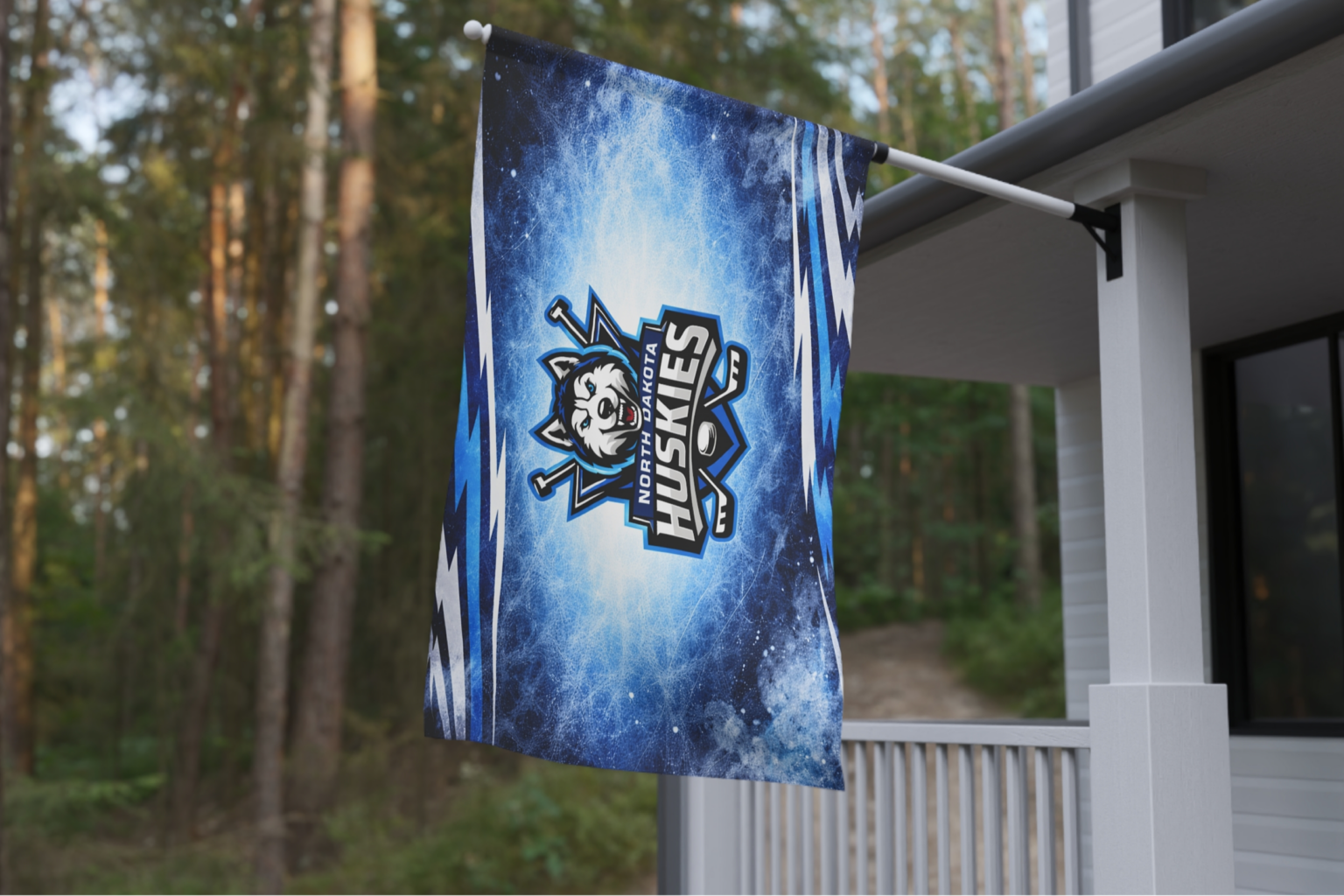
Learning how to make custom flags isn’t as complicated as it sounds. The process typically involves selecting the appropriate flag type, designing your artwork, and printing it using a method you’re comfortable with.
If you want to create personalized flags for your home, events, business, or even to sell online, you’re in the right place.
Below, we break down each step – from materials to printing – so you can confidently create your own flag.
This post may contain affiliate links, which means we may earn a commission if you make a purchase through those links. This comes at no additional cost to you.
Many people want to learn how to make a flag for their own personal use. A customized flag can mark a milestone – such as a birthday or family reunion – or add an eye-catching touch to your home decor.
Communities, schools, clubs, teams, and sports events print custom flags to promote programs, show pride, or bring people together around a shared identity. They also hang them to honor loved ones or convey important messages about a cause.
Companies often use custom flags and banners, too. They’re a super easy way to show logos, stand out at events, or represent your brand in pop-up shops.
Personalized flags also make a strong product to sell. People love showing what they’re part of – whether that’s a fandom, a local community, or a belief. When you turn those identities into well-designed flags, you create something people are happy to display.
With that in mind, let’s break down the steps to create your own flag, starting with the most important decision.

There are three main ways to create a flag: doing it yourself (DIY), ordering locally, or Print on Demand (POD). The right option depends on what you’re making, the number of flags you need, and the amount of time you want to invest.
DIY means making and customizing the flag by hand. This approach works best for hands-on projects, such as sewing or painting.
DIY flags can feel more personal, but they take time and skill to look polished. You’ll also need specialized accessories such as reinforced fabric strips, flag tape, grommets, or pole pockets.
Because production is manual, this option is more suitable for one-off projects rather than selling at scale.
Ordering locally means working with a print shop in your area. You can see the fabric in person before printing, discuss details face-to-face, and even negotiate better deals for bulk orders.
However, pricing and turnaround times can vary by location, and not every shop offers great-quality materials for flags.
With POD companies like Printify, you simply sign up for free, upload your own graphics, and have the flag digitally printed as soon as you place an order.
There’s no minimum order requirement and no inventory to manage, making it great for creating one flag for personal use and selling custom flags online.
POD is also ideal if you don’t have a local printer nearby, or if it doesn’t offer the perfect size, fabric, or customization for your needs. Everything happens online, from design to checkout.
Just keep the shipping time in mind. Since flags are made to order, plan ahead if you need your finished product by a specific date.
Here’s a quick comparison to help you decide which option fits your needs best:
| Criteria | DIY | Ordering locally | POD |
|---|---|---|---|
| Upfront costs | Around $30–$80, depending on tools and materials | Varies by location | From $12.08 with Printify for a double-sided flag |
| Print quality | Depends on your craftsmanship and materials | Professional quality, but varies by shop | Professional quality from vetted Print Providers |
| Production time | 5-8 hours, depending on skills | 1-3 days | 1-3 days |
| Customization | Full creative freedom with your own handmade elements and mixed materials | Depends on the printer’s capabilities | Printed designs only, using your own assets or the platform’s custom flag maker |
| Scalability | Low – Make one at a time unless you work with a team | Depends on the printer’s minimum order requirements | High – Order one or many custom flags at once |
| Best for | Creating a handmade flag | Those with a local print shop in their area | Personal orders, bulk orders, or selling online |
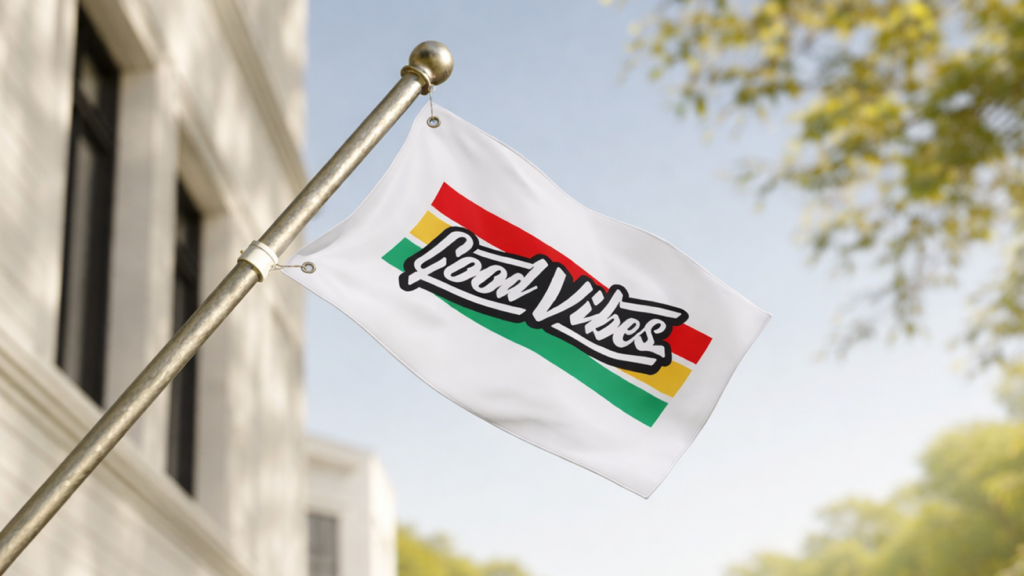
To choose the right type of flag, think of where you will display it and how visible it needs to be. These factors shape everything from size and shape to the viewer’s experience.
Some people create flags to add a personal touch to their yards or use them as home decoration.
Others make them for special occasions like parties, sports events, or community programs. In these cases, visibility and quick setup are more important, as the flag needs to catch attention and be easy to display.
On the other hand, flags for business promotions need to stand out from a distance, convey messages clearly, and maintain consistency across multiple displays.
Indoor flags are usually smaller and lighter – often used as wall or party decor, where weather and wind aren’t a concern.
Outdoor flags need to be more noticeable from a distance and be able to handle changing weather conditions. Sun exposure, wind, and moisture all affect how a flag looks over time, so they are typically designed with visibility and durability in mind.
Looking for product ideas beyond flags? Check out our list of the most profitable print-on-demand products.
Flags come in many shapes and sizes, but most fall into a few common formats:
Size matters just as much as shape. Larger flags are easier to see from a distance, making them great for busy areas. Smaller ones, like garden flags, are better for close-up viewing in indoor spaces, entryways, or yards, where details are seen up close.
Flags come in various types of fabrics, but some work better for specific cases.
Beyond choosing high-quality materials, the printing method plays a big role in how your flag looks and performs over time.
Dye sublimation is one of the most common printing methods for polyester flags. It delivers vivid colors and won’t crack or peel, making it a strong choice for outdoor use. At Printify, we print our flags using dye sublimation.
Screen printing works best for simple designs with solid, vibrant colors – such as logos or short messages. It produces bold, opaque prints that are easy to read from a distance and is common for large production runs.
Inkjet printing works well for complex, full-color designs on non-polyester fabrics. It allows for great detail but is more suitable for indoor display, since durability depends on the inks and fabric.
Appliqué or stitched flags are made by sewing fabric pieces onto the flag rather than printing them. This method is highly durable and commonly used for ceremonial flags, but it’s more expensive and less suitable for detailed artwork.
Choose a single-sided custom flag if people will view your design from one direction. The artwork prints on one side and appears as a reverse image on the back.
This option is best for flags placed against a fence or building, where a single clear view is enough. Single-sided flags are also lighter and more cost-effective, which makes them easy to hang as wall decor.
Choose a double-sided custom flag if you want people to see the design from both sides. Two printed layers with a liner in between ensure the design reads correctly on each side, without any image showing through.
Double-sided printing delivers better visibility and a more polished look, especially on flagpoles during national events like the 4th of July. This ensures symbols and logos look sharp from every angle.
When learning how to design a flag, the goal is simple – create something that looks:
Once you have a few flag design ideas in mind, choose a tool that feels easiest for you to work with.
Programs like Adobe Photoshop or Adobe Illustrator offer full control over layout, colors, and typography. These tools work best for those who are comfortable with design software and need precision for detailed artwork, brand assets, or complex logos.
If you want something faster and easier, tools like Canva or Adobe Express are more than enough for most flag designs.
These platforms offer templates, drag-and-drop editing, and quick customization, making them a great option if you’re designing something straightforward.
Alternatively, consider hiring a freelance designer through platforms like Fiverr. This option is best for business flags, company banners, or when you want a unique look without designing it yourself.
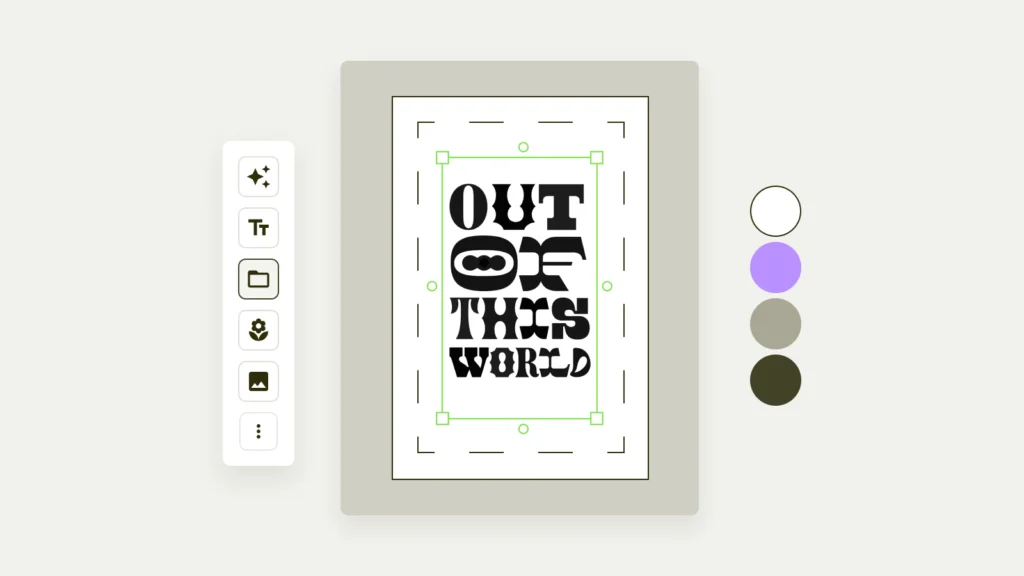
For an all-in-one design and print option, you can customize your flag directly in Printify’s Product Creator. Upload your own graphics, company logos, or favorite photos, or build a design from scratch using Printify’s graphics library or AI image generator.
Our flag design tool also lets you position elements easily, preview your layout, and see how it will look on the finished product before placing an order.
This way, you can move from idea to printed flag in one place, without switching between multiple tools.
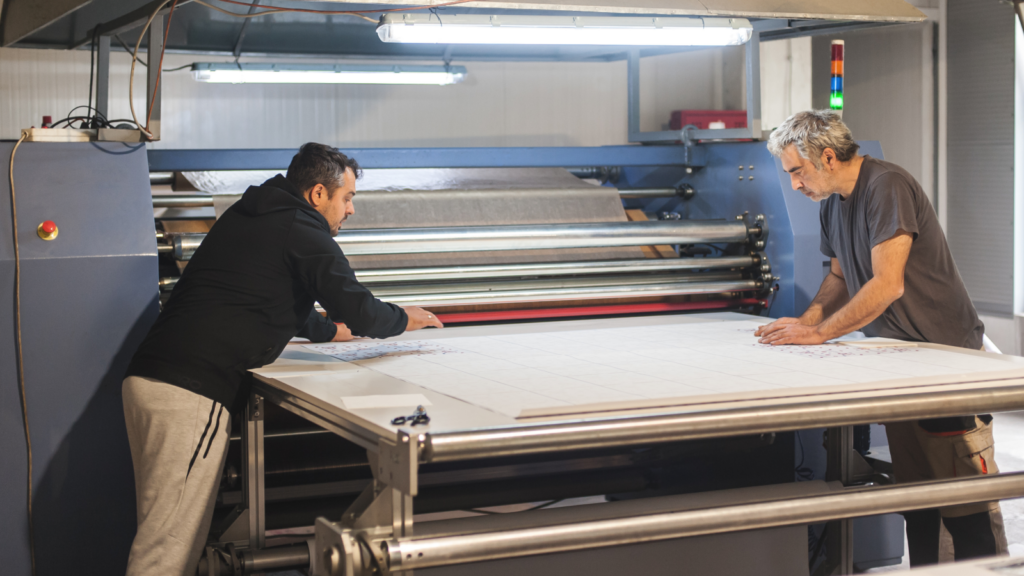
It’s time to print your new flag and get it ready to hang, display, or sell.
Before printing, confirm that your final design is in high resolution, colors are set correctly, and important elements like brand logos aren’t too close to the edges.
If you’re ordering locally, ask for a proof or fabric sample when possible and confirm finishing details such as pole pockets, grommets, or sizing for flagpoles.
Once you receive or make the finished product, check the print quality, stitching, and overall appearance. If it’s double-sided, ensure that both sides align and appear consistent.
If you’re producing multiple company banners, test one flag first before committing to a larger run.
With POD, printing your flag is typically just a few clicks away. Select a flag product, upload your design or photo, and review the generated mockups carefully before ordering.
If possible, order a sample first to confirm the final result matches your original design.
To sell customized flags online, you need to connect your online store to your print-on-demand platform. Only then can customers place orders, and the service will automatically print and ship each flag.
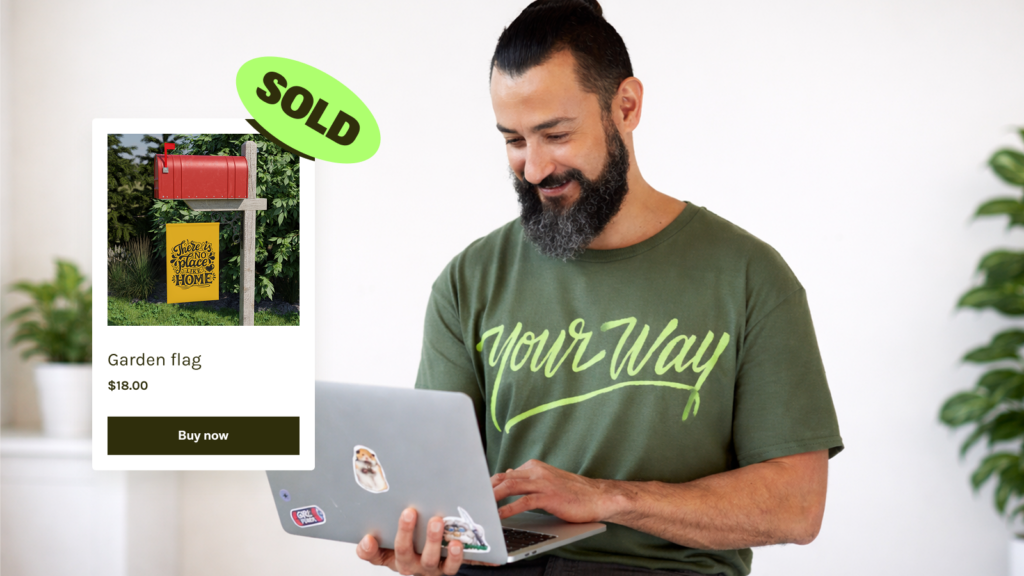
If you want to sell custom flags with POD, Printify makes the process simple.
Choose from high-quality flag products, connect to major eCommerce platforms, and sell worldwide using a network of over 90 Print Providers – all without managing inventory.
Here’s how to get started.
Create your own flag design using Printify’s Product Creator. Upload your artwork, photo, or company logo, or start from scratch using our graphics library or AI image generator.
Preview the design and fine-tune it as needed before moving forward.
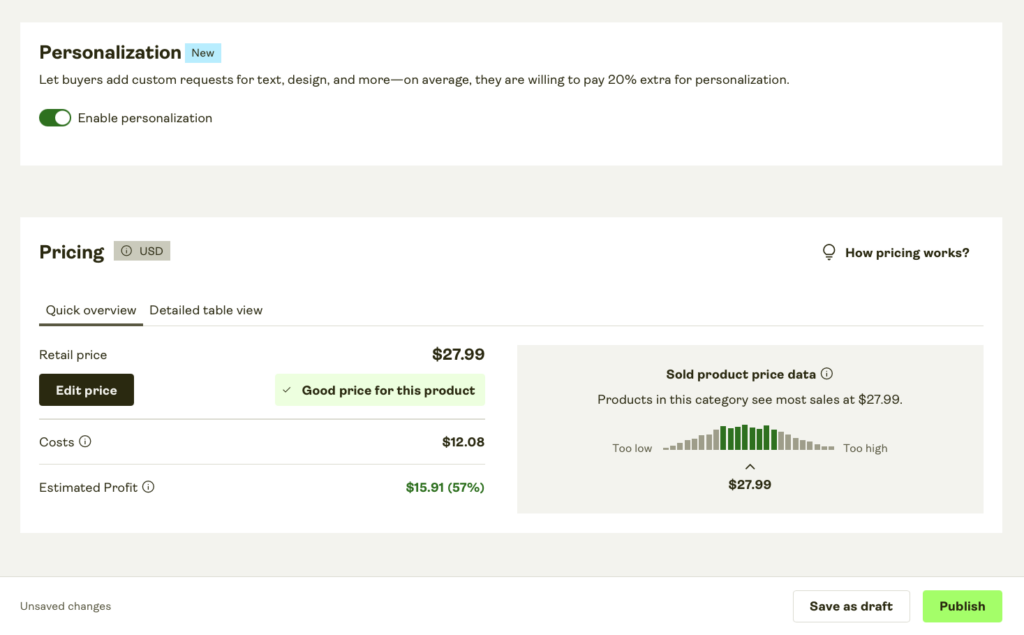
Next, set your product description, pricing, and personalization options.
When pricing your flag, make sure to stay competitive while leaving room for profit. Printify offers pricing suggestions based on market data, but the final price is always up to you.
You can also enable personalization to let customers add custom text or details when ordering.
Integrate Printify with platforms like Etsy, Amazon, eBay, Shopify, WooCommerce, and more. Your listings and orders sync automatically, while Printify handles printing and shipping.
Alternatively, feel free to order a sample first or place a bulk order to sell flags in physical locations.
Custom flags are made by printing or stitching a design onto fabric. The process usually involves choosing a flag type, material, and print method, then applying the design before finishing it with details like pole pockets or grommets.
Yes. You can get a custom flag made through print-on-demand services, local print shops, or by making one yourself. Print on Demand is the easiest option if you want professional results without upfront costs or managing inventory.
Red appears on roughly 75% of national flags, making it the most common flag color worldwide. It’s closely followed by white and blue, which also appear on more than half of all flags.
The five rules of flag design are:
To recap, here’s how to make custom flags from start to finish:
Whether you’re creating a company banner, supporting a cause, or representing a fandom, flags are a powerful way to stand out and be seen. With Printify’s custom flag maker, you can design and print flags without upfront costs or inventory.

Open your business today: Create and sell beautiful custom-products within minutes. Printify prints, and delivers 1,300+ products at the lowest prices around. No risk, all reward.
100% free · Easy to use · 1,300+ products