

Choosing between a hoodie and a sweatshirt isn’t always as straightforward as it seems. While both are cozy staples for casual clothing, a few key differences can affect how they look, feel, and fit into your wardrobe or product catalog.
In this hoodie vs sweatshirt guide, we’ll break down the fabric, fit, and profit differences – so you can pick the style (or both) that’s right for your store.
Key takeaways
- Choose based on your audience: Hoodies and sweatshirts both sell well, but the right choice depends on your customers, designs, and brand.
- The hood is the biggest difference: Hoodies offer extra warmth and a casual look, while sweatshirts provide a cleaner silhouette that’s easier to layer.
- Both hoodies and sweatshirts can be profitable: Hoodies often command higher prices, while sweatshirts typically have lower base costs and healthy profit margins.
- Match the product to the design: Bold graphics suit hoodies, while minimalist artwork and logos often shine on crewneck sweatshirts.
- Test both styles: Offering hoodies and sweatshirts helps you reach more customers, build seasonal collections, and discover what sells best.
What is a hoodie?

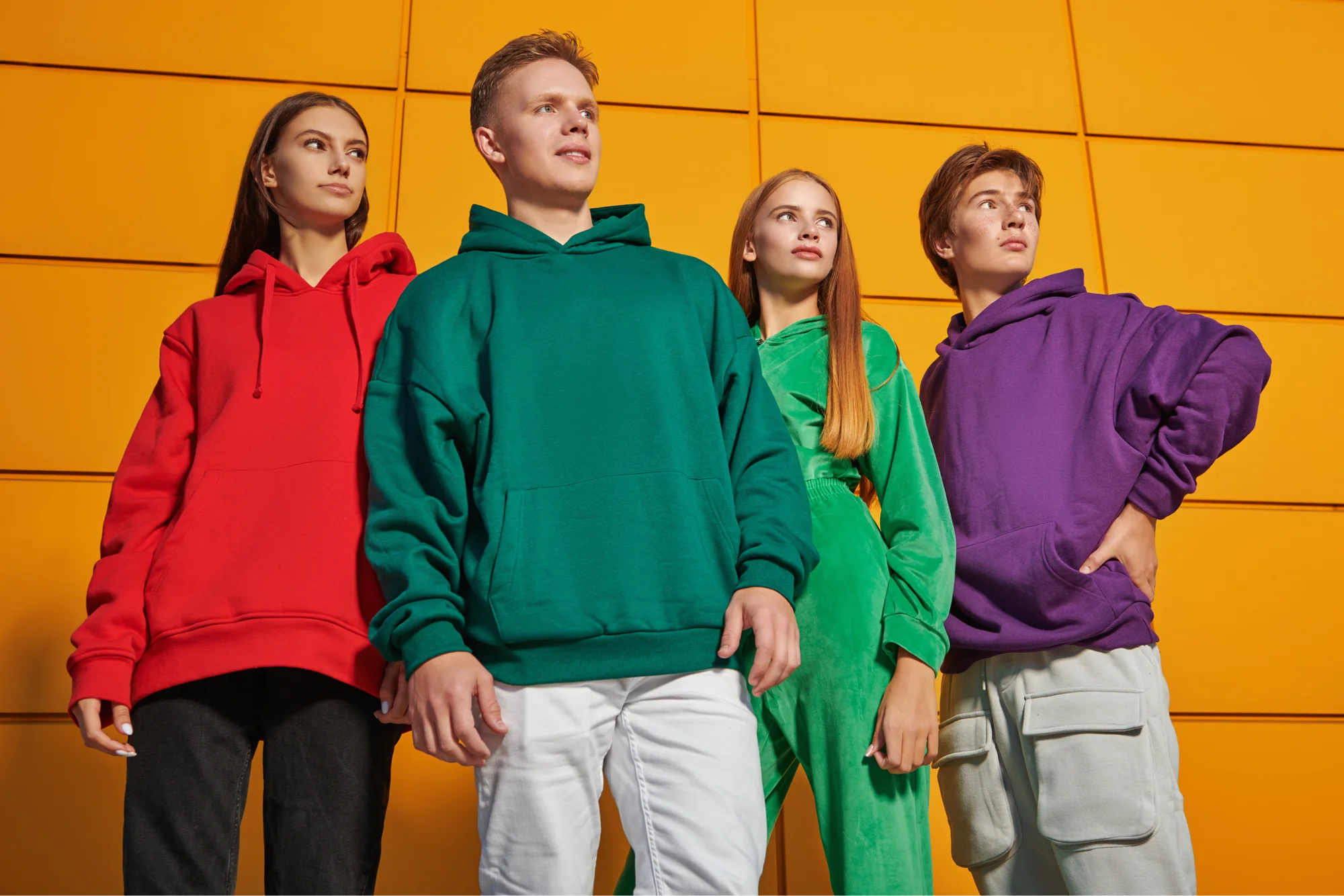
A hoodie is a long-sleeve zip-up or pullover garment with a hood. Many styles also feature a kangaroo or front pocket and adjustable drawstrings, making hoodies both practical and instantly recognizable.
What are the common types and styles of hoodies?
Hoodies come in different styles to appeal to various audiences and personal styles:
- Pullover hoodies: A classic overhead style with a kangaroo pocket and clean silhouette.
- Zip-up hoodies: Easy to layer, adjust for changing temperatures, and wear year-round.
- Oversized hoodies: Relaxed fits with a laid-back feel that’s popular in streetwear.
- Performance hoodies: Often made with moisture-wicking polyester blends for athletic wear and outdoor activities.
What are hoodies typically used for?
Hoodies work for just about any casual moment, from lounging at home to heading outdoors. Here are some of their most common uses:
- Everyday wear: A comfortable choice for running errands, relaxing at home, or casual outings.
- Outdoor activities: The hood offers extra protection from wind and light drizzle, making it practical for changing weather.
- Cold-weather layering: Wear a hoodie over a plain t-shirt, or layer it under a denim jacket or winter coat for extra warmth.
- Personal expression: A minimalist design or a bold graphic both work – a hoodie is really about showing off your personal taste and making a statement.
What is a sweatshirt?

A sweatshirt is a long-sleeve top without a hood. Not all sweatshirts are built the same, though. Available in a range of weights and finishes, sweatshirts come in lightweight French terry and warm fleece fabrics, offering comfort year-round.
What are the common styles of sweatshirts?
From timeless classics to trend-driven silhouettes, sweatshirts come in several styles to suit different occasions and personal preferences:
- Crewneck sweatshirts: The most common style, defined by a round neckline.
- Raglan sweatshirts: Feature angled shoulder seams for easier movement and a sporty look.
- Oversized sweatshirts: Relaxed fits that pair well with casual clothing and streetwear-inspired outfits.
- Graphic sweatshirts: Showcase logos, artwork, or typography for a bold visual statement.
What are sweatshirts typically used for?
Sweatshirts work across a wide range of settings, from lounging at home to casual office outfits. They’re best for:
- Casual wear: Comfortable for everyday wear while offering a slightly cleaner look than a hoodie.
- Layering: Wear a sweatshirt under a jacket or over a collared shirt during colder seasons.
- Everyday outfits: A wardrobe staple for running errands, meeting friends, or casual outings.
- Seasonal collections: A popular choice for fall and winter apparel, from minimalist designs to holiday-themed collections like ugly Christmas sweaters.
Hoodie vs sweatshirt at a glance
Here’s how the two compare side by side:
Feature | Hoodie | Sweatshirt |
|---|---|---|
Design and structure | Hood, often with drawstrings and a kangaroo pocket | Crewneck, no hood |
Warmth | Extra coverage around the head and neck | Depends on fabric and weight |
Comfort and fit | Relaxed fit with added coverage | Streamlined, lightweight feel |
Style | Casual, sporty, laid-back | Clean, classic, timeless |
Versatility and use case | Outdoor, casual, athletic wear | Everyday wear, layering |
Layering | Best under roomier outerwear or as an outer layer | Easy to layer under jackets and coats |
Functionality | Often includes pockets, drawstrings, or zippers | Simple, minimal design |
Seasonality | Great for cooler weather | Suitable year-round, depending on the fabric |
The main differences between hoodies and sweatshirts
The differences between a sweatshirt and a hoodie come down to design, warmth, and how you’ll actually wear them.
Design and structure
The most obvious difference is the hood. Hoodies have one, while sweatshirts don’t. This gives hoodies a more casual, functional look, whereas sweatshirts have a cleaner silhouette that’s easier to style for different occasions.
Warmth and insulation
Hoodies usually feel warmer because the hood helps retain heat around the head and neck. Sweatshirts can be just as cozy through the upper body, especially when made from fleece or heavyweight fabrics, but they don’t offer the same coverage.
Comfort and fit
Both sweatshirts and hoodies are designed for comfort, so the choice depends on personal preference. If you like extra coverage and a relaxed feel, a hoodie may be the better option. If you prefer a lighter, less bulky layer, a sweatshirt is often the more comfortable choice.
Style and appearance
A hoodie creates a laid-back, sporty look that pairs well with jeans, joggers, and sneakers. A sweatshirt offers a more versatile style that can be dressed up or down, even for some formal occasions when paired with the right pieces.
Layering
Without a hood, sweatshirts fit more comfortably under jackets, coats, and overshirts. Hoodies work well as a standalone outer layer or beneath roomier jackets, though the hood can add bulk when layering.
Functionality
For extra practicality, hoodies often feature kangaroo pockets, zip-up closures with metal or plastic zippers, or adjustable drawstrings. Sweatshirts keep things simple with a streamlined design that prioritizes comfort over extra features.
Best use cases
Reach for a hoodie on a chilly commute, a hike, or any day you want one layer to do the job of a jacket. A sweatshirt works better under a blazer for the office, thrown over a workout, or anywhere you want warmth without the bulk of a hood.
Profit potential: Hoodie vs sweatshirt margins at a glance

For print-on-demand sellers, this decision hits your bottom line directly – hoodies and sweatshirts carry very different cost structures and margins.
Hoodies typically cost more to produce because they use more material and require additional construction, but they also command higher retail prices. On the other hand, sweatshirts usually have lower production costs, so you can price them more competitively while maintaining healthy margins.
Let’s compare realistic profit examples based on blank hoodies and sweatshirts in the Printify Catalog. Base costs reflect catalog pricing at the time of writing, while retail prices use typical eCommerce markups.
Hoodie profit breakdown: Budget vs premium
The Gildan 18500 Heavy Blend is one of the most popular hoodies for Print on Demand. Its cotton-poly blend and soft fleece interior offer comfort and warmth at an affordable base cost.
Base cost (Printify): $21.58
Typical retail price: $26.99-$48.99
Example (40% margin):
$35.99 selling price - $21.58 base cost = $14.41 profit per sale
Potential profit (100 sales): $1,441
The Champion Tie-Dye Hoodie is a premium heavyweight style with a cotton-rich fleece blend and a distinctive tie-dye finish. Add embroidery to create a higher-value product that can command a higher retail price.
Base cost (Printify): $65.31
Typical retail price: $79.99-$109.99
Example (30% margin):
$93.99 selling price - $65.31 base cost = $28.68 profit per sale
Potential profit (100 sales): $2,868
Sweatshirt profit breakdown: Budget vs premium
The Gildan 18000 Crewneck combines a classic fit with an affordable base cost, making it a solid choice for everyday collections.
Base cost (Printify): $17.87
Typical retail price: $32.99-$47.99
Example (40% margin):
$29.95 selling price - $17.87 base cost = $12.08 profit per sale
Potential profit (100 sales): $1,208
If you’re looking for a premium alternative, the Champion S149 Crewneck offers a heavyweight fleece construction and a structured fit. The crewneck sweatshirt’s hood-free design layers easily under jackets, while embroidery-ready placements make it a great choice for premium custom apparel.
Base cost (Printify): $54.91
Typical retail price: $62.99-$89.99
Example (30% margin):
$78.99 selling price - $54.91 base cost = $24.08 profit per sale
Potential profit (100 sales): $2,408
Choosing between hoodies and sweatshirts for your custom apparel
The best choice depends on your audience, design style, and business goals. While both hoodies and sweatshirts are strong print-on-demand products, each excels in different situations.
When to choose hoodies
Choose hoodies if:
- Your brand targets streetwear or younger audiences like Gen Alpha and Gen Z.
- Your designs feature oversized graphics, striking artwork, or designs that make a bold statement.
- Your customers value warmth, comfort, and a relaxed fit.
- You’re creating collections for fall, winter, or cooler climates.
- You want to experiment with creative design placements, such as the hood or pocket.
Print-on-demand hoodies are evergreen bestsellers, and they tend to spike hardest in seasonal collections and limited-edition drops.
How to sell a hoodie
When starting a hoodie business, make sure to:
- Build each collection around a clear theme, such as gym motivation, gaming culture, or local pride.
- Include close-up photos of the fabric, print, hood, and pocket to highlight quality and craftsmanship – heather grey, black, and dark blue tend to photograph the cleanest for storefronts.
- Describe the fabric weight, fit, and feel so customers know what to expect before ordering.
When to choose sweatshirts
Choose sweatshirts if:
- Your designs are minimalist, typography-based, or logo-focused.
- Your customers prefer timeless styles that become wardrobe staples.
- You want apparel that transitions easily between casual and smart-casual outfits.
- You’re building a collection that’s easy to layer throughout the year.
- You want to appeal to a broad audience with versatile everyday basics.
Crewneck sweatshirts are a reliable choice for brands focused on long-term collections and repeat purchases.
How to sell a sweatshirt
To increase sweatshirt sales:
- Share styling tips and different outfit combinations so customers can picture the sweatshirt in everyday settings.
- Highlight the fabric, fit, and layering potential in your product descriptions.
- Offer matching sweatpants to create coordinated sets and increase average order value.
- Include a detailed size guide with model photos to help shoppers choose the right fit with confidence.
Hoodie and sweatshirt design and print cheat sheet
Want to know which printing technique best suits your design? Use this table to match your graphic type with the most suitable methods for sweatshirts vs hoodies.
Design type | Best printing methods |
|---|---|
Big bold front graphic | |
Large back print | DTG, DTF |
Small sweatshirt or hoodie logo | Embroidery, DTG |
Sleeve print | DTG |
Minimal text or typography | DTG, embroidery |
Athletic-inspired design on polyester blends | DTF |
Vintage or washed-look graphic | DTG |
Seam-to-seam pattern | |
Premium brand logo | Embroidery |
Photo-realistic artwork | DTF |
Quick tip
Always order a sample first. Dark, saturated prints show more color bleed-through than expected on heather or colored fabric – the underlying garment color can shift how the ink reads once it’s printed. Order a sample before you list a design to check print opacity, fabric feel, and true color against your original file.
Design print-on-demand sweatshirts and hoodies with Printify
Unlike DIY production, Print on Demand lets you create and launch custom hoodies and sweatshirts without buying equipment, holding inventory, or managing fulfillment yourself.
With Printify, you can design and sell custom apparel worldwide with zero upfront costs or order minimums. Plus, you get access to a massive Catalog of hoodie and sweatshirt styles in fleece, cotton, and polyester blends.
Here’s how to design hoodies and sweatshirts with Printify:
- Sign up for a free account.
- Choose a hoodie or sweatshirt style from the Printify Catalog.
- Customize the design to match your niche or personal style using the free Product Creator.
- Order a sample or list online by integrating your store with Printify. Alternatively, create a free Printify Pop-Up Store and start selling in minutes.
From there, our Print Providers handle printing, packaging, and shipping worldwide. This workflow makes designing custom apparel simple, even if you’re just starting out.
Frequently asked questions about hoodies and sweatshirts
Hoodie vs sweatshirt: Which will you choose?
The right choice comes down to your audience and designs. Hoodies deliver extra warmth and a laid-back vibe, while sweatshirts offer a cleaner look that’s easy to layer. Many successful brands sell both to appeal to different styles and seasons.
With Printify, creating custom hoodies and sweatshirts is easy. No inventory, no upfront stock. Just upload your designs and start selling.