


Custom products, global reach
Every Printify seller has the same question – where should I sell my print-on-demand (POD) products?
Shopify gives you the freedom to create a branded store from scratch, whereas Etsy attracts customers who are already looking for unique items. Meanwhile, TikTok Shop can turn viral content into instant sales.
Not sure which direction to take? Totally normal. Here’s a breakdown of where to sell print-on-demand products and how to choose one that fits your goals.
This post may contain affiliate links, which means we may earn a commission if you make a purchase through those links. This comes at no additional cost to you.
What are the best platforms to sell print-on-demand products?
When deciding where to sell print-on-demand products, you’ll typically choose between eCommerce platforms, online marketplaces, and social commerce sites.
Let’s explore how each one works.
eCommerce platforms for maximum control over your brand

Want to create an online store that looks and works exactly the way you imagine? Go with eCommerce platforms.
These tools don’t come with built-in traffic, but they give sellers more control over their website and online business. Here are some top options that integrate with POD platforms like Printify.
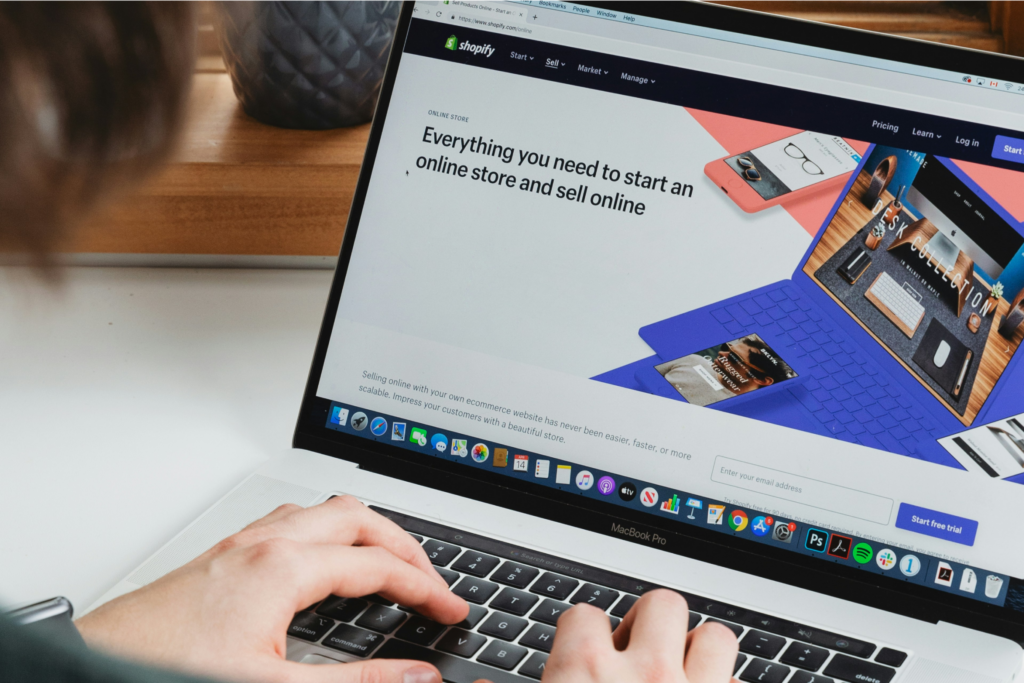
1. Shopify
Shopify is popular among both small businesses and big brands. The free Printify app makes it easy to list and sell custom products in a few clicks.
Why it’s great:
- Free trial, then $1/month for three months before paying the subscription fee
- Integrates with marketplaces and social channels to expand your reach
Keep in mind:
- Extra fees apply if sellers don’t use Shopify’s built-in payment processor
Starting price: $29/month
2. WooCommerce
WooCommerce is a free plugin that turns a WordPress site into an online store. Many small business owners use it to have control over how their website is built, down to the code.
Why it’s great:
- Free to install
- Tons of extensions to add more website features and customization options
Keep in mind:
- Has a higher learning curve than all-in-one tools like Shopify
Starting price: Free, with paid extensions ranging from $19 to $299 or more
3. Squarespace
Want an online store that looks polished from the start? Squarespace is an excellent choice. Merchants can sell products right from their Printify account using the built-in app.
Why it’s great:
- Over 190 professional website templates
- An AI tool that can create a custom store in just a few clicks
Keep in mind:
- A 2% transaction fee applies to the cheapest plan, which can affect your profit margins
Starting price: $16/month
4. Wix
Wix is an easy-to-use eCommerce site builder with powerful tools to boost your sales.
Why it’s great:
- Large app market to connect your store with multiple platforms, including print-on-demand services like Printify
- Sales-boosting features like back-in-stock alerts and abandoned cart recovery emails
Keep in mind:
- Some users report that the platform can feel slow when building their sites
Starting price: $29/month to list products and accept payments
5. Big Cartel
Big Cartel is popular among artists and creators who want a simple and affordable way to start selling. Our Printify integration lets you connect your store and import your product catalog seamlessly.
Why it’s great:
- The free plan lets you list five items with one image each, so you can sell with zero upfront costs
- Built-in sales tax tools that make it easy to stay compliant
Keep in mind:
- The free plan uses a Big Cartel subdomain
Starting price: Free, then paid plans start at $15/month
Curious about other platforms? Visit our integrations page to explore more tools Printify connects with. Or, use the Printify Pop-Up Store to sell print-on-demand products instantly without building a website.
Marketplaces for built-in traffic and fast visibility

Marketplaces make it easy to reach customers because people already shop on these online selling sites every day. They offer global reach, built-in marketing tools, and a quicker path to your first sale.
The trade-off is the costs. Most marketplaces charge fees, so you’ll need a smart pricing strategy and healthy profit margins to grow without losing money.
The marketplaces below easily connect with print-on-demand platforms like Printify.
6. Etsy
Etsy is popular for selling unique products with original designs, from custom t-shirts to wall art, phone cases, and other merchandise.
Why it’s great:
- Many Printify sellers like Simone Cassarino have built six to seven-figure print-on-demand businesses on Etsy
- Access to marketing tools like Etsy Ads to attract new customers
Keep in mind:
- Listings with a distinct style and niche often stand out – such as custom t-shirts with funny slogans or trendy designs
Fees: There’s a one-time setup fee that varies by location, a $0.20 listing fee per item, and a 6.5% transaction fee on each sale.Additional Etsy fees for promotions, payment processing, and optional upgrades may apply.
7. Amazon
Amazon is one of the most trusted marketplaces in the world, known for its fast delivery times and large customer base. If you want the credibility of a big brand, this is the place to sell.
Why it’s great:
- High demand across many product categories, making it easier to reach shoppers at scale
- Incentives to help new sellers make sales, like a $50 Amazon coupon credit
Keep in mind:
- Many sellers offer similar items at competitive prices, so focus on creating a strong brand and highlighting the product’s quality to make your listings more attractive
Fees: The Individual plan costs $0.99/item sold, plus some Amazon fees based on your product category.
For example, selling t-shirts comes with a referral fee of 5% for items priced at $15 or less, 10% for items priced between $15.01 and $20, and 17% for items priced over $20, with a minimum fee of $0.30 per item.
8. eBay
While eBay is popular for used goods, over 80% of items sold are new. That makes it a solid option for print-on-demand sellers who want access to a large, ready-to-buy audience.
Why it’s great:
- A product research tool to analyze competition and set your retail price based on data
- Strong seller protection policies to safeguard your business
Keep in mind:
- Make sure to use high-quality product images and be clear about your product’s materials, shipping options, and return policies to boost your listings
Fees: eBay fees vary by category. Each month, sellers get up to 250 zero-insertion-fee listings. After that, it’s $0.35/listing, plus final value fees and optional upgrades for promoting or enhancing listings.
Social commerce channels to turn scroll-stopping content into sales

Social media platforms aren’t just for entertainment anymore – they’re shopping destinations. These channels help level the playing field for small businesses, giving anyone the chance to reach a vast audience through engaging content.
9. TikTok Shop
With TikTok Shop, users can discover and purchase trending products at the same time. Many small-scale brands base their entire business model on this platform because of how quickly a single viral video can skyrocket demand.
Why it’s great:
- The algorithm relies on engaging content, not follower count, giving new sellers a real chance to get seen
- Talk to potential customers and drive impulse purchases in real time with live streams
Keep in mind:
- Success depends on consistent posting and genuine connection with viewers – test different content ideas to see what gets attention
Fees: TikTok Shop charges a 6% commission fee per order for most products, in addition to transaction fees. Our TikTok Shop fees article breaks everything down to help you understand the full costs and protect your profits.
Want to create a profitable print-on-demand business on TikTok? Check out our interview with Ayman Ihiri to see how he did it.
10. Facebook Marketplace
Facebook Marketplace is mainly for peer-to-peer selling, but US sellers can now ship items nationwide.
Why it’s great:
- All you need is a personal Facebook account
- Talk to buyers directly through Messenger to answer questions fast and close sales
Keep in mind:
- You need to place a manual order at Printify after a customer pays for the item and shipping cost – from there, our Print Provider will take care of order fulfillment
Fees: Facebook charges a 10% selling fee or a minimum of $0.80 per order.
11. YouTube Shopping
YouTube Shopping lets you display items from your website across your channel. Add it to video descriptions, a product shelf under your videos, or use shopping buttons on Shorts, livestreams, and posts.
Why it’s great:
- Shopify merchants based in the US can use embedded checkout to let viewers buy without leaving YouTube
- YouTube Analytics lets you easily see how much money your channel generates from merchandise
Keep in mind:
- Make sure to use a compatible eCommerce platform like Shopify
- Check whether your channel qualifies for YouTube Shopping
Fees: YouTube charges no fees for Shopping features, even when using embedded checkout.
12. Instagram or Facebook Shop
Instagram and Facebook let you tag items in posts, Reels, and Stories, or add them to a product catalog that users can explore any time. Print-on-demand sellers can use these tools to create a clear path to checkout, turning casual scrollers into customers.
Why it’s great:
- Ideal for visually-driven custom products like t-shirts, wall art, or phone cases
- Reach buyers using multiple content formats, increasing your chances of catching their attention
Keep in mind:
- When customers decide to buy, the app sends them to your website to complete checkout, so you’ll need to set up a store first
Fees: No fees for displaying products on Instagram or Facebook.
How to choose where to sell print-on-demand products

To choose where to sell print-on-demand products, you need to evaluate how each platform aligns with your business. It’s less about picking one perfect place and more about deciding where to start, since many sellers eventually expand and sell on multiple platforms.
Here are the most important factors to consider:
- Integration: Check whether the platform connects with your print-on-demand company.
- Your target audience: Where do they mainly shop – do customers like purchasing on websites or prefer the convenience of a marketplace or social commerce channel?
- Upfront investment: Consider the initial costs of getting started and whether you can set a competitive price that covers all expenses while generating a profit.
- Ease of use: Marketplaces and social commerce channels like TikTok Shop are simple to start because there’s no need to create a website. An eCommerce platform takes more setup, but offers more control over branding and the shopping experience.
Let’s say you sell personalized phone cases. In this case, Etsy is a strong starting point because shoppers there want convenience and customization. You can always build your own website later once there’s a steady flow of customers.
How do I start selling print-on-demand products with Printify?
Selling print-on-demand products with Printify only takes a few steps. With high-quality products and a global Print Provider network, you can start an online business without hiring staff, keeping stock, or paying upfront costs.
1. Sign up and choose a product
Create a free Printify account and explore our Catalog of over 1,300 products. Choose anything from mugs and wall art to organic t-shirts made with sustainably-sourced materials.
Filter by brand, color, print area, or select local Print Providers to speed up shipping.
2. Design your product
Use our Product Creator to upload your artwork, create original designs using AI, or explore our graphics library.
Need inspiration? Use Printify Trends to discover design ideas based on what’s selling right now.
3. Connect your store
Integrate your online store with Printify and publish your print-on-demand products in a few clicks. Don’t have a shop yet? Launch your own Printify Pop-Up Store to start selling.
4. Let us handle the rest
Whenever someone makes a purchase, we’ll print, package, and ship it right away. Get fast production, top-rated print quality, and global shipping with all orders. Just focus on marketing your business and growing your brand.
Frequently asked questions
The best way to check quality is to order samples. You can see the print, feel the materials, and compare different Print Providers’ products before listing them in your store.
Yes. A free Printify account lets you integrate up to five sales channels. To sell on more platforms, upgrade to Printify Premium and link up to ten stores.
Etsy is the most beginner-friendly platform because shoppers already come looking for custom products with original designs. That built-in demand makes it easier to get your first orders.
For a simpler alternative, the Printify Pop-Up Store makes it easy to start selling without creating a website or joining a marketplace – no upfront costs.
Conclusion
Still not sure where to sell print-on-demand products? Here are the top places to start:
- Shopify: Great for having full control over your brand and store experience.
- Etsy: Best for beginners who want built-in demand for custom and creative products.
- TikTok Shop: Perfect for content creators who can turn viral videos into fast sales.
Ready to launch? Create your custom products with Printify and start an online business today.