


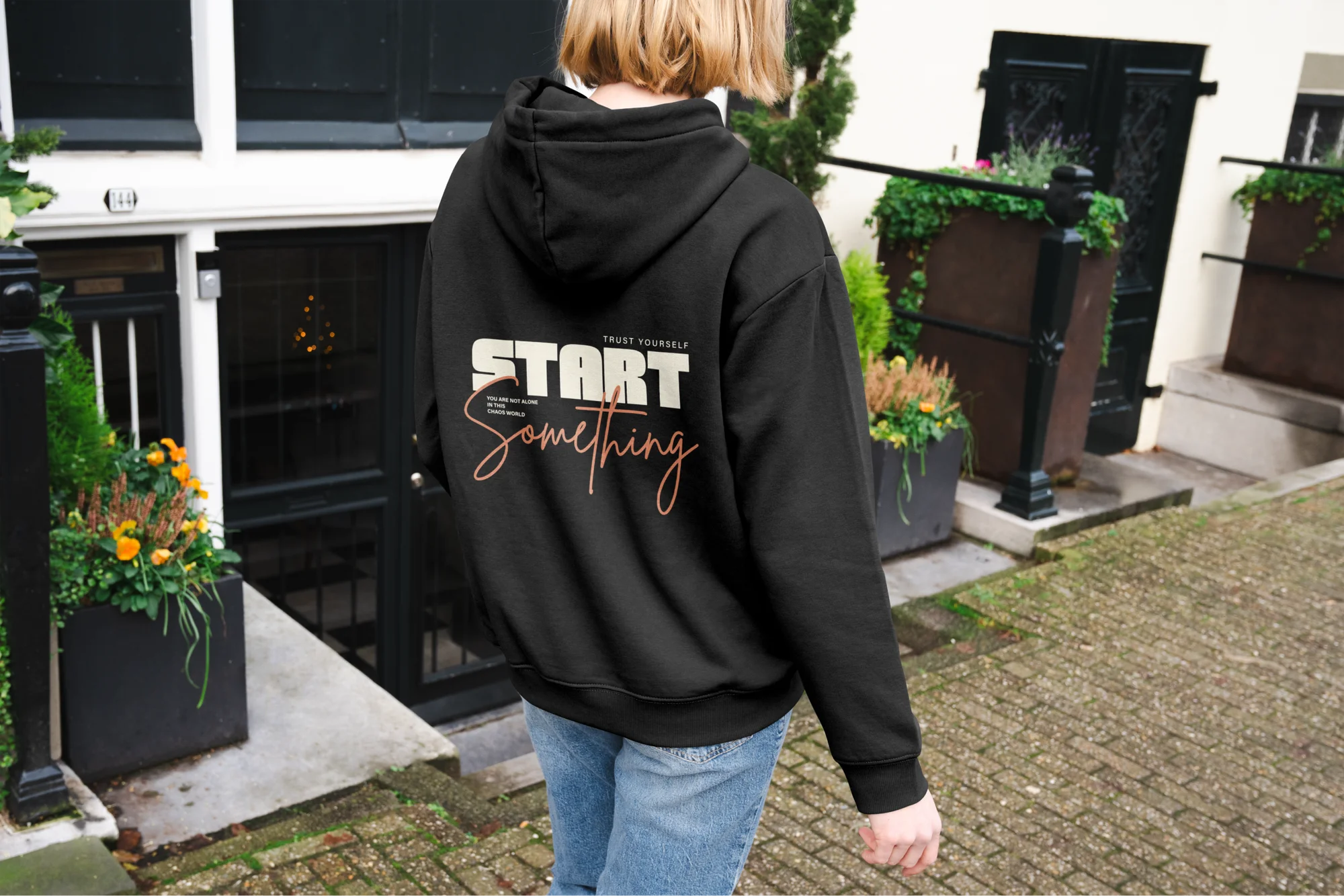
If you're tired of your 9-to-5 and dream of financial freedom, learning how to start a hoodie business could be the perfect path forward.
While it may seem challenging at first, it's much easier than you think. With Print on Demand, anyone can start a hoodie business without inventory or in-depth entrepreneurial knowledge.
In this article, we'll show you how to start a hoodie business by covering all the essentials, from finding a profitable niche and designing custom hoodies to picking a sales channel and building a brand.
Disclaimer
This post may contain affiliate links, which means we may earn a commission if you make a purchase through those links. This comes at no additional cost to you.
How to start a hoodie business: Quick answer
To start a hoodie business in 2026:
- Choose a niche.
- Source blank hoodies through Print on Demand.
- Create standout hoodie designs.
- Build a strong brand identity.
- Pick a sales channel.
- Market across social and search.
With Printify, you can launch a hoodie brand with zero inventory and sell hoodies online in just a few clicks. The same playbook works if you're researching how to start a sweatshirt business or any apparel brand.
1. Research and find a profitable niche

With a carefully chosen niche, you can reduce competition and earn more by appealing to a specific target market.
A niche is a small, specialized market segment for a particular product that appeals to a certain group of people with their own identity, needs, and preferences.
For example, a profitable niche can be 1960s true crime fans, off-grid van life, or winter CrossFit. The narrower you go, the easier it is to appeal to a target audience and create hoodies that feel made just for them.
Begin research by:
- Analyzing search engine results. Use market research tools like Ahrefs or Semrush to find what people search for and gauge the popularity of your business idea.
- Exploring best-selling products. Start with a Google search. Check other hoodie stores on Amazon, Etsy, and eBay to spot upcoming trends.
- Tuning into social media. Scroll TikTok, Reddit, and Pinterest to see which hoodie design ideas are getting saves, shares, and comments.
Finding what your target audience is passionate about is the easiest way to win them over.
Quick tip
Gain inspiration for your hoodie styles by exploring the top print-on-demand niches for 2026.
2. Source and design hoodies

After you find a niche, it's time to source and design hoodies without holding stock or running a home screen-printing setup.
Try Print on Demand
Print on Demand is a super convenient business model that makes it easy to start a custom hoodie business without inventory and design your own clothing like a pro.
Add your art to apparel, accessories, and even home decor, and list it in your online store. Print Providers handle printing, packaging, and shipping, so you can focus on creating new hoodie design ideas, developing your brand identity, and marketing.Print on Demand is easy to start, easy to manage, and much cheaper than traditional fashion production. No warehouse, no order minimums, no upfront stock. Add as many hoodie designs as you like to your online store with just a few clicks, and pay for production only when you make a sale.
Quick tip
Take a look at the success stories of small business owners who use Print on Demand and gain inspiration for your own clothing business.
Choose a few styles
While everyone loves hoodies, customer preferences vary. Increase your likelihood of sales by offering a range of hoodie styles to appeal to different shoppers. Trending hoodie styles in 2026 lean toward oversized fits and heavyweight fleece.
The Printify Catalog has a wide selection of comfortable hoodies in various styles, sizes, colors, and materials, like the classic pullover hoodie, zip-up hoodies, oversized hoodies, cropped hoodies, and hoodie dresses.
Filter by style, print area, price, thickness, and branding options like gift messages, inserts, and neck labels.
We carry some of the most popular brands – Gildan, Hanes, Champion, Bella+Canvas, Stanley Stella, and Lane Seven – so you can sell hoodies people already know and trust.
We offer multiple decoration methods:
- Direct-to-garment. Produces durable prints with a vintage feel. Designs are restricted to certain print areas.
- Direct-to-film. Ideal for photos, fine details, and extra vibrant colors.
- Dye sublimation. Used for all-over-print hoodies. Designs cover the entire product.
- Embroidery. Adds texture and has high durability. Custom-embroidered hoodies have a premium feel that drives repeat sales.
The design process
With our beginner-friendly design tool, the Product Creator, creating a custom hoodie is easy. Upload images, graphics, text, or a combination to bring your hoodie design ideas to life.
Product Creator features include:
- AI Image Generator to create designs from text prompts.
- Pattern tool for all-over-print hoodie designs.
- Fit and fill for fast image placement.
- Text editor with various fonts.
- Graphics library with hundreds of free images.
- Shutterstock integration with millions of low-cost graphics.
When your design's ready, you'll see a realistic mockup of the finished hoodie. Use these high-quality photos for your online store and social media to showcase your products.
For design inspiration, check out:
- Dribbble. A social platform where you can view designs from professionals.
- Pinterest. A visual discovery engine packed with hoodie design ideas.
- Behance. A portfolio platform – good for both inspiration and hiring a talented designer.
Quick tips
Read our graphic design tips to learn how to create your first product.
Don't forget to order samples before listing your custom hoodies – it's worth checking the print in person.
3. Establish your hoodie brand

Branding is the process of forming a solid, recognizable, positive perception of your online business. A strong brand identity makes it easier to stand out, attract new customers, retain existing ones, and signal the quality you offer.
The strongest brand identities are built on four pillars:
- Vision. What's the vision of your hoodie line? What's your long-term goal? Define the motivation that drives your business.
- Values. What do you stand for – climate change, mental health awareness, local pride? When your values align with your audience's passions, you build brand loyalty.
- Voice. Develop a communication style that reflects your values and resonates with your customers. Consistency across product pages, emails, and captions is what separates successful brands from forgettable ones.
- Visuals. Create assets – logo, illustrations, photography, icons – that tell a clear brand story. Use them on your online store, social media accounts, and marketing materials for a cohesive look. Tools like Canva or Pixlr make this easy.
A strong brand story turns one-time buyers into repeat customers – the foundation of any clothing line before scaling. Consistency is also key to making your hoodie brand feel premium from day one.
4. Select a sales channel

When picking a sales channel, evaluate the pros and cons – each has different pricing, fees, and features. Take a look at the best sites to sell online to find one that fits your needs.
We provide seamless integrations with all the major eCommerce platforms and marketplaces, so you can set your store up quickly and start a hoodie business online without coding.
eCommerce platforms
eCommerce platforms make it easy to create a branded store. Most come with easy-to-use templates and core features, but each has its own capabilities and limitations.
Category | Advantages | Disadvantages |
|---|---|---|
Control & branding | Full control over the look, feel, and user experience. | Takes significant time and effort to build and launch from scratch. |
Customer relations | Easy to remarket to and target existing customers directly. | No pre-existing traffic; requires a higher budget to drive visitors. |
Data & insights | Ability to gather and analyze deep customer data and behavior. | May require specialized technical knowledge to maintain and optimize. |
A few great platforms for selling custom apparel, including hoodies:
You can also create a Printify Pop-Up Store and start selling with no upfront cost – ideal for a new hoodie business testing demand.
eCommerce marketplaces
With a marketplace, anyone can start selling customized hoodies quickly and reach a wide audience. The trade-off is less control over store design, content, and the data you can collect.
Category | Advantages | Disadvantages |
|---|---|---|
Accessibility | Quick setup – start listing products almost immediately. | Very few options to customize the "storefront" or branding. |
Ease of use | Beginner-friendly. The technical infrastructure is handled for you. | You must follow rigid rules; accounts can be suspended easily. |
Traffic & reach | Access to a massive, pre-existing customer base. | High competition. You are often listed right next to hundreds of similar rivals. |
A few great marketplaces for print-on-demand sellers:
Quick tip
If you're tech-savvy, the Printify API integrates with custom websites, apps, or third-party tools. Create custom functionality and automate processes.
5. Market your hoodie business

When you start a hoodie business, marketing is vital. A solid marketing plan tells the world about your brand and brings buyers to your hoodie store.
Here are the core types of marketing every hoodie business should do:
- Social media marketing. Use Facebook, Instagram, or TikTok Ads to reach your audience at the right place and time. Mix paid ads with organic content – behind-the-scenes clips, fit videos, and styling reels outperform polished product shots in 2026.
- Influencer marketing. Gain broad exposure by collaborating with creators who genuinely fit your niche. Micro-influencers (10k–100k followers) often deliver better return on investment (ROI) than big names.
- Email marketing. A cost-effective way to advertise. Tools like MailerLite or Omnisend help nurture buyers and drive repeat sales.
- Content marketing. Time-consuming but affordable and effective. Consistent articles, product reviews, and videos position you as a leader in your niche.
- Search engine marketing. Increase visibility in search results using SEO and Google Ads. Learn more from our SEO Masterclass for Driving Sales.
Quick tip
Our blog's marketing hints and tricks section provides useful advice for online businesses of all sizes.
6. Don't forget the legalities
To avoid legal headaches, we strongly advise consulting a qualified professional who can provide guidance specific to your case.
Each country, state, and city has different rules and regulations, so it's vital to understand the legal requirements in your jurisdiction. Visit the US Small Business Administration's website and explore their guide on registering a business.
Registering a business isn't always necessary, but without doing so, you could miss out on personal liability protection and legal and tax benefits.
Weigh the advantages and disadvantages of the most common business structures to find one that fits your own hoodie business:
- Sole proprietorship
- Partnership
- Limited liability company
- Limited liability partnership
- Corporation
In some jurisdictions, you might need a business license or permit.
If you plan to use copyrighted material on your hoodies, get proper licenses to avoid copyright and trademark infringement. Take a look at our article on merchandising to learn how to obtain these.
7. Analyze performance and visitor behavior
Analyzing performance plays a significant role in your store's success. It helps you identify strengths, address weaknesses, and refine your business strategy as your hoodie small business grows.
A few key metrics worth tracking:
- Conversion rate. Tells you if you're driving people to the right pages. Calculate it by dividing orders by unique store visitors.
- Customer acquisition cost. Divide marketing and advertising expenses by new customers acquired in a specific period.
- Shopping behavior metrics. Average products added to cart, session duration, cart-abandonment rate, and best-sellers.
Depending on your platform or marketplace, you’ll have built-in tools to analyze performance.
Alternatively, try these eCommerce analytics tools:
- Google Analytics. A popular tool with wide-ranging insights into the customer journey. Track visits, devices, and time spent per page.
- Matomo. A suite of ecommerce analytics – real-time flow of visits, internal search tracking, and geolocation to help you understand your audience.
- Smartlook. Session recordings and heatmaps that show where visitors click, scroll, and move their mouse.
By analyzing visitor behavior and store performance, you can see what works, fix what doesn't, and keep improving customer experience and sales.
8. Expand your product selection

Selling hoodies appeals to a wide audience, but adding more products attracts even more customers and increases average order value.
With Printify, you can quickly turn your store into a business that sells a world of customizable products – including limited edition designs across categories that stay on-brand.
Our Print Providers use high-quality materials and modern printing technology, so your designs always come out beautifully.
Our Catalog of over 2,000 high-quality products includes:
- Custom apparel. T-shirts, sweatshirts, tank tops, shorts, joggers, pajama pants, sportswear, shoes, and swimwear.
- Accessories. Stickers, mugs, magnets, phone cases, mouse pads, bags, hats, pouches, socks.
- Stationery. Journals, postcards, notebooks, calendars, clipboards, bookmarks, and note cubes.
- Home decor. Wall tapestries, lamps, candles, wall clocks, yard signs, window curtains, banners.
- Pet products. Collars, tags, bowls, feeding mats, beds, and leashes.
FAQ
Closing thoughts
While fashion industry trends come and go, custom hoodies are here to stay – a profitable business opportunity that's easier than ever to launch.
A quick recap of how to start a hoodie business:
- Research and find a profitable niche.
- Source, select, and design hoodies.
- Create a recognizable hoodie brand.
- Select a sales platform.
- Market through various channels.
- Cover the legal stuff.
- Analyze performance and adjust.
- Expand your product selection.
With the right mindset, anyone can learn how to sell hoodies online and build a profitable business. Choose a niche, design hoodies that stand out, market with intent, and a successful hoodie business will follow.