




Printify + your favorite platform = more sales!
Top AI SEO tools continue to reshape how marketers plan, write, and optimize content. From SurferSEO and SEMrush’s AI upgrades to Jasper and Ahrefs stepping deeper into automation, the lineup keeps getting sharper.
In this guide, you’ll find what each tool does well, where it falls short, and how to pick the right fit for search engine optimization.
This post may contain affiliate links, which means we may earn a commission if you make a purchase through those links. This comes at no additional cost to you.
Key takeaways
- AI-driven platforms give faster insights, clearer direction, and smarter workflows for everyday marketing tasks.
- Each tool excels in different areas, so the real win comes from choosing the one that fits your goals rather than chasing features.
- Blending AI research with your own judgment produces stronger, more trustworthy content.
- Testing tools side by side helps you avoid payingfor functionsyou won’t actually use.
- AI evolves quickly, so your approach should stay flexible too.
How to choose AI-powered SEO tools
Choosing the right platform starts with understanding what you actually want to improve. Some teams focus on research, others on writing, structure, or performance. Before comparing options, write down your top priorities and match them to tools known for those strengths.
Small businesses usually start with leaner, simpler platforms, while larger teams prefer more control and automation.
Here are the main factors to consider:
- Budget. Pick a tool you can keep long-term. Many platforms offer free trials, so compare how much value you get before upgrading.
- Business size. Solo creators often need straightforward workflows. Larger teams benefit from features built for collaboration and consistency.
- Features you actually need. Avoid tool overload. Match functions to tasks you perform weekly, not aspirational ones you may never touch.
- Ease of use. If the interface slows you down, the tool may not be a good fit. Look for dashboards that help you think clearly instead of burying you in clutter.
- Integrations. Check whether the platform integrates smoothly with your existing stack. This saves time and removes friction from your workflow.
A simple way to choose: test two tools for the same task during a trial period and keep the one that makes your work noticeably smoother.
Explore more solutions for eCommerce and other SEO tools and AI resources for small business owners.
10 best AI SEO tools for 2026
1. SurferSEO
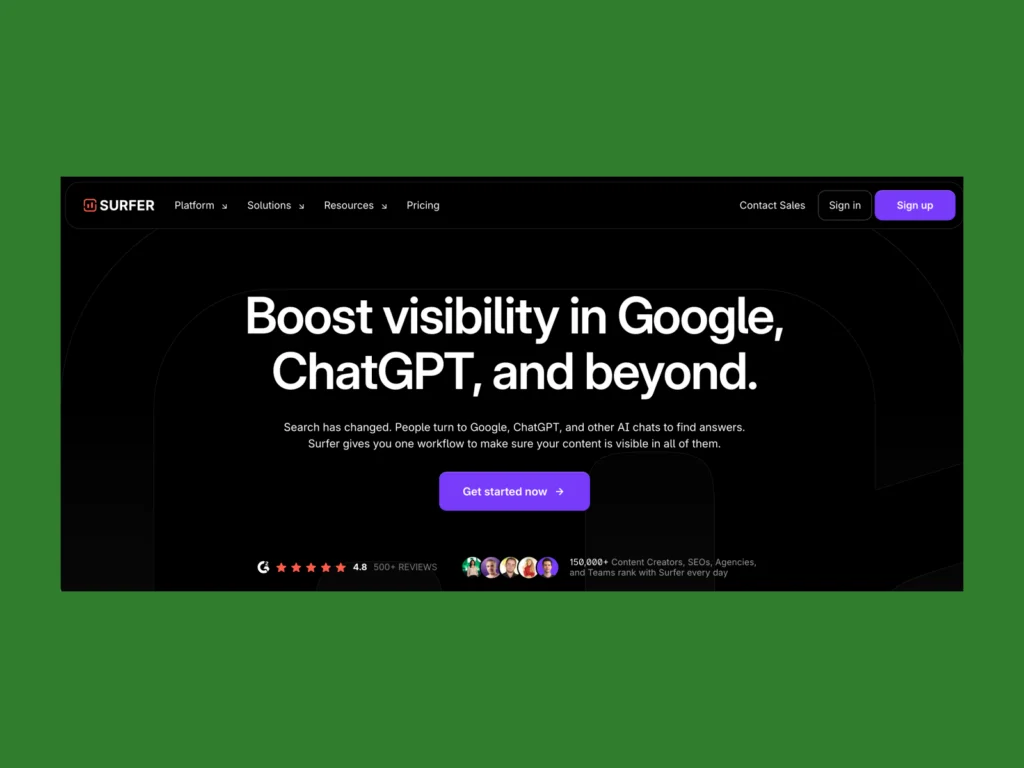
SurferSEO is the tool people turn to when they want clear, practical direction instead of SEO guesswork.
- It shows you what top-performing pages cover for your target keyword, how long their articles are, what questions they answer, and even where they add internal links.
The Content Editor gives you a live score based on structure, search volume patterns, NLP-ready terms, and readability. You can also generate full article drafts through Surfer AI, run a quick seo audit on your older posts, and track how your topical authority grows over time.
Pros and cons:
Surfer keeps everything simple: you write, and the tool shows what needs tightening. The tradeoff is that some writers find the scoring system a little strict and not fully adjustable, but many say it keeps their writing process focused.
Pricing: Essential $79/month, Scale $175/month, Enterprise custom.
Best for: Anyone who writes content regularly and wants a tool that explains, step-by-step, what helps you compete in real search results.
2. SEMrush
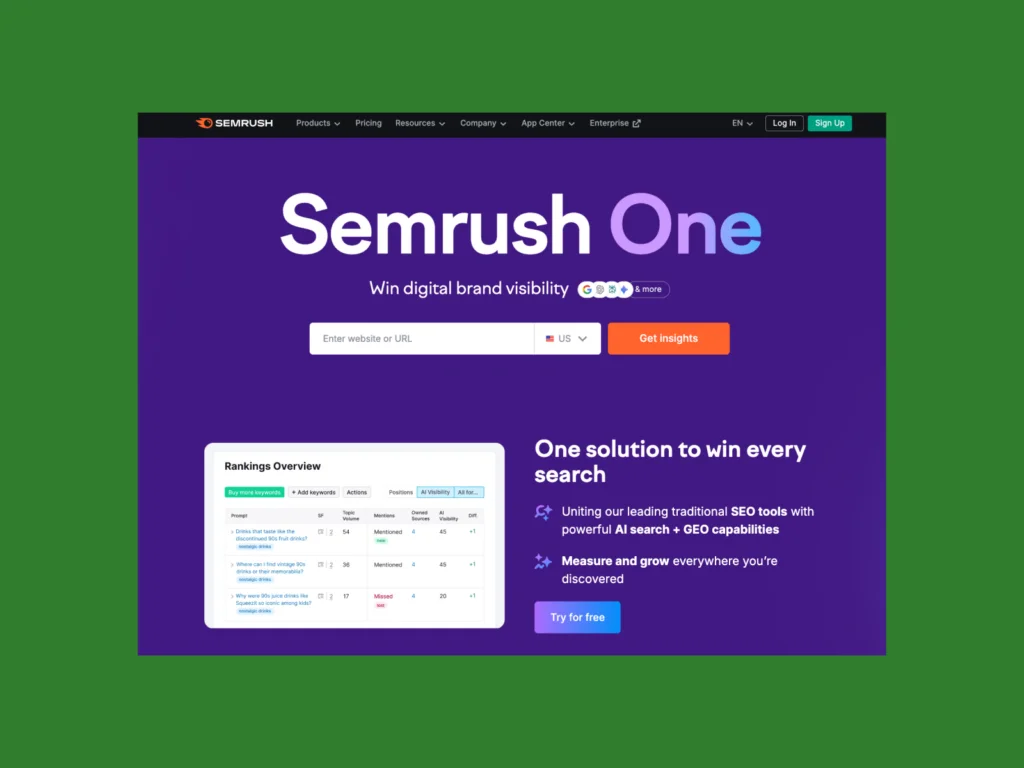
SEMrush’s AI features feel like giving your research workflow a turbo button.
- The tool digs into competitors, highlights patterns you may miss, and helps you shape smarter pages without wading through endless menus.
- You get instant breakdowns of competitor analysis, quick ideas based on search volume, and insights from a huge database.
- Its AI helpers also refine outlines, suggest structure improvements, and surface new angles you may want to explore.
SEMrush even tracks changes over time, showing where you gain or lose ground compared to other businesses in your space.
Pros and cons: The upside is depth; you can analyze almost anything. The downside is simply the platform’s size. New users sometimes get lost until they find a simple workflow that fits their style.
Pricing: Starter $165, Pro+ $248/month, Advanced $455/month.
Best for: Agencies or growing teams that want one powerful hub for planning, researching, and monitoring progress.
3. Jasper AI
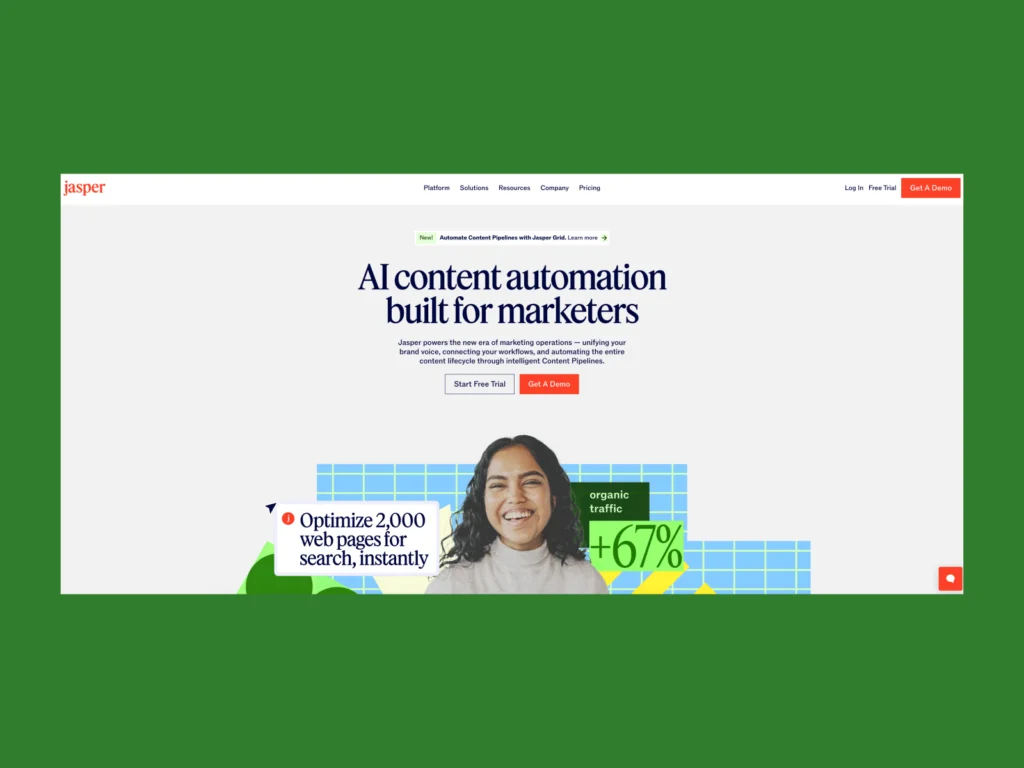
Jasper is the writing sidekick that helps you get ideas out of your head faster and onto the page with less friction.
- It helps youdraft blog posts, ads, emails, and product descriptions in your brand’s voice, while keeping everything organized inside a clean workspace.
The tool shines when you’re juggling multiple projects and need consistent quality without rewriting the same paragraph five times. Jasper also helps brainstorm angles, rewrite clunky sentences, and refine tone, and it works well for teams that collaborate on shared assets.
Pros and cons: The advantage is speed and clarity – Jasper removes the blank-page stress. The limitation is deeper SEO insight; users who want rank tracking or detailed technical checks usually connect Jasper with another platform.
Pricing: Pro $69/month per seat, Business custom. It offers a convenient seven-day free trial for their SEO toolkit.
Best for: Busy marketers and brands that want clean, consistent writing across many channels.
4. Ahrefs
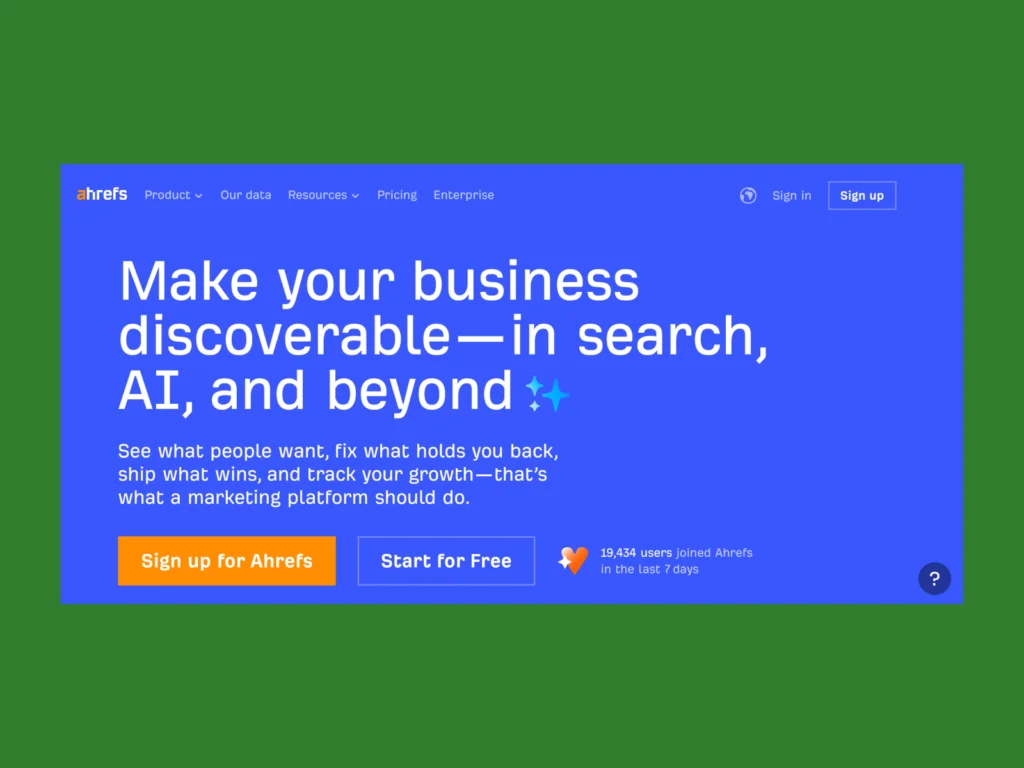
Ahrefs adds AI on top of one of the world’s strongest data libraries.
- You can instantly turn reports into plain-language insights, find new keyword ideas from a single seed keyword, and explore keyword difficulty in a way that actually makes sense.
- It’s also one of the best platforms for backlink analysis, identifying patterns in competitor growth, and pinpointing content gaps that you can realistically target.
The AI assistant summarizes long reports, explains unusual trends, and helps you decide which topics are worth your time.
Pros and cons: The strength here is accuracy; Ahrefs is one of the best SEO tools and rarely feels like guesswork. The primary limitation is pricing, particularly with no free plan, which may cause small teams to hesitate.
Pricing: Starts at $119/month with usage-based credits.
Best for: Marketers who want reliable data, clear explanations, and a tool that helps guide decisions instead of dumping charts on your screen.
5. Frase
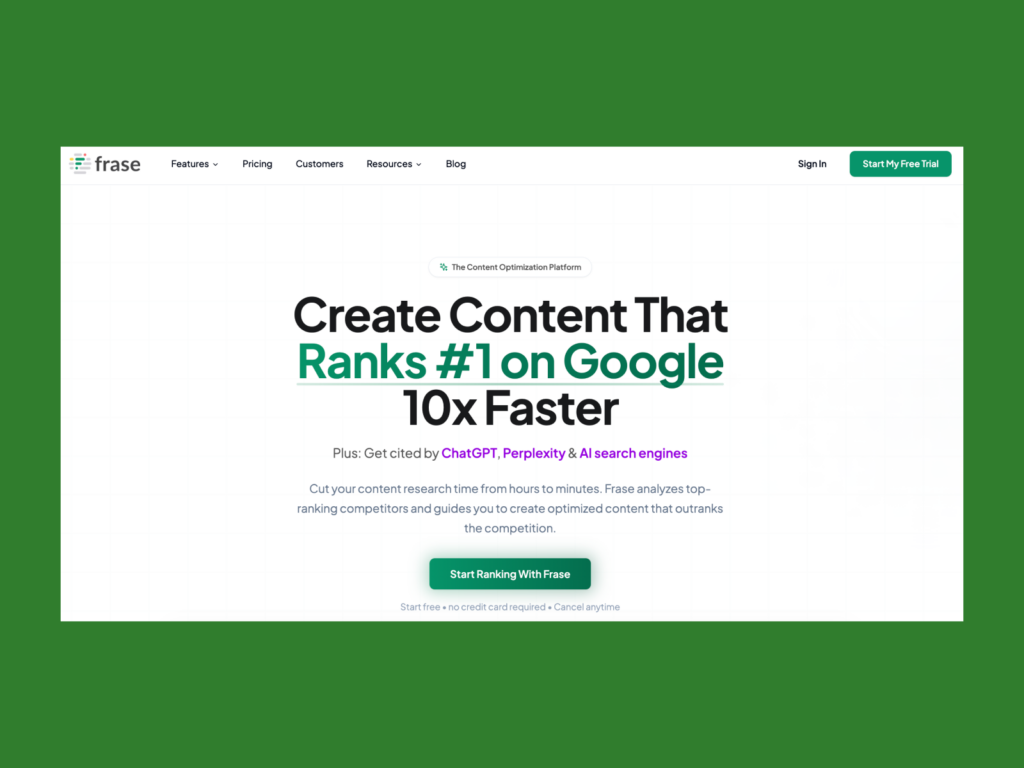
Frase is designed for creators who want to research, outline, and write in a single, clean workflow, rather than juggling multiple tabs.
- It analyzes what shows up on Google and gives you a fast analysis of search engine result pages (SERPs), competitor patterns, and the questions people actually ask.
- Frase also scores your drafts, helps you improve coverage, and lets you optimize for both traditional search and AI search.
Many teams use it to create structured briefs, rewrite sections for clarity, and test variations before hitting publish. You can even monitor how your brand compares through optional AI tracking modules, complete with competitor analysis and share-of-voice insights.
Pros and cons: The benefit is clarity – Frase shows exactly what to include and why. The drawback is that it focuses on content workflows, not larger site fixes, so you may pair it with a dedicated audit tool.
Pricing: Starter $45/month, Professional $115/month, Scale $195/month, Advanced $297/month.
AI Search Tracking is included starting at the Scale tier.
Best for: Writers and teams seeking structured guidance without compromising their creative flow.
6. GrowthBar AI
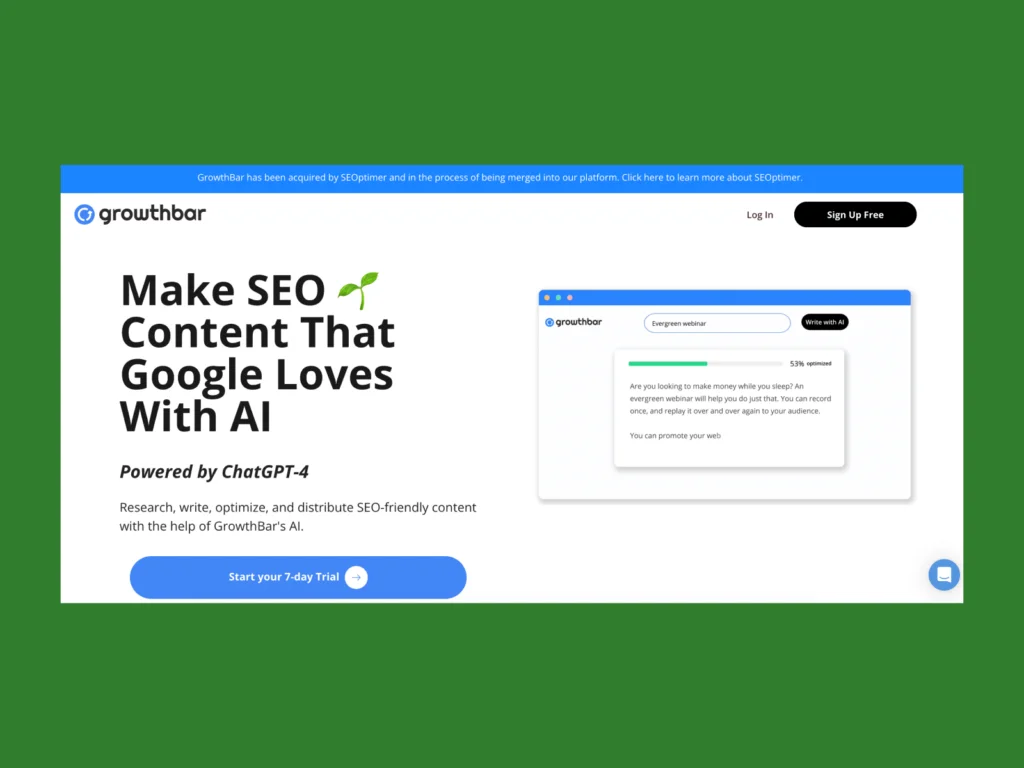
GrowthBar AI is the tool you open when you want a full blog workflow without the usual headaches.
- It scans what already shows up for your target keyword, checks competitors, and builds an outline based on real keyword suggestions, headings, and structure.
- From there, the 2-Minute Blog Builder converts that outline into a 1,500-word draft, while the editor provides guidance on improving search engine rankings and filling any gaps.
You can also generate product descriptions, press releases, social posts, and more – all powered by a clean AI writing assistant built for fast publishing. Teams love it because everyone can collaborate on the same project without hopping between apps.
Pros and cons: On the upside, GrowthBar makes long-form writing feel simple and predictable. On the downside, users who need advanced rank tracking or in-depth audits may pair it with other AI SEO tools.
Pricing: Standard $36/month, Pro $74.25/month, Agency $149.25/month. A seven-day free trial is available.
Best for: Bloggers, solo creators, and small teams who want to plan and write SEO-friendly content fast.
7. Rytr
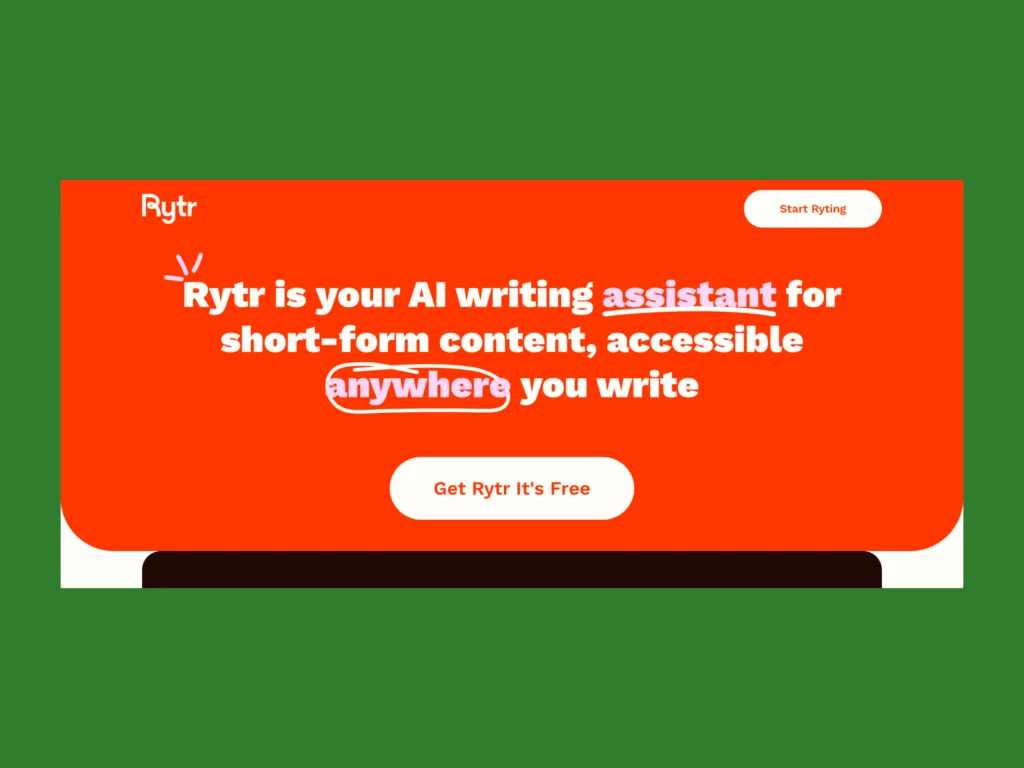
Rytr is the go-to tool for quick, clean writing without getting buried in complexity. It’s built for short-form and mid-length content, with more than 40 templates for emails, blog ideas, ads, replies, and social captions.
- The real magic comes from its tone-matching system: give Rytr a sample, and it’ll mirror your style so everything sounds like you, not a robot.
- It also includes rewriting tools, a paragraph generator, and grammar polishers that help you tighten up your drafts fast.
If you work inside browsers all day, the Chrome extension lets you write anywhere – from WordPress to Google Docs – without switching apps.
Pros and cons: The upside is speed and affordability. The downside is that Rytr isn’t built for deep research or technical seo, so many users pair it with other tools for planning.
Pricing:Free tier available, Unlimited $9/month, Premium $29/month.
Best for: Writers, freelancers, and small businesses that need fast, affordable writing support across different channels.
8. Mangools
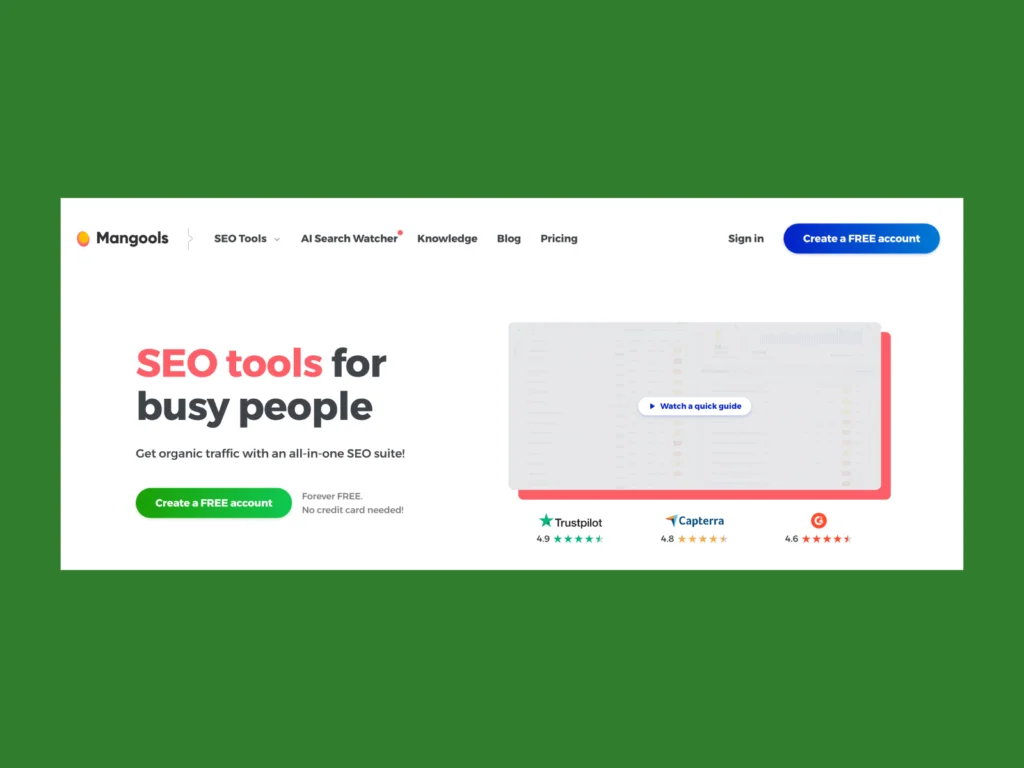
Mangools is the “friendly-but-powerful” AI-powered kit for anyone who wants SEO data without the overwhelming dashboards. It bundles five optimization tools – KWFinder, SERPChecker, SERPWatcher, LinkMiner, and SiteProfiler – into a clean interface that makes research feel simple.
- You can find low-competition ideas with its keyword research tool, check search volume trends, spot weaknesses in top-ranking sites, and run a quick SERP analysis before committing to a piece of content.
Mangools also includes strong rank trackingand backlink data, which helps you track performance shifts and uncover new link-building opportunities. Their AI Search Watcher adds another layer by tracking visibility across AI search engines, so you see where your site shows up beyond Google.
Pros and cons: The appeal is usability; everything feels quick and digestible. The tradeoff is that this AI-powered tool isn’t an “everything platform,” so users chasing deeper audits or advanced reporting often connect it with other options.
Pricing: Get a paid plan starting at $43/month. A free plan with limited access is available.
Best for: Creators, freelancers, and small teams who want data that’s easy to understand and act on.
9. Alli AI
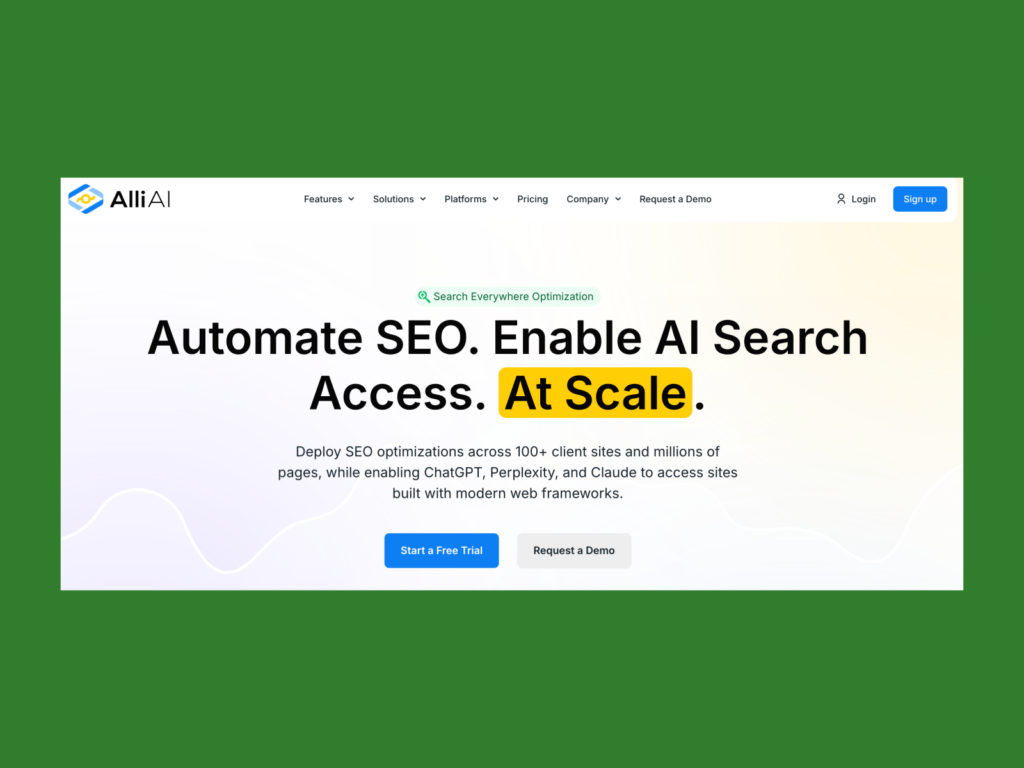
Alli AI is designed for teams that manage numerous websites and want SEO changes deployed instantly, rather than spending weeks fixing pages one by one. It’s especially helpful for agencies managing multiple websites, because you can update title tags, schema, headings, and on-page elements across thousands of URLs in seconds.
The platform’s SEO features also address a growing problem: many modern JavaScript sites appear blank to AI search engines, which means missed visibility. Alli AI addresses this issue by serving pre-rendered HTML to AI crawlers, which helps your pages appear in AI search results more reliably.
Pros and cons: Its strength is automation – Alli AI handles bulk changes, supports real-time updates, and offers tools for large-scale optimizations that typically require entire teams. The limitation is that it’s built for volume; smaller brands might not need this much firepower.
Pricing: Business $299/month, Agency $599/month, Enterprise custom. All plans include a trial period.
Best for: Agencies, eCommerce portfolios, and companies maintaining many properties at once.
10. Localo
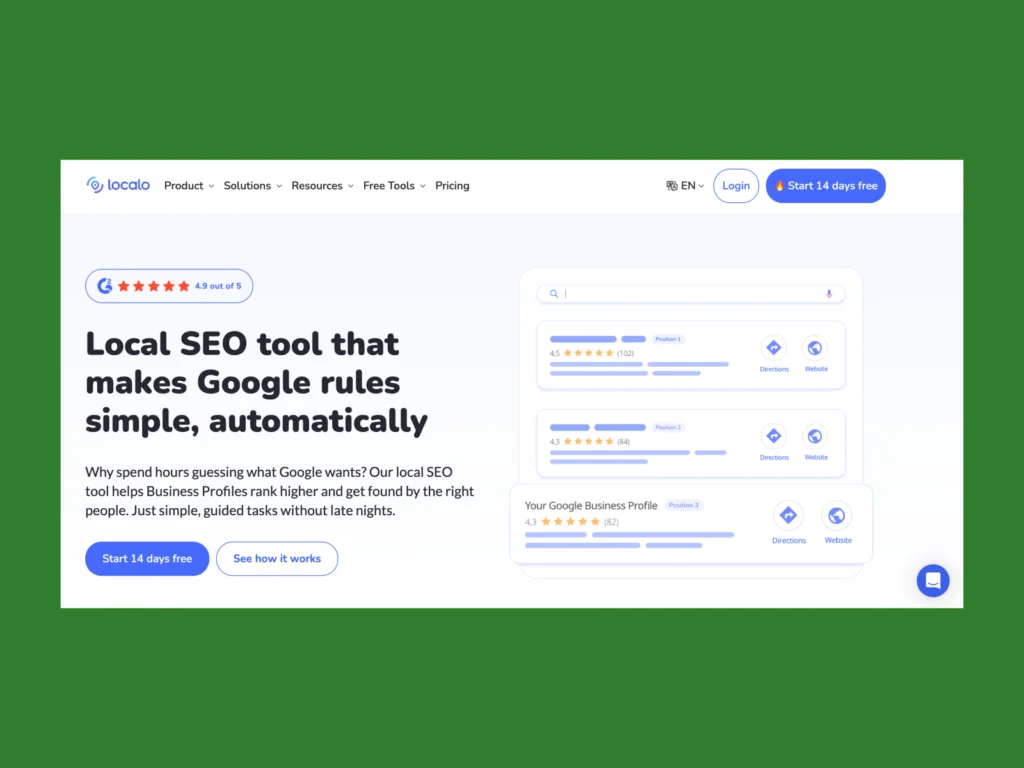
Localo is the tool you grab when you want to understand exactly why your Google Business Profile isn’t showing up where you expect. Instead of digging through Google Search Console and guessing, Localo gives simple, guided steps that actually improve local seo.
- The platform tracks key metrics, such as visibility zones and engagement, highlights changes in local rankings, and even uses AI answers for reviews.
- It checks how your listing performs in nearby areas, compares you with competitors, and identifies what factors most affect search performance.
You also get weekly Smart Tasks that point out missing details, post ideas, review prompts, and ways to strengthen your presence in AI and organic search.
Pros and cons: You can update details without touching complex technical SEO or worrying about structured data. The only downside is its narrow focus. Localo isn’t an all-in-one tool, so you’ll still use a separate seo software for full-site work.
Pricing: Single Business $27/month, Pro $41/month, Enterprise custom.
Best for: Anyone serious about becoming one of the top-ranking pages in their area without drowning in traditional SEO tools.
Learn how to use AI in eCommerce and explore more tools and resources for improving your rankings with off and on-page optimization.
Tips for getting the most out of AI SEO tools
Combine AI insights with human judgment
AI gives fast pattern recognition, but humans guide direction. Treat AI outputs as drafts, not decisions. Start by letting a tool surface search intent, keyword data, and gaps in your seo content, then review everything with your industry knowledge.
Businesses often blend both approaches by setting a weekly workflow: AI does the first pass, humans refine, adapt, and decide what actually moves the needle inside real search engines.
Use AI for research and optimization while keeping content natural
AI handles repetitive research, compares competitors, and spots structure issues, but readers respond to clarity and real experiences. Let AI map angles, search volume groups, and potential link-building ideas. Then rewrite everything in your brand’s tone.
If you publish guides or long-form content, run the content creation process through AI first, then reshape every section so it feels written for humans, not dashboards.
Regularly update your strategy based on analytics
Most teams use analytics to spot early signals rather than wait for rankings to settle. Track clicks, impressions, and new search patterns every week. Check how pages perform across different search engines, then adjust based on trends, not hunches.
If something drops, revisit structure, internal links, or outdated claims. This rhythm keeps your strategy aligned with real behavior instead of past assumptions.
Craft better prompts
Prompts decide the quality of your insights. Use simple formulas like:
- Topic + audience + goal + style.
For example:
- “List keywords a user searches before buying a product in [niche], include search intent and related subtopics.”
- “Suggest structure improvements for a guide about [topic], focusing on clarity and missing sections competitors cover.”
The more context you provide for your goal, the better the AI shapes research and recommendations.
Focus on user intent
Every strong page solves something specific. Before producing content, write down the intent type: learn, compare, buy, or troubleshoot.
Use AI to test multiple angles or find overlooked subtopics people search for. Then match the structure to the intent.
- A comparison page gets short sections and feature notes.
- A guide gets steps and examples.
Intent-first content performs better in the long term and fosters trust.
Add expert insights whenever possible
AI can synthesize information, but readers value lived experience. Borrow comments from trusted marketers, SEO educators, analysts, or agency leads.
Pair AI findings with quotes explaining what actually works in the field. This gives your content authority and makes your advice stand out from generic ones.
Treat AI like a collaborator, not automation
AI won’t replace strategic thinking, but it accelerates decision-making.
- Let it test variations, rewrite sections for clarity, suggest outlines, or propose content opportunities you can vet later.
If you manage multiple projects, pair AI insights with your real goals: more leads, better structure, or improved topical authority. This mindset keeps your workflow flexible while you stay hands-on with direction.
Frequently asked questions about AI SEO tools
Yes. Most AI seo tools now guide beginners through tasks like keyword research, content optimization, and simple site audits with clear prompts, rather than complex dashboards. They handle repetitive seo tasks so newcomers can focus on learning basics like search intent and simple edits. If someone wants a smoother start without getting lost in data overload, these platforms can be very helpful.
No. AI speeds up research, drafts, and technical checks, but it can’t replace human judgment or strategy. Humans read nuance, brand voice, and shifting trends in ways AI tools can’t fully match. Think of AI as support for analysis, outlining, and spotting gaps while specialists make decisions, interpret context, and shape long-term seo strategy.
Start with one or two AI tools that align with your goals. For example, use one platform for keyword research and another for content creation or optimization. Let AI draft, outline, or suggest improvements, then refine everything manually. This gives a balanced workflow where AI speeds up the content creation process without taking over your voice or judgment.
No. Google focuses on helpful content, not the method used to create it. AI drafts won’t trigger penalties as long as your final content is accurate, edited, and useful for readers. Treat AI as a writing or analysis assistant. You still need to review facts, refine structure, and match search engines’ expectations for clarity and relevance.
Unleash your Printify potential with smart AI SEO
Smart AI-driven research and production workflows help more shoppers discover your brand, and pairing that visibility with Printify keeps growth manageable. You create designs, publish products, and we handle printing, shipping, and inventory management, so you can stay focused on strategy instead of logistics.
Combine clever AI insights with a streamlined print-on-demand setup to bring more visitors to your listings and turn attention into real sales.