

Most TikTok marketing guides are written for general brands with big budgets. This one isn’t. Whether you’re launching your first TikTok Shop or scaling past your first thousand orders, this guide covers exactly what works – from profile setup to LIVE selling, affiliate strategy, and building a TikTok marketing strategy that drives real results.
Here’s what we cover:
- Is TikTok good for print-on-demand social media marketing?
- TikTok marketing tips that actually drive sales in 2026
- The best analytics and editing tools to support your TikTok content workflow
- Common mistakes that kill growth – and how to avoid them
Is TikTok good for print-on-demand marketing?
Yes – and here’s why it works differently than every other social media platform.
On most social media platforms, reach is tied to follower count. TikTok flips that model entirely. The TikTok algorithm distributes content based on performance, not popularity – a brand-new shop with zero followers can land in front of millions of TikTok users with the right video.
TikTok is also the only platform that fully combines content discovery and eCommerce purchasing in a single app. Through TikTok Shop, a viewer can go from watching a video to buying your product without ever leaving the app. No link in bio, no redirects, no drop-off.
The audience is there too. TikTok has over 1.99 billion monthly active users worldwide, with the strongest concentration of younger audiences aged 18-34. Over half of TikTok Shop buyers report discovering a product through a video on their For You page – not through a paid ad. That’s social commerce working at its best.
For POD sellers, this matters because TikTok rewards exactly what’s cheap to produce: authentic short-form videos filmed on a phone. That makes TikTok marketing for business genuinely accessible in a way that advertising on other video platforms isn’t.
TikTok marketing tips for a successful 2026
The following tips are drawn directly from what’s working for POD sellers running TikTok Shops right now. These aren’t generic social media marketing strategies – they’re built around TikTok’s mechanics and the POD business model.
Optimize your profile for conversions

Your TikTok profile is your storefront – the first thing potential buyers see before clicking anything. Getting it right from the start sets your brand up for consistent sales.
Write a clear, niche-specific bio: Keep it short and specific. Something like “Funny graphic tees for dog moms | Shop below” tells visitors exactly what you sell and gives them a reason to browse. That’s your brand voice established in one line.
Link your TikTok Shop to your profile: This activates your Shop tab and makes every tagged product in your videos directly shoppable. It’s the single most important technical step for any TikTok seller.
Apply TikTok SEO to your captions and listings: TikTok users increasingly use the platform as a search engine. Keywords like “funny gift for dad” or “motivational gym hoodie” drive far more qualified traffic than generic product descriptions.
Set up your TikTok business account:
- Download the TikTok app
- Go to Settings and Privacy
- Tap Switch to Business Account
- Choose the category that best describes your brand
This unlocks TikTok analytics, commercial sounds, and all the seller tools you’ll need. Pick a handle that’s memorable and aligned with your niche – it’s part of your brand identity.
Repurpose content to reduce workload
Posting 1-5 TikTok videos per day sounds like a lot - and it is, if you start from scratch every time. A content repurposing system multiplies your output without increasing your effort.
Every piece of content you create can be remixed, re-hooked, or redistributed. A popular video that performs organically can be amplified with GMV Max Ads (run from Ads Manager). A strong affiliate video can be reposted with different text overlays. LIVE sessions are automatically clipped into shoppable highlight videos. One product shoot becomes a lay-flat, an on-body reveal, a reaction video, and a lifestyle clip – four in one shoot.
A practical system for POD sellers:
Film 5-10 raw clips per product in one session. This footage becomes the foundation of your distribution. Edit into 3-4 videos with different formats, hooks, sounds, and overlays. Post to your feed, share clips with affiliates as raw material, and save top performers for GMV Max.
After 2-3 weeks, double down on what converts. Use a content calendar to track what’s live and what’s coming.
Consistency beats intensity across every social media platform – and TikTok is no different. The TikTok algorithm rewards accounts that show up regularly. One focused hour daily compounds faster than three hours twice a week.
Use TikTok LIVE to sell your products

LIVE selling is one of the most underused strategies for POD sellers – and one of the highest-converting formats on the platform. Brands running consistent LIVE sessions often find it drives more revenue than all other content combined.
Why does it work? Because it combines social proof, urgency, and real-time connection in a way no pre-recorded video can. When a viewer watches you hold up a shirt, call out a flash sale, and thank buyers by name, that’s an experience that drives more sales and boosts engagement better than any static product listing.
Setting up your LIVE room:
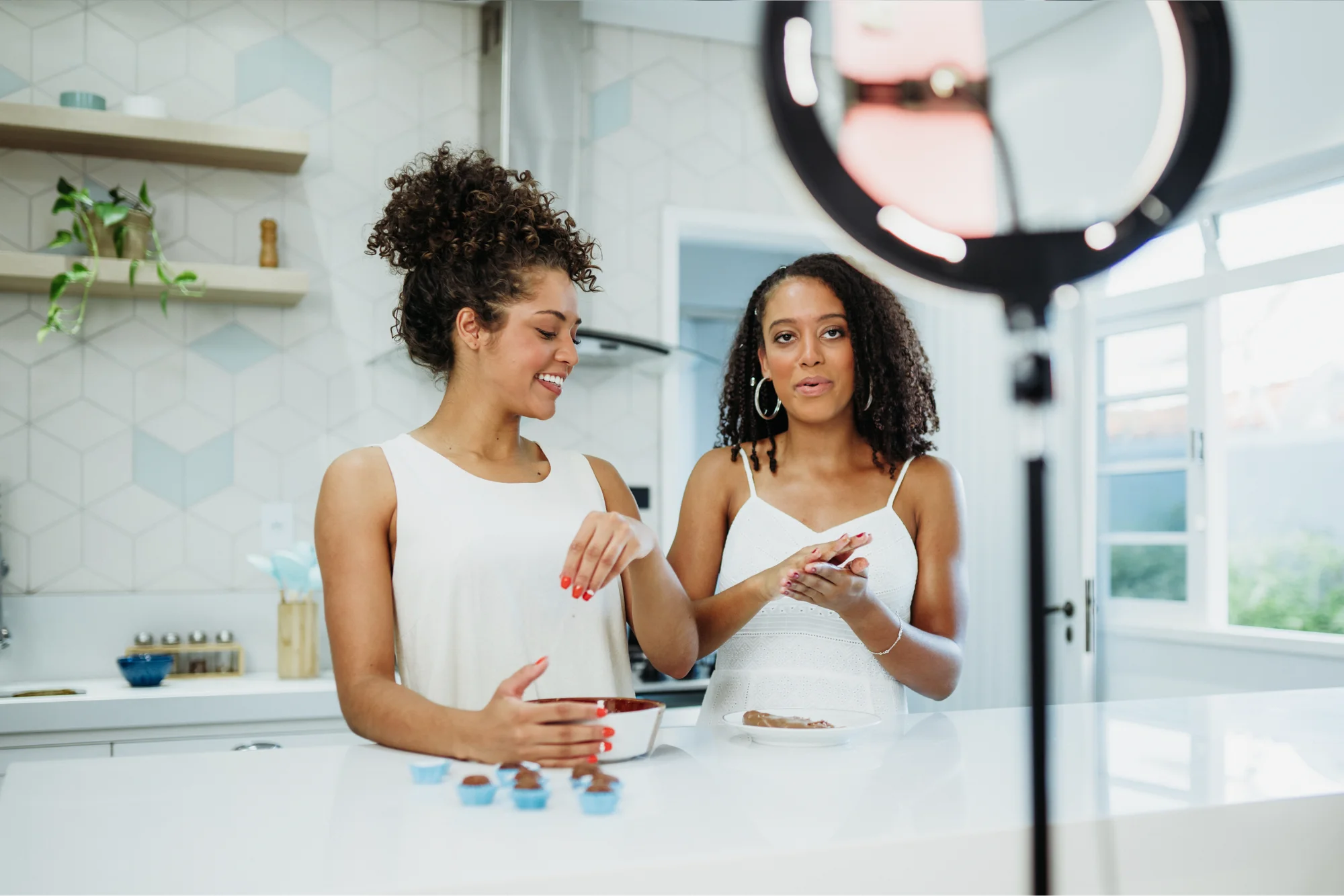
You don’t need a studio. A clean background, a ring light, a tripod, and 3-5 product samples on hand are enough. Plan to stand for the full session – TikTok’s algorithm deprioritizes still-frame content. Schedule via LIVE Manager in Seller Center, notify followers with TikTok’s CRM tool, and run Practice Mode first.
During the session:
Run for at least 1 hour; 2 or more builds a consistent weekly audience. Add products to your cart before going live, pre-set flash sale prices, and plan giveaway milestones. Engage from the first minute: call out every viewer who joins, thank buyers by name, and vocalize your countdown windows. The goal is a room that feels like an event - the algorithm rewards active, interactive broadcasts, and so do buyers.
After the session, review TikTok analytics for orders, video views, new followers, and peak engagement moments. TikTok auto-clips your best moments into shoppable highlight videos. Use this data to refine your next cart and improve your selling approach over time.
Create seasonal marketing campaigns
Seasonal campaigns are among the highest-ROI strategies in TikTok Seller Center – and they’re free to enter.
TikTok runs themed campaigns tied to major holidays: Valentine’s Day, Mother’s Day, Father’s Day, Halloween, Black Friday, and more. Enrolling signals you’re an active seller and gives your products additional exposure in the Shop tab during peak buying windows.
Before enrolling, you’ll need an SPS of 3.5+ and products priced high enough to support meaningful discounts – often at a 10-30% margin. Always read the campaign rules; restrictions apply to some categories.
For POD sellers, seasonal design strategy and campaigns need to work together. Publish seasonal products 3-4 weeks before the campaign window opens so you have time to build content, rack up early sales, and prove your listings before enrolling. Sellers who plan ahead consistently outperform those who react at the last minute.
Promote your products with affiliates

Affiliate marketing is one of the biggest growth opportunities for POD sellers – and most wait too long to start.
Here’s how it works: you set a commission rate, TikTok creators promote your products in their own videos, and when someone buys, the creator gets paid automatically. You only pay when a sale happens. Every affiliate video is engaging content that builds social proof and extends your TikTok presence across the social media network - without you filming every video.
The real advantage is scale. One creator posting to a highly engaged audience can outsell weeks of your own content. Get 20 or 50 affiliates posting regularly, and you’re reaching highly engaged audiences around the clock.
How to get started: Make sure you have at least 50 sales, strong listings with 5+ mockups, and proof that your products convert before recruiting. Set your products to Open Collaboration in TikTok Seller Center, then use TikTok’s Affiliate Center, Kalodata, or EUKA to find creators in your niche. Filter by GMV in the last 30 days and post rate - aim for 85%+.
When reaching out:
- Personalize every message – reference their content, not a generic pitch
- Quote commissions in dollar terms – “$4-6 per sale” lands better than “20%”
- Send a free sample so they can create content with the real product
- Follow up – your first message often gets missed
Commission benchmarks:
- New seller/recruiting phase: 20-25%
- Established and scaling: 15-20%
- Minimum viable: 15% - below this, quality TikTok influencers won’t engage
- Top performers: base retainer + commission
Don’t sleep on micro influencers. TikTok influencer marketing doesn’t need a big budget. Creators with 5,000-50,000 followers in a specific niche often convert better than mega creators and are way more accessible. The right fit between creator, product, and target audience matters more than follower count.
As you scale, tier your affiliates. Reward top performers with higher commissions, early product access, and flat retainer fees – and track post rates closely. Sending samples to affiliates who never post is one of the most costly mistakes in POD.
Collaborate with influencers
Beyond affiliates, direct collaboration with TikTok influencers can accelerate brand growth – especially when building a recognizable identity rather than a generic shop.
Unlike affiliates who post for commission, collaborators post as partners – featured integrations, co-created content, exclusive drops. Prioritize fit over follower count. A creator in the humor niche with 15,000 engaged followers is more valuable for a funny tee brand than a lifestyle influencer with 200,000 followers who don’t connect with your product.
Give creators real creative freedom. Brief them on your product, target audience, brand voice, and business objectives – then let them run with it. Scripted content underperforms. Original content from creators consistently reaches wider audiences than branded productions ever will.
Follow your Shop Performance Score (SPS)
Your Shop Performance Score (SPS) is one of the most important metrics in your TikTok business – and most sellers don’t track it until something goes wrong.
SPS is a dynamic 0-5 score based on six metrics, including Negative Review Rate, On-Time Delivery Rate, IM Dissatisfaction Rate, and After-Sales Handling Time – recalculated continuously across the past 90 days.
Why it matters: SPS gates access to key tools in Seller Center. You need a 3.5+ score to opt into seasonal campaigns, run promotions, and access the full affiliate program. A strong SPS unlocks Silver or Gold Star Seller badges, which boost visibility across the video platform and increase buyer trust. Low scores trigger enforcement actions that can limit your shop’s reach and drive sales opportunities away.
Protecting your SPS as a POD seller:
On-time delivery is largely handled through Printify, but you can reduce risk by selecting Print Providers that consistently meet TikTok’s shipping windows and ordering product samples to verify quality before scaling.
What’s fully within your control is customer service. Reply to every message within 24 hours – delayed responses directly affect your IM Dissatisfaction Rate. Handle returns quickly and professionally. A string of negative reviews drags your SPS down fast, so treat post-purchase communication as part of your TikTok marketing strategy.
Tools for TikTok marketing

Analytics tools
TikTok Seller Center Analytics: Built-in TikTok analytics covering video performance, order attribution, affiliate GMV, and your Shop Performance Score. Use it to identify which TikTok videos are driving sales and which formats to scale.
TikTok Ads Manager: The hub for GMV Max campaigns and broader TikTok advertising. Ads Manager tracks ROAS by content piece, lets you set daily budgets, and measures conversion events. It’s an essential marketing tool once you’re ready to amplify your best content with spend. New to paid promotion? Start with Ads Manager’s GMV Max campaign type – it’s the most beginner-friendly.
Kalodata: The leading third-party analytics platform for TikTok sellers. Use it to research popular videos and viral content formats, find TikTok creators by GMV and post rate, and benchmark your performance against competitors. Printify merchants get a discount with promo code PRINTIFY10.
TikTok Product Opportunities: A free tool inside Seller Center that surfaces trending products, keyword search volume, and category-level demand. Use it to validate design ideas and spot what TikTok content is resonating in your niche.
Editing tools
TikTok’s built-in editor: Handles text overlays, trending sounds, transitions, and effects. For most sellers, this is the primary editing tool – native content tends to perform better because it feels organic to the platform and resonates with your target audience.
CapCut: A free mobile editing app with more granular control over captions, pacing, and effects. Useful for adding consistent branding across multiple clips and polishing video content when needed.
Canva: Ideal for designing mockup graphics and product announcement visuals. Use it to create clean product images for listings, shoppable posts, and anything beyond video.
Euka: An AI-powered platform for scaling affiliate outreach. Streamlines creator communications as your affiliate network grows.
Common TikTok marketing mistakes

Focusing only on products, not content
The most common mistake POD sellers make is treating TikTok like a product catalog. Mockup images without hooks, storytelling, or emotional triggers rarely get views – let alone drive sales.
TikTok users scroll for entertainment. Think about how beauty brands create tutorials that feel helpful rather than salesy – that same logic applies to POD. People buy when a product makes them laugh, feel something, or solves a problem they recognize. Build the four impulse drivers into every video: urgency, scarcity, social proof, and relatability.
Ignoring trends
Trends on TikTok have roughly a two-week window – sellers who spot them early consistently outperform those who react after the peak. Use TikTok Product Opportunities and Kalodata to monitor rising search volume and engage with content in your niche daily, training the algorithm to surface trends before they saturate.
If you’re already seeing a trend everywhere, you’re probably too late. Gen Z users and younger audiences move fast – track cross-platform signals on Pinterest, Instagram, and Google Trends to stay one step ahead.
Not testing enough creatives
Most sellers abandon a product after two or three underperforming videos. Test at least 20 videos per product across 2-3 weeks, changing one variable at a time, before drawing any conclusions.
If your videos aren't performing, use this simple diagnostic:
- Zero views – fix the hook
- Views but no clicks – the design or CTA isn’t landing
- Clicks but no sales – check your listing or pricing
- Engagement but no sales – impulse triggers are missing
Poor product-market fit
Designing for personal taste rather than what actually sells is the most common reason new sellers lose traction. Humor, identity, belief, and relatability drive impulse purchases more reliably than aesthetics.
Validate demand before designing. Use TikTok Product Opportunities to check search volume and see what’s already selling. The question to ask before publishing any product: “Would someone share this?” If not, redesign it.
FAQ
Build a brand, not a shop
The sellers who succeed long-term on TikTok aren’t the ones with the most products – they��re the ones with the clearest identity.
A shop sells things. A brand makes people feel something. The strongest POD brands pick one emotion, one niche, and one consistent voice – then scale everything around that.
Consistency beats intensity. One focused hour daily compounds into real results. Printify handles production and shipping so you can put all your energy into building your brand – sell products that resonate, post consistently, gain more followers who care, and let the algorithm do the rest.