
Printify vs Bonfire
Read this print-on-demand comparison to choose the rightplatform
See how Bonfire vs Printify stack up in terms of pricing, product quality, integrations, unique features, and profit potential.
Free to start – No credit card requiredHere’s what people say about us


Printify vs Bonfire review: Which is the best print-on-demand platform?
Both Printify and Bonfire help you sell your own products without upfront investment. The biggest difference comes down to whether you’re building a long-term business or running short-term campaigns.
Let’s break down each platform’s core features.
Platform costs
Print network
Business performance
Customer support
Switch to Printify
in minutes
Looking for a Bonfire alternative? Migrate to Printify and earn more per sale.
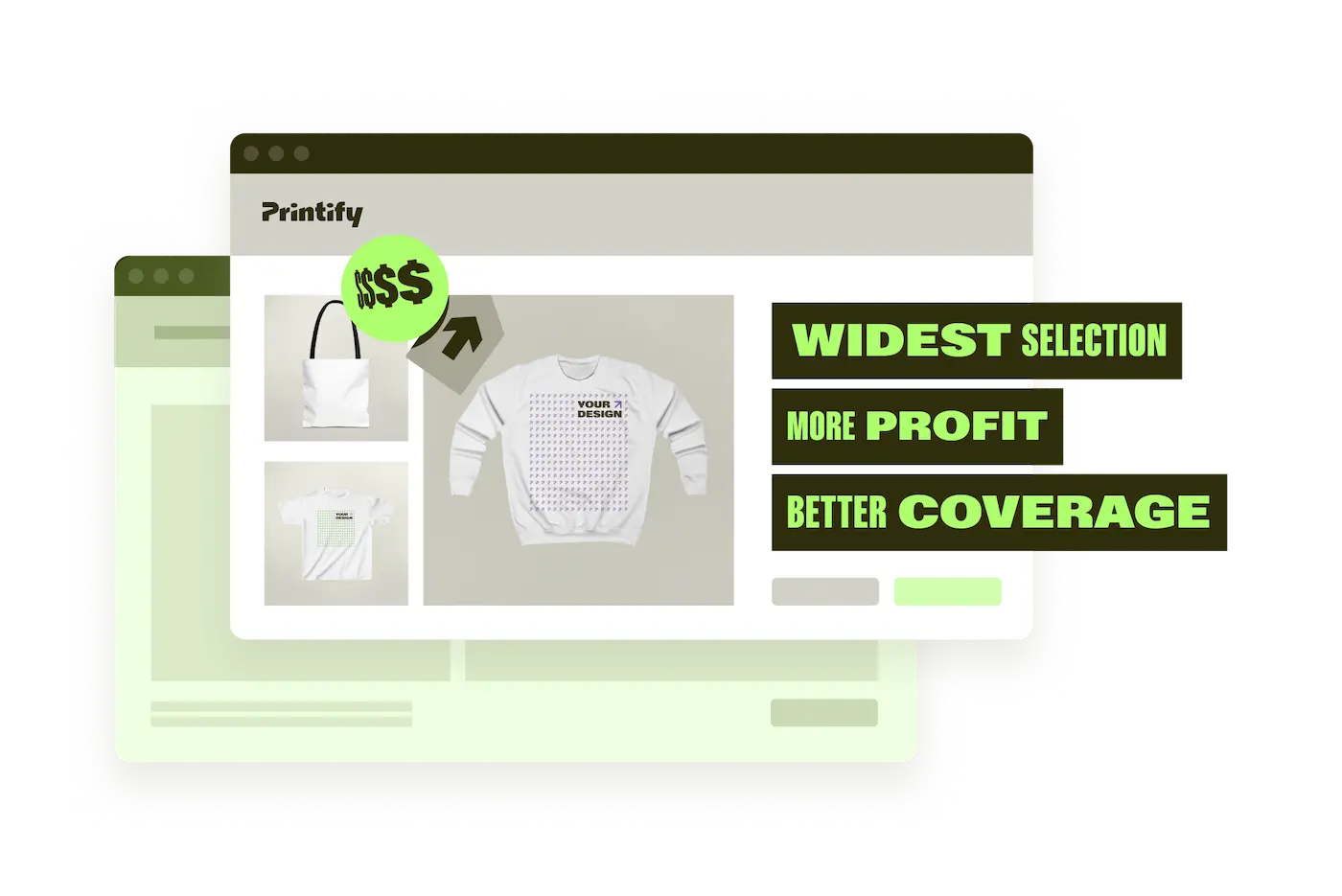
What to look for in POD platforms
Let’s look at the two print-on-demand platforms’ core differences – starting with Printify and Bonfire pricing.
1. Profitability: Printify vs Bonfire
Base product costs, shipping rates, and subscription fees may look minor on paper. In practice, they impact how much you keep from every sale.
Take a closer look at Bonfire and Printify pricing below:
This data was collected in February 2026. Some information may have changed since.
Verdict: The plus side of Printify is simple – lower base costs mean more room for profit, especially for smaller sellers. As sales grow, those savings can add up. Bonfire’s higher per-item pricing makes it harder to sell products profitably over time.
2. Product quality:
Printify vs Bonfire
Product quality goes beyond high-quality materials. It’s also about sharp print results, color vibrancy, and consistency as sales increase.
Here’s how Printify and Bonfire’s print-on-demand services compare:
Verdict: If you want a wide range of printing options, control over POD vendors, and consistent quality, Printify is an excellent choice. Bonfire’s batch-based production can lead to slight variations in print quality.
3. Fulfillment locations: Printify vs Bonfire
Want your products ASAP? Local production leads to faster delivery times and more affordable international shipping costs.
Where can I sell my custom t-shirts?
Sell custom t-shirts worldwide easily with Printify’s global fulfillment network.
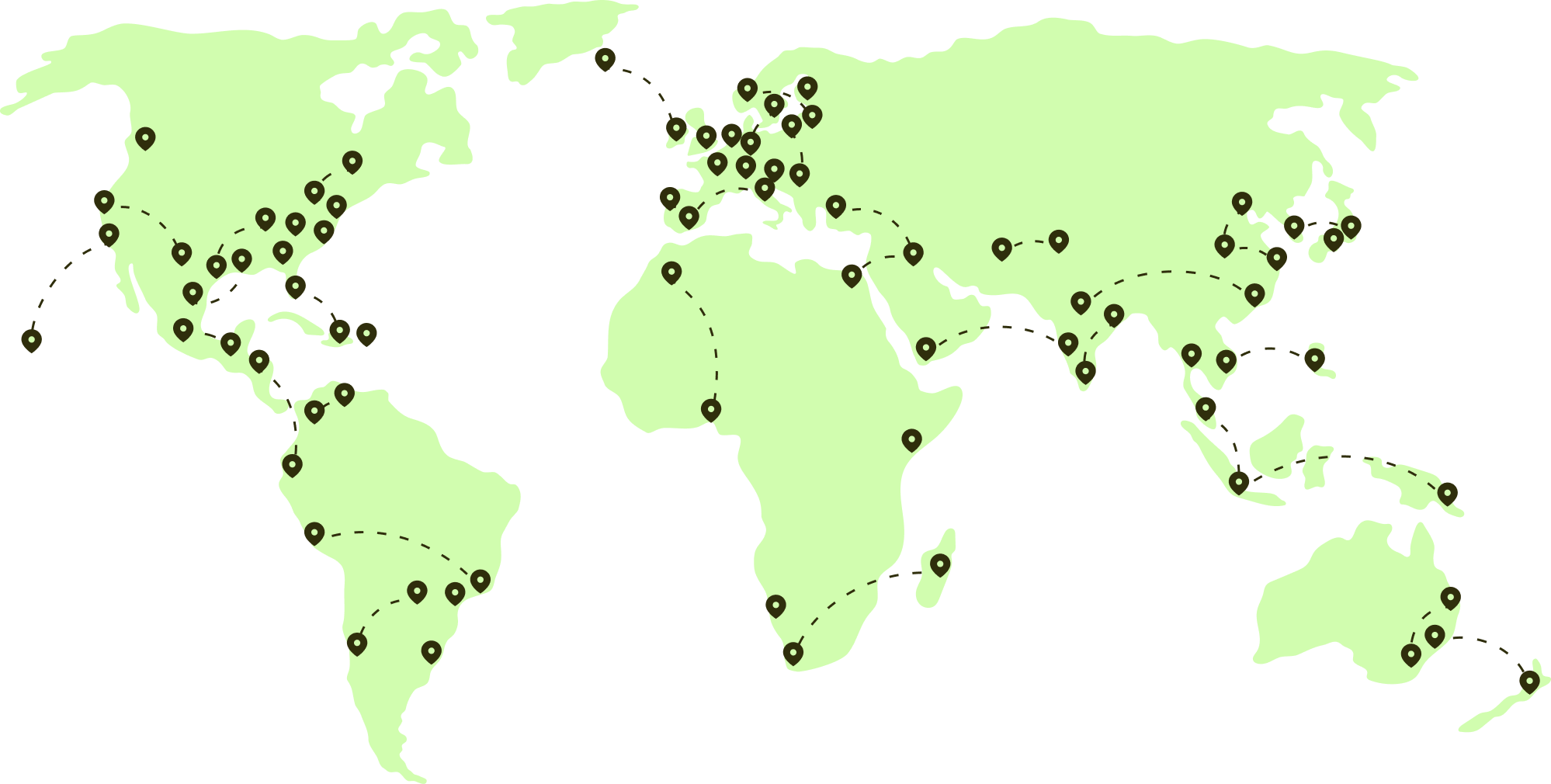
Verdict: Printify has an excellent reputation for its global fulfillment coverage, giving sellers instant access to print facilities across major regions. Meanwhile, Bonfire mainly caters to US merchants selling to a domestic audience.
4. Product selection: Printify vs Bonfire
A POD platform’s catalog size, available categories, and branding options all shape how easily you can grow your business.
Verdict: If you want a huge selection of products and the freedom to test unique items in different niches, Printify gives you more room to grow.
5. Sales channel integrations:
Printify vs Bonfire
Whether you’re selling products on social media channels or an existing marketplace like Etsy, integrations determine how easily you can reach potential customers and manage orders.
Verdict: Printify integrates with major eCommerce platforms, so you can reach more customers across various channels. Bonfire lets you build your own campaign pages and sell on its integrated marketplace, but its existing audience is far smaller than those on Etsy or Amazon.
Check out all the Printify integrations


















Which to choose:
Bonfire vs Printify?
Here’s the quick verdict – if you’re an aspiring entrepreneur wanting to build a steady income, Printify makes more sense. With a huge range of high-quality products and competitive base prices, you can test new niches, adjust your pricing, and grow your business over time.
Bonfire is more suitable for running short-term product releases. This print-on-demand service doubles as a fundraising platform, helping communities raise money quickly through a simple merch store.


No time to switch over?
Leave the migration to us.
Transfer to Printify today and get:

Listings migration
Move your products with ease and start earning more without rebuilding from scratch.
Rebates
Earn money back on qualifying sales during your switch to Printify.
Account manager
Get one-on-one guidance to help you grow your print-on-demand business.














How to start a print-on-demand business with Printify
Here’s how Printify works.
Explore our Product Creator’s customization options. Upload your artwork, generate images with AI, or use our ready-made graphics.
Integrate your Printify account with Etsy, Shopify, Amazon, and other sales channels in a few clicks.
Let Printify handle the printing and shipping, while you focus on promoting your products.
Real merchants, real results
What began as a side hustle is now a full-time business for many Printify merchants. Explore their stories and see what’s possible.




Frequently asked questions about Redbubble vs Printify
Bonfire is good for raising funds or launching a limited-time product drop. However, it doesn’t integrate with major eCommerce platforms, and its base costs are higher than most POD providers.
If you want lower costs and multiple sales channel integrations, go with Printify.
It’s possible to use both platforms at the same time – for example, Bonfire for limited drops and Printify for your Etsy or Shopify store. Many of the same products are available on both, but their base costs and shipping rates may differ.
Bonfire focuses on selling POD products through limited-time campaigns, meaning your listings are available for a set period before the campaign ends.
Printify is built for ongoing sales and long-term growth on major eCommerce platforms, so your products remain available at any time.
To move from Bonfire to Printify, sign up for Printify, connect your store, and manually recreate your listings. Alternatively, contact our team about listings migration and possible rebates during the transition.
Ready to switch to Printify?
More sales, fewer headaches. Grow your print-on-demand business on a platform built to scale.
Learn with Printify



The information provided on this page, including any comparison of services and prices, is based on data that has been obtained from publicly accessible sources associated with the companies mentioned. The data was last updated on February 18, 2026.
While we strive to provide accurate and timely information, we make no representations or warranties of any kind, express or implied, about the completeness, accuracy, reliability, suitability, or availability of the information contained in this article for any purpose. The use of this information and any reliance you place on such information is therefore strictly at your own risk. We understand that the information may change over time and therefore may become outdated or may not accurately represent the current services and prices offered by the companies mentioned.
If you are a representative of one of the companies mentioned in this article and believe any information is inaccurate or outdated, we invite you to contact us at [email protected] to provide updated information. We are committed to promptly updating any information found to be inaccurate.