

You just spent three hours building the perfect flat mockup, uploaded it to Etsy, and watched it get exactly zero organic clicks—again. The fix is to stop treating Pinterest like a photo album and start treating it as a traffic multiplier, because its users search with buying intent and its visual search algorithm rewards vertical lifestyle pins over stale product photos. In this playbook, you'll work with Pinterest's visual search graph, turn one listing into five Fresh Pins, and map your art onto trend-driven Printify blanks—all with $0 in ad spend.
Why flat mockups fail
Here's the problem: flat computer mockups look like ads, and Pinterest's algorithm buries them under native-looking content that matches how users actually browse. Meanwhile, you're either getting no clicks or bleeding cash on Etsy ads that stop the second you stop paying.
Pinterest solves both problems—for free.
The buying-intent advantage
Most social platforms are built for scrolling. Pinterest is built for planning purchases. People land on Pinterest specifically to find things to buy: outfits, home decor, and gift ideas.
That means a click from Pinterest is worth more than a click from anywhere else. You're not interrupting someone's feed—you're answering a search they already made with their wallet open.
The zero-ad-spend math
One well-built pin doesn't expire in 24 hours like a social post. Pinterest surfaces pins in search results for months, sometimes years.
That's the compounding effect: a single listing can generate free clicks long after you post it. Build five pins from one product, and you've planted five seeds that keep growing while you sleep.
What this playbook skips
No basic account setup. No ad tutorials. No fluff.
We're going straight to the three mechanics that actually move the needle—and the exact 48-hour sprint to execute them.
Mechanic 1: Work the visual search graph
Why this matters: Pinterest's AI doesn't read your pin the way you think. It uses computer vision to scan every element inside the image—and flat mockups give it nothing interesting to categorize.
How computer vision reads pins
Pinterest's algorithm analyzes three things inside every image:
- Text overlays — words rendered directly on the pin
- Color palettes — dominant tones and moods
- Shapes and objects — garments, backgrounds, and props
A white-background product shot tells the AI almost nothing. A styled lifestyle photo tells it everything: the vibe, the season, the aesthetic, and the use case.
Rank for aesthetic queries
Stop targeting generic product terms like "black t-shirt." Start targeting how people actually search on Pinterest: "cozy dark academia fashion," "coastal grandmother outfit," and "cottagecore home decor."
These aesthetic queries have less competition and higher buying intent. Match your pin's visuals and text to the aesthetic, and Pinterest slots you into that search feed.
The swap
Replace computer mockups with rich lifestyle imagery and mood boards that mirror native Pinterest trends.
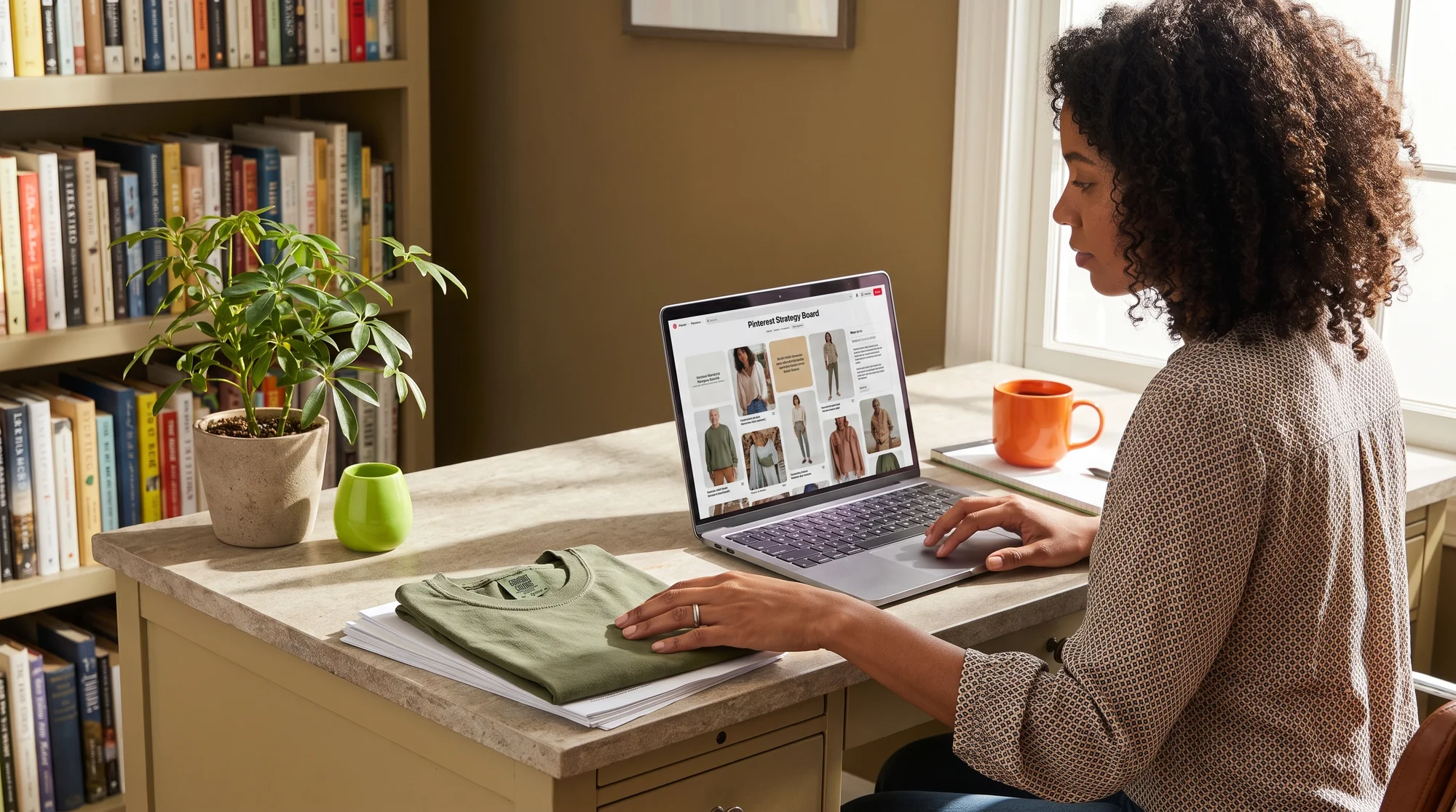
Action step: Use the Printify Mockup Generator to build your base product image, then style it into a lifestyle scene—place the tee on a moody flat-lay, add texture, and match the color palette to a trending aesthetic. You can also use third-party tools like Canva (a separate platform, not owned by Printify) to layer text and build mood boards.
Speed play
When you're working with computer vision, variation beats budget. You don't need a bigger ad account—you need more distinct visual angles feeding the algorithm fresh data. That's exactly what Mechanic 2 delivers.
Mechanic 2: The Pin Freshness metric
Why this matters: Repinning the same image to the same URL flags you as spam. Pinterest throttles repetitive content hard, and most sellers never figure out why their reach dies.
Why repinning flags you
Pinterest tracks which images it has already seen. Post the identical image and link again, and the algorithm reads it as duplicate spam—burying your reach instead of expanding it.
What counts as fresh
A Fresh Pin is any image the system has never seen before, even if it points to the same product link. Different photo, different layout, and different crop—all count as fresh.
This is the loophole that lets one listing feed the algorithm five times.
The 5-asset cloning formula
From a single product, build these five distinct pins:
- Single garment display — the product styled cleanly on a background
- Detailed close-up — fabric texture, print detail, and stitching
- Infographic layout — sizing, materials, or "why you'll love it" text
- Lifestyle shot — the product worn or used in a real scene
- Mood board — your product surrounded by the aesthetic it belongs to
Five fresh assets. One Etsy checkout link. Five chances to rank.
The safe cadence
Don't dump all five pins at once—that pattern looks automated. Stagger them.
Action step: Post one fresh pin per day across five days, or space them a few days apart. This keeps you inside Pinterest's safe zone and signals steady, authentic activity.
Mechanic 3: Bridge to trend-driven blanks
Why this matters: You can build perfect pins, but if your product is a blank nobody's searching for, you're optimizing a dead end. Research first, design second.
Research first with Pinterest Trends
Before you open the Product Creator, open Pinterest's own Trends tool (a Pinterest feature, not a Printify product). It shows you exactly which aesthetics and keywords are spiking this week.
Pull one rising trend. That trend becomes the brief for your entire pin cluster.
Map art to viral blanks
Some Printify Catalog blanks naturally dominate pinboards because they photograph beautifully and match popular aesthetics. Prioritize these:
- Comfort Colors 1717 Garment-Dyed Tee — the go-to for vintage, coastal, and cottagecore aesthetics
- Gildan 18500 Hoodie — a cozy staple for streetwear and comfort-core pins
- Premium Woven Throw Blankets — home-decor gold that thrives in mood-board searches
Each of these connects to Printify's promises of quality and selection, so your winning pin funnels to a product you can actually deliver at profit.
Front-loaded descriptions
Pinterest reads your description text to rank you in search. Put your most important long-tail phrase first.
Action step: Instead of "Cute shirt for fall," write "Dark academia oversized garment-dyed tee for cozy autumn outfits." Front-load the search phrase, then add supporting keywords. This keeps your pins populating in search for months.
The full funnel
Here's the whole system in one line:
Aesthetic search → Fresh Pin → Etsy checkout page.
A user searches "cozy dark academia fashion," finds your styled Comfort Colors pin, clicks, and lands on your Etsy listing ready to buy. No ads. No interruption. Just intent meeting product.
Your 48-hour execution sprint
Speed is your edge. Trends saturate fast, so move before the crowd catches on.
Step-by-step workflow
- Pick a trend — Open Pinterest Trends, and pull one aesthetic spiking this week.
- Map to a blank — Choose the Comfort Colors 1717, Gildan 18500, or Woven Throw Blanket that fits the aesthetic.
- Build the base — Design your art and generate a clean mockup in the Product Creator.
- Create 5 Fresh Pins — Single display, close-up, infographic, lifestyle, and mood board.
- Schedule — Stagger one fresh pin per day, each front-loaded with your long-tail keyword.
- Track clicks — Watch which pin drives the most traffic to your Etsy link, then double down on that style.
Common throttle traps to avoid
- Posting duplicate images to the same URL (instant spam flag)
- Dumping all pins at once (looks automated)
- Generic product keywords instead of aesthetic search phrases
- Skipping the trend research and guessing what's popular
The POD-specific playbook
Why this matters: Search "does anyone use Pinterest to drive Etsy sales?" and you'll find a hundred generic guides—none of them written for Print on Demand sellers.
Why generic guides fail
Standard Pinterest advice assumes you're selling physical inventory or driving traffic to a blog. It never accounts for the two things that make Print on Demand different: you have unlimited product variations, and your margins depend on picking blanks people already want.
That's why generic advice tells you to "post consistently" without ever explaining the Fresh Pin loophole or which blanks dominate pinboards.
The forum question, answered
"Does anyone use Pinterest to drive Etsy sales?"
Yes—and here's the system: research a trend, map it to a proven Printify blank, build five Fresh Pins from that one listing, front-load your descriptions with long-tail aesthetic keywords, and stagger your posting. That's the mechanic. Everything else is noise.
Launch your sprint today
Open Pinterest Trends right now, pull one aesthetic trend that's spiking this week, and map it onto a Comfort Colors 1717, Gildan 18500, or Woven Throw Blanket in Printify. Then build your first five Fresh Pins from that single listing before the trend saturates.
Speed is your edge—launch the sprint today, not next week. More traffic, more sales, and more freedom. Kiss the ad spend goodbye.