

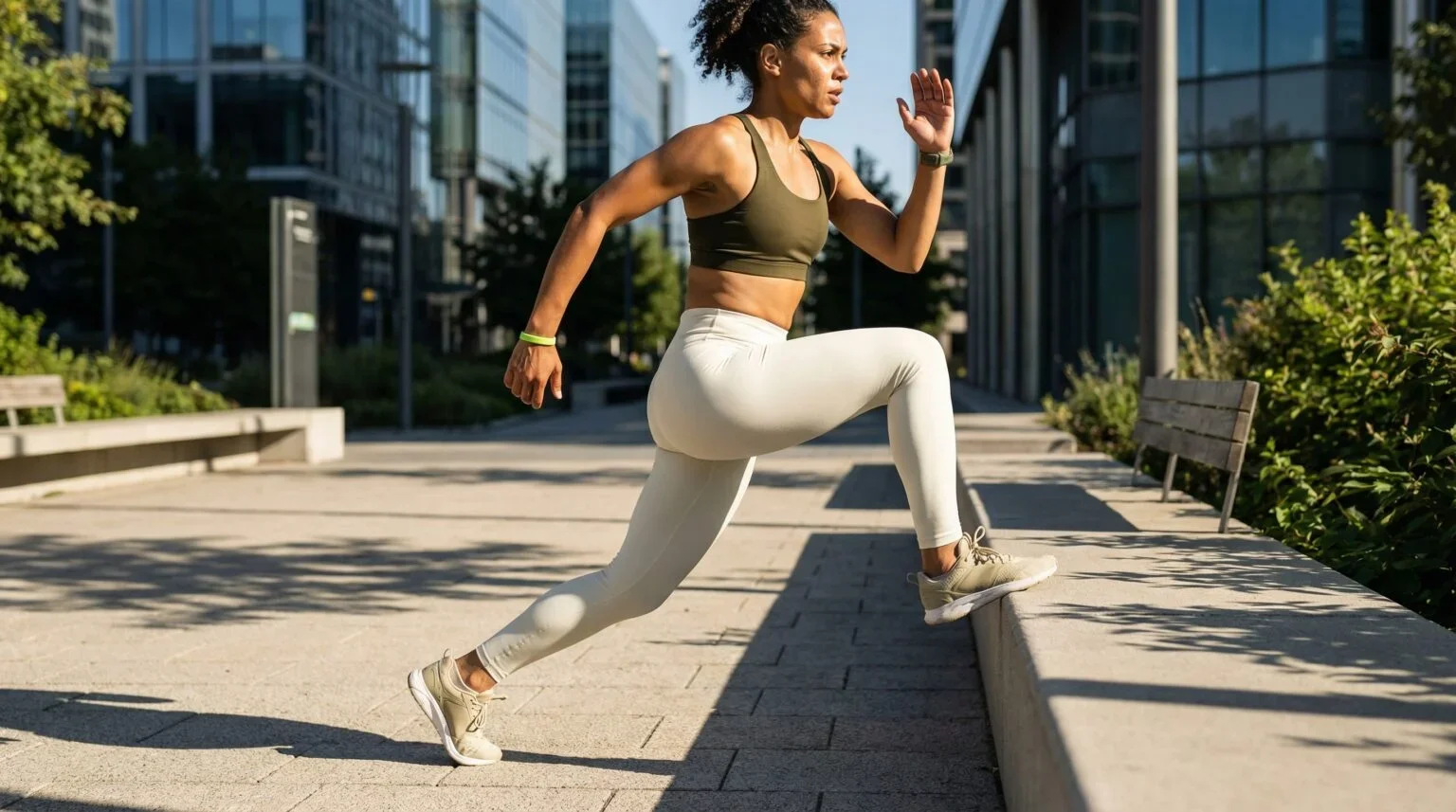

Stop letting fabric confusion hold your activewear brand back. To build a reputation for quality and performance, you must understand the nuances of stretch polyester. This guide walks you through 2-way, 4-way, and mechanical stretch, advanced printing techniques, and how to communicate these benefits to your customers to gain a competitive edge.
Why fabric science matters
Fabric quality as foundation
Choosing the right fabric for your activewear line is about building a trustworthy brand. Poor fabric choices lead to garments that restrict movement, chafe, or lose shape, eroding customer trust. Prioritizing fabric quality lays a strong foundation for a brand known for durability and peak performance.
Your brand’s reputation relies on the promise of quality. When activewear fails during a workout, it disappoints the customer and damages your brand. Investing in fabric science ensures every product stands up to intense activity, helping you cultivate loyal customers who value your commitment to excellence. This strategic investment in material knowledge translates into higher perceived value.
Defining stretch polyester
“Stretch polyester” is the foundation of high-performance activewear, offering flexibility, durability, and moisture-wicking properties. This synthetic fabric retains shape, resists shrinking, and endures rigorous activity. Polyester’s inherent properties make it ideal for activewear that needs to perform under pressure.
The “stretch” component is where the innovation lies. This elasticity, achieved by blending polyester with fibers like spandex (elastane) or through mechanical engineering, allows garments to move with the body. Understanding these different types of stretch is crucial for designing activewear that meets the demands of your customers and distinguishes your brand.
2-way vs 4-way stretch
Understanding 2-way stretch properties
Sometimes, full freedom isn’t needed, and 2-way stretch offers a targeted solution. This fabric stretches in one direction only, typically crosswise, and has minimal stretch lengthwise. While it offers less flexibility than 4-way stretch, its controlled elasticity suits specific garment needs.
Properties and applications:
- Controlled movement: Ideal for garments where directional stability is preferred, such as the body of jackets or specific panels in pants.
- Cost-effective: Generally more affordable to produce than 4-way stretch, allowing for better profit margins.
- Specific uses: Gym shorts where the waistband stretches but the body holds its form, or outerwear where some flexibility is welcome but excessive stretch isn’t desired.
Choosing 2-way stretch strategically helps you manage costs while delivering a quality product.
The superiority of 4-way stretch
For true athletic performance, 4-way stretch is a game-changer. This fabric stretches both crosswise and lengthwise, providing dynamic flexibility that moves seamlessly with the body. This superior elasticity is vital for activities requiring a full range of motion, from yoga to weightlifting.
Why 4-way stretch excels:
- Unrestricted movement: Athletes perform complex movements without feeling constrained.
- Enhanced comfort and fit: The fabric hugs the body without feeling tight, reducing chafing.
- Versatility: Perfect for leggings, compression tops, sports bras, and any garment designed for dynamic activity.
Offering 4-way stretch allows your brand to deliver maximum comfort and performance, distinguishing your apparel as high-end.
How to choose gym fabrics
Choosing between 2-way and 4-way stretch requires strategic alignment with your product’s purpose. Making the right choice ensures optimal performance, comfort, and profitability. Mismatched fabric can lead to customer dissatisfaction and returns.
How to select the right stretch:
- For compression wear: Always opt for 4-way stretch. This allows the garment to apply even pressure across muscles while adapting to movements.
- For relaxed fit apparel: 2-way stretch is ideal for items like loose-fitting shorts or warm-up pants where some give is needed, providing cost savings.
- For outerwear: Jackets might benefit from 2-way stretch in less mobile areas, paired with 4-way stretch in high-movement zones.
By matching fabric stretch to garment function, you optimize performance and cost.
Impact on performance and recovery
The right stretch polyester influences an athlete’s experience, from performance to garment lifespan. Subpar fabric hinders movement and wears out quickly. By understanding the impact, you can design products that truly empower your customers.
Enhancing the athlete’s journey:
- Performance: Proper stretch allows for full range of motion, preventing fabric from fighting against the body.
- Recovery: Compression garments made with 4-way stretch aid muscle recovery by improving blood circulation and reducing vibration.
- Garment longevity: Fabrics with excellent recovery maintain their fit and integrity over time, even with repeated washing.
When you prioritize fabrics that support performance, you sell an investment in your customers’ athletic journey.
Mechanical stretch and performance
What is mechanical stretch?
Not all stretch comes from spandex. Mechanical stretch is an innovative property woven into fabric through specific manufacturing techniques, allowing it to stretch without elastane. This means you can offer impressive flexibility with a different set of benefits.
The science of flexibility:
- Engineered fibers: Polyester yarns are texturized or crimped during manufacturing, creating microscopic coils that expand and contract.
- Weave structure: Specialized weaving patterns introduce slack into the fabric, allowing for give.
- Spandex-free elasticity: This method provides stretch through physical structure rather than chemical composition.
Understanding mechanical stretch allows you to consider alternative fabric constructions.
Key benefits for activewear
Mechanical stretch offers unique advantages that elevate your activewear line. The absence of elastane leads to a fabric with distinct benefits.
Advantages for your brand:
- Enhanced breathability: Without the dense structure of spandex, mechanical stretch fabrics often have superior airflow.
- Luxurious softness: Many mechanically stretched polyesters offer a premium next-to-skin comfort.
- Exceptional durability: Polyester’s inherent strength results in fabrics resistant to pilling and snagging.
- Hypoallergenic properties: For customers with sensitivities to elastane, mechanical stretch offers a fantastic alternative.
Use these benefits to differentiate your products and offer superior comfort.
Combining mechanical stretch with blends
Mechanical stretch is powerful on its own, but its potential shines when integrated into strategic blends. This approach allows you to achieve unique performance profiles.
Crafting hybrid solutions:
- Targeted elasticity: Use mechanical stretch for core fabric structure, then add a small percentage of spandex in specific zones like waistbands.
- Moisture management: Blend mechanically stretched polyester with fibers known for wicking properties to create breathable activewear.
- Texture and feel: Experiment with blends that introduce natural fibers for a softer touch while maintaining durability.
By blending materials, you fine-tune your activewear’s performance to meet niche demands.
Cost-benefit analysis of stretch
Evaluating mechanical stretch involves smart business decisions. It is essential to understand where it fits into your budget and product strategy.
Smart product placement:
- Premium basics: For athleisure, mechanical stretch offers a premium feel without the higher cost of high-spandex blends.
- Specialized gear: For garments where breathability is paramount, mechanical stretch justifies a higher price point.
- Long-term value: Enhanced durability reduces returns and improves customer satisfaction.
Analyze your target categories to integrate mechanical stretch where it offers the best return on investment.
Advanced printing techniques
Ensuring durability on high-stretch materials
Printing on stretchy polyester activewear presents unique challenges. Graphics can crack or distort when the fabric stretches. Your brand’s visual identity must endure the same rigor as the apparel.
Strategic solutions for print longevity:
- Pre-stretch preparation: Gently pre-stretching the fabric before application helps the design conform to movement.
- Flexible print mediums: Use inks and transfer materials specifically formulated to stretch without cracking.
- Expert Print Providers: Partner with Print Providers who specialize in activewear printing and understand high-stretch materials.
Proactively addressing these challenges ensures your designs remain vibrant.
Exploring stretch-resistant inks and transfers
Sublimation is excellent for polyester, but it is not the only option. Relying solely on basic printing methods leads to print degradation. Expanding your knowledge unlocks superior results.
Expanding your printing arsenal:
- Screen printing with elastomeric inks: These inks contain elasticizers that allow them to stretch without cracking.
- Heat transfers with stretch additives: Modern heat transfer vinyls (HTV) are engineered with built-in stretch properties.
- Direct to Film (DTF): DTF technology produces vibrant prints with excellent stretch and wash durability.
Investigate these alternatives with your Print Providers to ensure your visuals are resilient.
Tackling dye migration for graphics
Dye migration occurs when garment dyes “migrate” into your print, discoloring the design. This undermines perceived quality and wastes inventory.
Preventing print sabotage:
- Low-bleed inks/transfers: Use inks designed with “blockers” that create a barrier between the fabric dye and your print.
- Lower cure temperatures: Work with Print Providers who achieve proper curing at lower temperatures to prevent dye migration.
- Test swatches thoroughly: Always test your chosen print method on actual fabric swatches.
Proactively addressing dye migration ensures your graphics remain crisp.
Strategic logo placement for visuals
Poor logo placement on stretch activewear leads to distorted branding. Your brand’s emblem should enhance the garment’s performance.
Smart placement for impactful branding:
- Identify low-stretch zones: Analyze designs to find areas with minimal stretching, such as the upper chest or back yoke.
- Consider fabric tension: Logos placed across seams or areas of high tension distort easily.
- Scale and orientation: Adjust logo size to complement the garment’s natural lines.
- Test with movement: Physically test samples by stretching and moving in them.
Thoughtful logo placement ensures your brand remains consistently sharp.
Testing protocols for print longevity
Without rigorous testing, you risk releasing activewear where prints fail. Your customers expect their apparel to endure.
Implementing robust testing:
- Stretch and recovery tests: Manually stretch printed areas to observe if the print cracks or distorts.
- Wash cycle endurance: Conduct 20-50 wash and dry cycles to simulate real-world use.
- Wear tests: Have prototypes worn by athletes to observe print performance under actual movement.
- Adherence to industry standards: Familiarize yourself with relevant textile testing standards.
- Print Provider collaboration: Ensure your Print Providers have quality control protocols in place.
Rigorous testing safeguards your brand’s quality promise.
Articulating technical benefits to customers
Translating science into sales
Many brands list features but fail to explain why they matter. Your customers want to know how the fabric benefits them.
Creating irresistible narratives:
- Focus on the “why”: Explain how 4-way stretch allows unrestricted movement.
- Highlight emotional connections: Connect fabric benefits to desires for peak performance or confidence.
- Use vivid language: Paint a picture of the improved workout experience.
- Before and after scenarios: Describe the common problem and how your fabric provides the solution.
By turning technical specs into stories, you sell an enhanced experience.
Building trust through material transparency
Customers demand to know what they are buying. Transparency leads to trust and differentiates your brand.
Fostering an informed community:
- Dedicated product descriptions: Provide clear explanations of why you chose specific fabrics.
- Blog content and guides: Create educational content that dives deeper into fabric science.
- Visual demonstrations: Use videos to visually illustrate the stretch or durability.
- Be honest about trade-offs: Openly explain any trade-offs to build trust.
Educating your audience transforms them into informed advocates.
Justifying premium pricing with knowledge
If your activewear is priced higher, you must articulate why. Without a narrative around quality, premium pricing feels arbitrary.
Strategically validating your value:
- Connect quality to cost: Link advanced fabric technologies to enhanced performance.
- Quantify benefits: Mention how the fabric helps with moisture-wicking or durability.
- Highlight your investment: Explain that using superior materials involves greater cost but results in a better product.
- Emphasize value over price: Detail how your products offer long-term value.
Demonstrating your understanding of fabric science justifies your premium pricing.
Future-proofing with fabric innovation
The activewear market evolves constantly. Sticking to outdated materials risks falling behind.
Embracing the cutting edge:
- Monitor industry trends: Research textile expos and industry publications.
- Experiment with new blends: Test small batches of activewear using novel materials.
- Partner with innovative Print Providers: Choose providers invested in the latest technologies.
- Listen to customer feedback: Pay attention to feedback on comfort and performance.
Actively pursuing fabric innovation ensures your brand remains relevant.
Conclusion
Ready to elevate your gym brand? Apply these insights to source superior stretch fabrics, optimize your designs, and articulate performance to your customers. Start building your legacy of quality and innovation today.
Frequently asked questions
How do different blends impact stretch and recovery?
The ratio of polyester to spandex is critical. Higher spandex content (e.g., 15-25%) typically results in greater 4-way stretch and superior compression, ideal for high-impact activities. Lower spandex content (e.g., 5-10%) provides moderate stretch, suitable for relaxed-fit tops. Higher spandex also means excellent recovery. Test different ratios to find the balance of stretch and recovery for each product.
What are the latest innovations in sustainable stretch polyester?
Innovations in sustainable stretch polyester include:
- Recycled Polyester (rPET): Made from post-consumer plastic bottles.
- Bio-based Polyester: Derived from plant-based materials.
- Dye-free or Low-Impact Dyeing: Processes that reduce water and chemical usage.
- Mechanically Recycled Elastane Alternatives: Emerging fibers that are easier to recycle.
Investigate suppliers offering certified recycled options through your Print Providers.
What other fabric properties should I prioritize?
Prioritize these properties based on the activity:
- Moisture-Wicking and Quick-Drying: Keeps customers dry.
- Breathability: Allows air circulation.
- Compression: Provides muscle support.
- Anti-Odor: Prevents odor-causing bacteria.
- UV Protection: Protects skin from sun rays.
- Softness: Enhances comfort.
What advanced testing methods can I use?
To ensure activewear quality, use these methods:
- Tensile Strength and Tear Resistance: Measures force withstand.
- Stretch and Recovery: Quantifies stretch capability.
- Pilling Resistance: Evaluates surface wear.
- Colorfastness: Determines resistance to fading.
- Print Adhesion: Tests print durability.
- Moisture Management Testing: Measures wicking ability.
Partner with independent labs or ensure your Print Providers provide reports for these methods.