


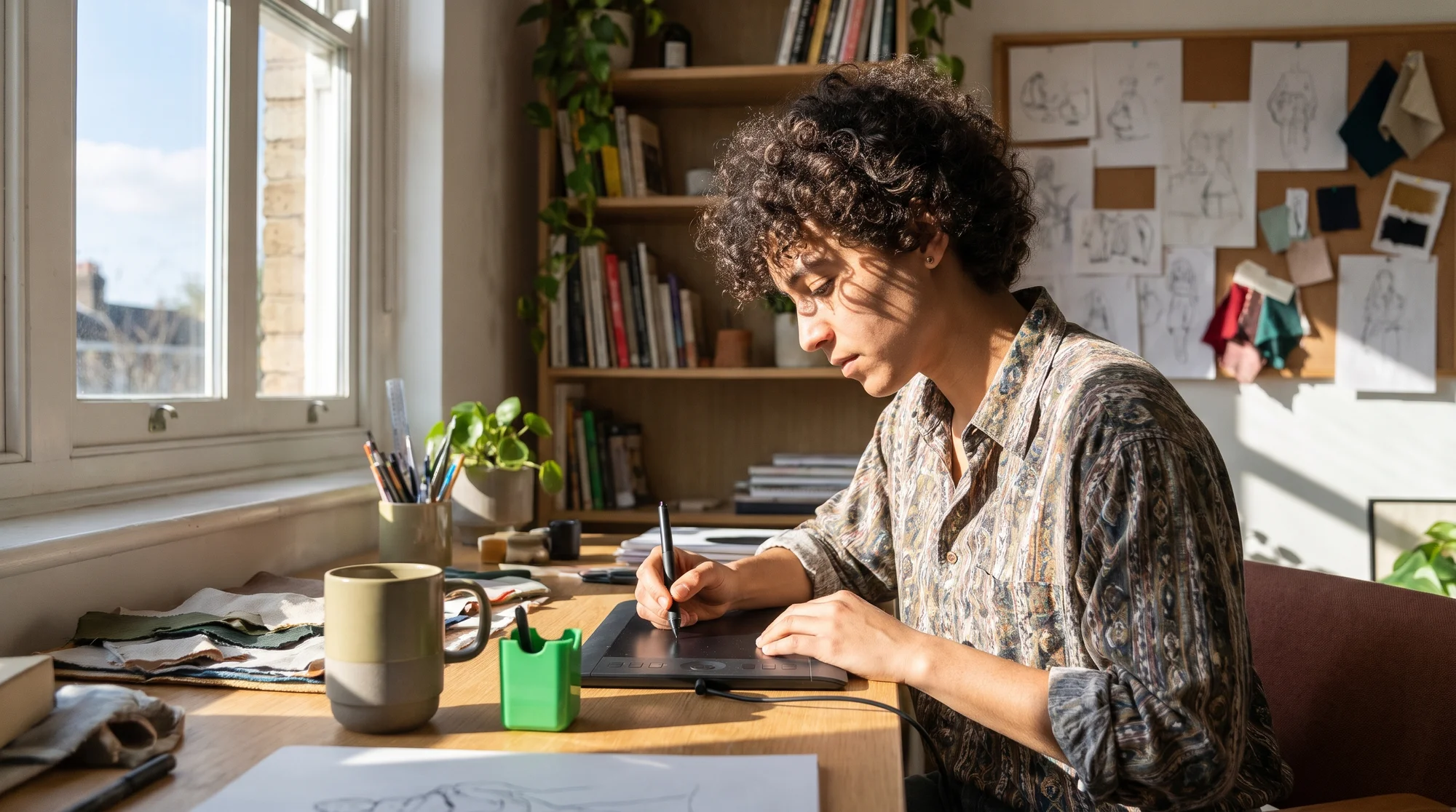
You've burned hours chasing trends that fizzle and licensed art you can't legally sell — the problem isn't your creativity, it's that you keep building on ground someone else owns. The fix is simple: design one original character you fully own, then turn it into a repeatable, recognizable product line nobody can rip out from under you. Below, you'll find nine character styles, the buyers each one attracts, and the exact products they sell best on — plus how print on demand lets you go from sketch to stocked catalog without inventory or upfront cost.
Your character becomes an asset that pays you again and again. One idea, spun across apparel, accessories, and home goods, builds a brand buyers recognize on sight.
Why your own character beats any trend you chase
The trap of trends and licensing
Chasing trends feels productive until the trend dies and your designs die with it. Licensed art looks like a shortcut, but it comes with legal walls, royalty cuts, and slow approvals that shrink your margins before you sell a single item.
Here's the hidden cost: every hour you pour into art you don't own is an hour building someone else's equity. When the license expires or the trend fades, you start from zero again.
The one asset nobody can take
A character you fully own is the one thing no platform, licensor, or competitor can pull out from under you. You control the look, the story, the products, and the profit — forever.
That ownership is the whole game. It's the difference between renting attention and building a brand.
One idea, a full margin-rich line
Original character design for merchandise turns a single idea into a repeatable engine. Draw one mascot, and you can spin it across dozens of products while keeping every design instantly recognizable as yours.
- Repeatable: Reuse the same character in new poses and colors.
- Recognizable: Buyers connect every item back to your brand.
- Margin-rich: No licensing fees eating your profit.
Why Print on Demand removes the wall
The old way of launching merch meant ordering inventory, guessing demand, and eating the cost of anything that didn't sell. That upfront risk stops most creatives before they start.
Print on Demand flips it. Your products get printed only after a customer orders, so you move from sketch to stocked catalog with zero inventory and no upfront cost. You design, we handle production and shipping — you keep the ownership and the profit.
How to read this roundup
Each style below is a product-line play, not just a look. Use this lens as you read:
- Originality lens: Design a character people instantly recognize as yours — not a copy of something they've seen before.
- The vibe: The feeling your character gives off.
- The buyer: Who reaches for their wallet.
- Best products: The exact apparel, accessories, and home goods each style sells best on.
The 9 original character styles
1. The chibi mascot
Vibe: Bold, cute, built from simple shapes with oversized heads and tiny bodies.
Buyer: Gift-shoppers, younger audiences, and anyone who loves collectibles.
Best on: Stickers, enamel-style pins, youth tees, and mugs.
Chibi characters are easy to redraw in endless expressions, which makes them perfect for a sticker pack or a pin series that keeps buyers coming back for the whole set.
2. The retro cartoon
Vibe: Rubber-hose limbs, a vintage 1930s feel, black-and-white or sepia tones.
Buyer: Design-savvy shoppers who love nostalgia and vintage aesthetics.
Best on: Graphic tees, tote bags, and wall art prints.
The retro style reads as "premium and intentional," so it carries beautifully onto framed prints and statement apparel.
3. The streetwear icon
Vibe: Edgy, minimal line art with attitude and clean negative space.
Buyer: Trend-aware shoppers who pay for brands that feel exclusive.
Best on: Hoodies, snapback hats, and phone cases.
Minimal line art prints crisp on dark fabric, making your icon feel like a drop worth owning.
4. The kawaii food friend
Vibe: Anthropomorphized snacks and drinks with happy little faces.
Buyer: Foodies, students, and anyone who loves wholesome, cheerful art.
Best on: Stickers, kitchen aprons, throw pillows, and water bottles.
A smiling boba cup or dancing dumpling practically begs to live in kitchens and on laptops — natural homes for home goods and accessories.
5. The moody anime protagonist
Vibe: Detailed, expressive, with serialized storytelling potential.
Buyer: Anime fans who want original characters, not fan art.
Best on: Oversized tees, posters, and laptop sleeves.
Give your protagonist a backstory and you create a reason for fans to collect every new release — turning one character into an ongoing line.
6. The pixel / 8-bit hero
Vibe: Nostalgic, blocky, straight out of a classic game cartridge.
Buyer: Gamers and retro-tech lovers chasing that childhood feeling.
Best on: Tees, mousepads, stickers, and blankets.
Pixel art scales cleanly and feels right at home on a gamer's desk, making mousepads and blankets easy upsells.
7. The quirky animal pun character
Vibe: A cat, frog, or capybara with a personality and a pun to match.
Buyer: Humor-lovers and gift-givers hunting for something that makes people laugh.
Best on: Mugs, greeting-style prints, socks, and tote bags.
Pun characters sell because they do the talking for the buyer — perfect for giftable mugs and socks.
8. The spooky cute creature
Vibe: Pastel goth little monsters — creepy, but adorable.
Buyer: Alt-aesthetic fans and anyone who loves a soft, dark vibe year-round.
Best on: Hoodies, candle-style home goods, stickers, and wall art.
This style thrives on contrast, letting you fill a catalog with both cozy hoodies and eerie wall prints under one brand.
9. The motivational mascot
Vibe: A friendly face tied to a catchphrase or daily affirmation.
Buyer: Students, hustlers, and self-improvement shoppers who want a boost.
Best on: Journals, posters, tees, mugs, and mouse pads.
Pair your mascot with rotating slogans and you'll never run out of new products to list.
Turn one character into a catalog
Build a core, then spin variations
One character can fill an entire catalog once you treat it like a system. Draw your "core" version first, then spin out variations — new poses, color swaps, seasonal outfits, and different expressions — to cover more products without starting from scratch.
Action steps:
- Finalize your core character design.
- Create 3–5 variations (a wave, a wink, a holiday look).
- Match each variation to the products it fits best.
Keep one recognizable style
Consistency is what turns scattered designs into a brand. Keep the same line weight, color palette, and personality across every item so buyers instantly connect your mug to your hoodie to your sticker pack.
When your style stays consistent, each new product markets every other product for you.
Bridge to action
Once your character and its variations are ready, load them into the Product Creator and preview them on real mockups in minutes. Spread one character across apparel, accessories, and home goods to build a full catalog from a single idea — create your free account and start placing your character on products today.
Your first move
Don't try to launch all nine styles at once — momentum beats perfection. Pick one style above, sketch or commission your character, and list it on three products to get your first line live this week.
- Choose one style that fits your creative voice and target buyer.
- Create your character — draw it yourself, commission an artist (with a written agreement that assigns the copyright to you), or use the AI Image Generator as a starting point that you then substantially rework by hand, since purely AI-generated images generally can’t be copyrighted.
- List it on three products — one apparel item, one accessory, one home good.
Own the character, own the catalog, own the profit. The one asset nobody can take from you is the one you create yourself. That protection only holds if you actually own the copyright, so draw it yourself or get it assigned to you in writing.
