


You keep losing afternoons to GSM charts and collar-ribbing forums, and you still haven't picked a single blank to build your brand on. The fix is simpler than the research spiral suggests: lock in four proven heavyweight SKUs that let you charge $42–$95 at retail while keeping 65–75%+ net margins. Below, you'll get the exact specs, the exact products, the right print methods, and a weekend launch checklist.
Here's the truth most new founders miss: a thin 4.2 oz promo tee will cap your brand at $20 forever, no matter how good your graphics are. Streetwear buyers pay for structure, weight, and feel — and a print on demand model lets you deliver all three with zero inventory risk. You source premium blanks, print each item only after a customer buys, and never pay up front.
That means you can test a full streetwear lineup this weekend, keep your profit margins fat, and never sink cash into a garage full of unsold shirts. Let's build it.
Why thin commodity tees cap your brand
The $20 ceiling problem
A 4.2 oz (145 GSM) promo tee feels exactly like what it is: a giveaway shirt. The second a customer holds it, their brain prices it at $15–$20, and no logo or hang tag changes that first-touch judgment.
Thin blanks also crush your margins from both sides. You can't charge a premium, and the flimsy fabric warps after a few washes — driving refunds and killing repeat orders. You end up competing on price in a race to the bottom.
What streetwear buyers pay for
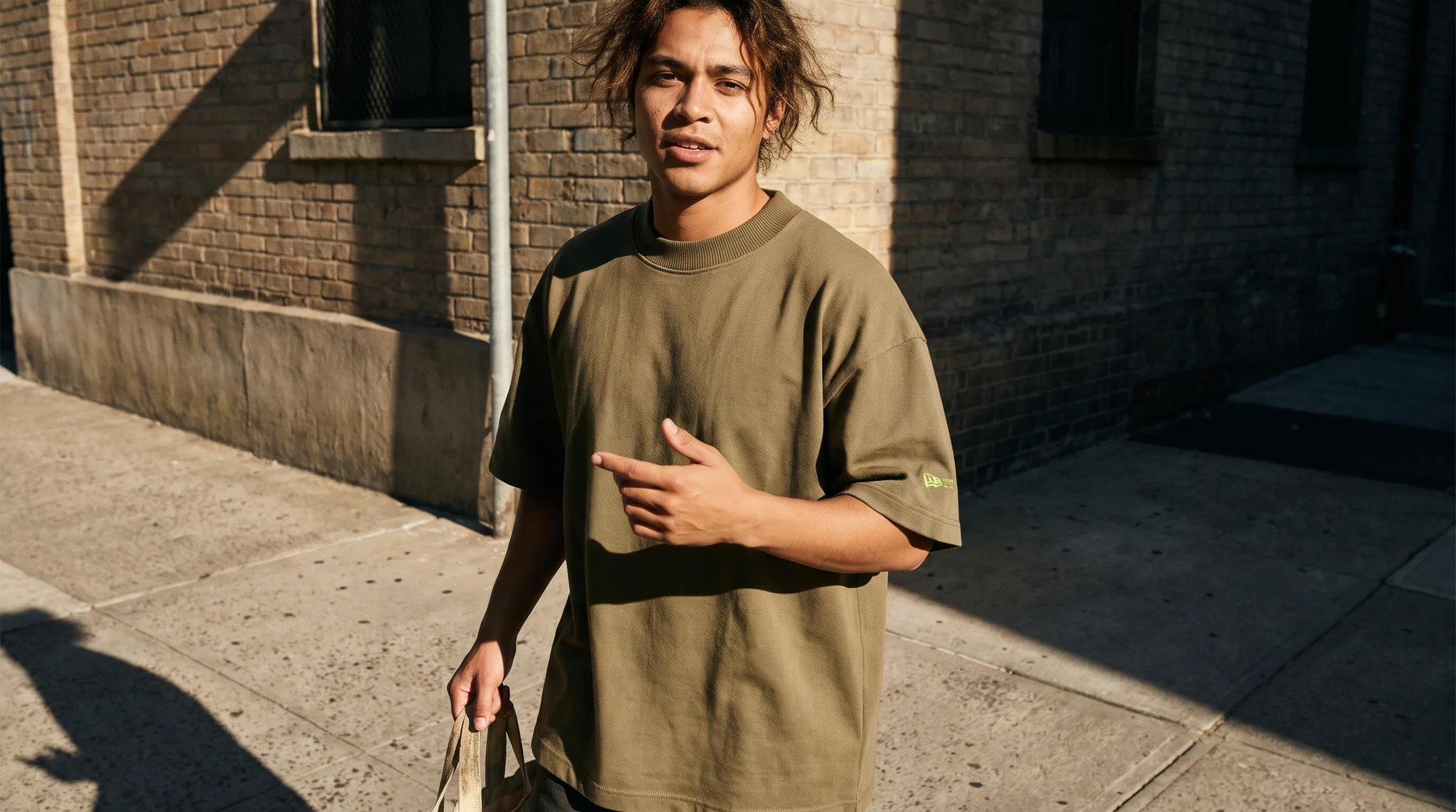
Streetwear shoppers aren't buying a graphic. They're buying weight in the hand, a collar that holds its shape, and a boxy silhouette that drapes the way their favorite brands do.
When a buyer feels a dense 7 oz fabric and a thick ribbed collar, their perceived value jumps instantly. That tactile signal is what justifies a $48 price tag over a $20 one — and it's the single biggest lever you control.
The margin math
Here's why heavyweight blanks change the game financially:
- A heavyweight blank with printing might cost you $14–$22 depending on the SKU and provider.
- Streetwear buyers accept $42–$95 retail for structured, premium-feeling pieces.
- That spread lands you at 65–75%+ net margins — the same math that keeps independent streetwear brands alive.
Thin tees force you to sell at $20 with a $9 cost, leaving thin profit and no room for ads. Heavyweight blanks give you breathing room to grow.
The 3 pillars of blank architecture
Skip the research rabbit hole. Every quality streetwear blank comes down to three specs. Nail these and you'll never second-guess a product page again.
Pillar 1 — Fabric weight
Weight is the first thing a buyer feels, so it's the first thing you lock in.
- Standard retail tee: 4.2 oz / 145 GSM — avoid this for streetwear.
- Vintage relaxed tee: starts at 6.1 oz / 207 GSM.
- Structured boxy tee: scales to 7.5 oz / 255 GSM.
- Hoodies: 10 oz / 340 GSM to 13.5 oz / 450 GSM, so the hood stands upright instead of collapsing flat.
Pillar 2 — Collar ribbing and construction
The collar is where cheap blanks betray themselves. A thin collar waves and warps after one wash — the dreaded "bacon-neck" that screams low quality.
Look for:
- High-density 1x1 or 2x2 rib-knit collars reinforced with Lycra or spandex.
- A collar width of 0.85in to 1.2in.
- Double-needle topstitching that frames the neckline and holds its shape wash after wash.
Pillar 3 — Silhouette and cut
Fit is what separates a "shirt with a logo" from a brand. Tubular bodies (no side seams) twist on the body and read as basic.
Prioritize:
- Side-seamed construction instead of cheap tubular bodies.
- Slightly dropped shoulders for that relaxed streetwear drape.
- A wider chest-to-length ratio for a true boxy fit.
- Longer, wider sleeves that hit near the elbow.
The exact 4 SKUs to lock in today
Stop comparing dozens of tabs. These four blanks cover vintage, structured, boxy, and fleece — the full streetwear range.
Comfort Colors 1717 — garment-dyed vintage tee
The 1717 is the go-to for that lived-in, washed vintage look. It's garment-dyed after assembly, so each piece has an authentic faded tone and near-zero post-wash shrinkage. Perfect for distressed retro graphics and oversized back prints.
Shaka Wear SHMHSS — structured boxy tee
When you want weight buyers can feel through the shipping bag, the Shaka Max Heavyweight delivers at 7.5 oz / 255 GSM. Its dense, structured body holds a boxy shape and frames big chest or back graphics cleanly.
Lane Seven LS14001 — premium boxy tee
The LS14001 nails the modern boxy silhouette with dropped shoulders and a clean, smooth print surface. It's the balanced pick for brands that want structure without maxing out on weight.
Independent Trading Co. IND4000 — heavyweight fleece hoodie
Your hoodie is your highest-ticket item, and the IND4000 is built for it. The heavyweight fleece gives the hood body to stand upright, and the dense face takes prints vibrantly — justifying $65–$95 retail with ease.
Quick-reference spec table
| SKU | Weight | Collar | Fit | Retail target |
|---|---|---|---|---|
| Comfort Colors 1717 | 6.1 oz / 207 GSM | Ribbed, double-needle | Relaxed vintage | $42–$55 |
| Shaka Wear SHMHSS | 7.5 oz / 255 GSM | High-density rib | Structured boxy | $48–$62 |
| Lane Seven LS14001 | 6.5 oz / 220 GSM | Ribbed, topstitched | Boxy, drop shoulder | $46–$60 |
| Independent Trading Co. IND4000 | 10 oz / 340 GSM | Ribbed cuffs and hood | Heavyweight fleece | $65–$95 |
Always confirm current specs on the live Printify Catalog listing, since Print Providers occasionally update materials.
Match your blank to your print method
A premium blank with the wrong print pairing wastes your margin. Match the fabric to the decoration so your graphics pop.
Ring-spun cotton for clean DTG
Why it matters: fuzzy cotton makes fine typography look blurry. The tighter yarn twist in high-stitch-density ring-spun cotton creates a smoother surface, so a DTG white underbase and CMYK inks sit cleanly on top without fibers poking through your lettering.
Action: for crisp text and detailed art, choose ring-spun or combed cotton blanks and run DTG with a solid underbase on darker colors.
Garment-dyed vs piece-dyed
Garment-dyed blanks like the Comfort Colors 1717 are pigment-washed after assembly. The result: an authentic, lived-in fade and near-zero post-wash shrinkage — ideal for distressed retro graphics, puff-style halftones, and oversized back prints.
Action: pick garment-dyed when you want a vintage aesthetic and reliable sizing after washing.
Cotton-face fleece for hoodies
Interior polyester is fine and even helps with structure. What matters is the exterior. Choose fleece with a 100% cotton outer face so DTG inks bond vibrantly without dye migration bleeding through your print.
Action: filter for hoodies with a cotton face even if the inner loop blends in polyester for rigidity.
Best blanks for puff and distressed prints
- Puff prints: structured 7.5 oz tees like the Shaka Max hold raised ink without sagging.
- Oversized back prints: boxy tees and the IND4000 hoodie give you a large, flat canvas.
- Distressed retro graphics: garment-dyed 1717 for that authentic faded base.
Fast US fulfillment by the weekend
Speed is a promise, not a bonus. Domestic fulfillment gets orders to US customers fast and keeps your reviews high.
Top domestic print facilities
Several highly rated US Print Providers specialize in premium blanks and fast turnaround:
- Monster Digital
- SwiftPOD
- Stoked On Printing
Each handles DTG on heavyweight cotton, so you can keep production domestic and shipping quick.
Filter the Printify Catalog smartly
Why it matters: scrolling blindly wastes hours. Use filters to surface only the blanks worth selling.
- Open the Printify Catalog and filter by garment type.
- Sort by fabric weight to surface heavyweight options first.
- Check each Print Provider's rating and production time before committing.
Expanding the lineup
Once your tees and hoodies are live, widen your catalog with accessories that carry your brand:
- Canvas totes for a lifestyle add-on.
- 30 oz stainless steel tumblers for repeat, higher-ticket buyers.
These extend average order value without new design work.
Turn a blank into a private-label brand
A generic manufacturer tag at the neck instantly breaks the illusion. Fixing it is the fastest way to look like an established brand.
Custom neck-label printing
Swap the manufacturer tag for your own logo with custom neck-label printing. It's a small detail with an outsized effect on perceived value.
Action: enable neck-label printing on supported blanks and upload your logo artwork sized to the print area.
Why the neck label convinces buyers
When a buyer flips the collar and sees your logo — not the blank maker's — they believe they bought from a real brand. That belief is what supports premium pricing and repeat purchases. The neck label is the cheapest brand-equity upgrade you can make.
Your weekend launch checklist
You have everything you need. Here's the sequence to go live in a weekend.
- Pick your core SKUs. Choose from the four blanks above based on the aesthetic you're after.
- Set retail prices. Use the spec table targets and your blank-plus-print cost to confirm 65–75%+ margins.
- Upload your designs. Build mockups in the Product Creator and place your artwork on each blank.
- Add your neck label. Swap the manufacturer tag for your logo on supported products.
- Order a sample. Feel the weight and check the print quality before you sell a single piece.
- Go live. Publish your products and open your store.
Pick your heavyweight blanks and start your brand today. You can sign up and build your first product free at Printify.
Articles in the Printify Knowledge Hub are researched, written, and published with the help of generative AI, and cover topics related to eCommerce and Print on Demand. They are for educational purposes only and do not constitute legal, financial, or business advice.
