


TikTok affiliate marketing is reshaping how brands and creators make money online. Instead of relying on ads alone, businesses grow through short videos, creator partnerships, and performance-based commissions that feel more native to how people actually use TikTok.
We’ll explore how TikTok affiliate marketing works, how to attract the right creators, and how POD sellers can turn the platform into a consistent marketing channel – from commission strategy to fulfillment.
Why TikTok affiliate marketing is a game-changer for POD sellers
TikTok affiliate marketing helps POD sellers reach new customers through creator-driven content that feels natural to the platform, making discovery feel more organic than running ads.
Affiliate marketing works especially well for Print on Demand because sellers can quickly test new designs, trends, and niches without upfront inventory costs. Multiple creators can also promote the same product to different audiences, helping brands stay visible with consistent content.
Another major advantage is the lower upfront risk. Sellers usually pay commissions after sales are generated, making affiliate marketing on TikTok more accessible for smaller businesses and newer brands.
Most importantly, TikTok gives affiliate products a strong organic reach. The right creators – even smaller ones – can generate high-performing videos, keeping brands visible without relying on paid ads alone or other social media platforms.
How TikTok affiliate marketing actually works

Affiliate marketing through TikTok works through videos, live streams, tutorials, and product reviews – formats that let creators promote brands without sounding like an ad. For sellers, it creates one of the fastest-growing new marketing channels for reaching potential buyers without ad-only promotions.
The process looks like this:
- A seller creates an affiliate program through TikTok Shop’s Seller Center and sets commission rates
- Affiliate creators browse the affiliate products and choose items that fit their audience
- The content creator makes a short video, live stream, or review promoting those products and adds a clickable link or tagged product
- Users click affiliate links, view tagged products, or make purchases directly inside the app
- Sales and paid commissions are tracked automatically – brands pay creators based on performance, and only once a sale occurs
For a deeper dive on TikTok Shop’s affiliate program specifically, see our full TikTok Shop affiliate program guide.
TikTok Shop affiliate program plan types

TikTok Shop currently offers two main affiliate plan types: Open Collaboration and Target Collaboration. Sellers can run different commission setups across products, which helps when testing multiple affiliate programs or campaign types (the earlier Shop plan has been discontinued).
Open Collaboration (grow fast)
Open Collaboration makes products visible to all TikTok creators through TikTok Shop’s affiliate marketplace. This setup helps creators easily find products they want to promote.
Sellers can manually choose products or automatically add newly published products to the open plan. They can also turn on approval mode to review the right creators before allowing them to promote products.
This option makes it easier to attract more creators and generate a larger volume of affiliate content quickly. It works especially well for products with broad appeal or strong viral potential. The tradeoff is less control over who promotes your products and how creators present your brand.
Commission rates can be set for individual products, selected product groups, or the entire catalog, ranging from 1%-80%.
Target Collaboration (quality control)
While Open Collaboration focuses on reaching more creators, Target Collaboration gives sellers more control over who promotes their products. Sellers can invite specific creators to promote selected products or make certain products visible only to chosen creators.
Once creators accept the invitation, they can start selling products immediately.
Target Collaboration is designed for niche brands, higher-priced POD items, and long-term creator partnerships. It also helps sellers work with creators whose audience and content style already fit their brand.
Commission rates can be set for individual products or selected product groups, ranging from 1%-80%. Sellers usually offer higher commissions in Target Collaboration – typically 18%-30% – to attract top-performing creators and lock in consistent promotion.
Target Collaboration also supports a flat-fee structure, where sellers pay a fixed amount per video instead of (or alongside) a per-sale commission. It’s useful for testing creators or running campaigns with predictable spend.
Products can appear in both Open and Target collaborations simultaneously. However, the Target Collaboration commission always takes priority.
Commission rate strategy for POD

Commission rates heavily influence whether creators choose to promote your products. While rates vary by niche and product type, these benchmarks work well for most POD sellers:
- 20%-50%: new seller in the recruiting phase
- 15%-20%: established seller in the growth phase
- 15%: minimum viable commission
- Flat fee or retainer: base payment plus commission for selected creators
Before setting rates this high, run the numbers. TikTok charges a 6% referral fee on every sale, and POD margins are tighter than dropshipping. A 50% commission on a $25 t-shirt can wipe out your profit entirely. The goal is to pay generously enough to attract creators without going broke.
That said, going too lean backfires, too. For most POD sellers, generous commissions in the 20%-30% range make it easier to attract affiliate creators upfront, especially when newer sellers are competing against established brands.
Once certain creators consistently drive sales, sellers can optimize margins by adjusting commission structures, focusing on high-performing products, or building long-term partnerships with top affiliate partners.
Low commissions early on can slow sales growth and make products less attractive inside TikTok Shop’s affiliate marketplace. Many creators simply move on to products with higher earning potential – and to brands that pay creators more reliably.
Understanding SPS, PR, and PSS

TikTok affiliate marketing heavily relies on performance metrics that influence product visibility, creator interest, and conversions.
Shop Performance Score (SPS), Product Rating (PR), and Product Selection Score (PSS) each measure something different. SPS measures seller reliability, PR tracks individual product quality, and PSS – the quality of products a creator chooses to promote. All three matter for affiliate sales.
What is TikTok’s Shop Performance Score?
Shop Performance Score (SPS) measures how reliably your TikTok Shop performs across customer experience, fulfillment, and service quality. TikTok uses this score to evaluate seller performance and determine eligibility for certain features, including affiliate plans.
Your SPS is based on three areas:
- Product satisfaction: customer reviews, refund requests, and overall buyer satisfaction with your products
- Fulfillment and logistics: shipping speed, on-time delivery, cancellations, and order handling performance
- Customer service: response times, issue resolution, and how efficiently you handle support requests
TikTok currently requires sellers to maintain a 3.5 SPS or higher to qualify for affiliate marketing. Shops that drop below 3.0 have their affiliate plans and campaigns automatically terminated, with a 3.5 re-qualification bar. Higher scores also help build trust with content creators and make your products more appealing to promote.
What is TikTok Shop’s Product Rating?
TikTok Shop’s Product Rating is a 0-5 score based on real customer reviews and the buying experience of the specific product. Higher ratings reflect better customer reviews, product quality, and overall satisfaction.
Higher product ratings help listings look more trustworthy to both buyers and creators. Affiliates are more likely to promote products with positive reviews because they usually convert more easily and create a better customer experience, which benefits the creator’s brand too.
Product Rating also contributes to a product’s Product Selection Score (PSS) – see more below.
What is TikTok Shop’s Product Selection Score?
TikTok Shop’s Product Selection Score (PSS) is a creator-side metric – it rates how well an affiliate creator chooses which products to promote, on a 0-5 scale. The score factors in seller rating, product rating, and the volume of orders the creator generates.
For sellers, PSS matters in reverse: high-PSS creators are picky. These creators promote products only from shops with strong SPS and high product ratings. That’s because weak products drag down their own score and limit their access to TikTok Shop campaigns. To attract these creators, your shop and products need to look like safe bets.
TikTok calculates Product Selection Score using this formula:
Product Selection Score = (Sum of Product Rating x Orders) / (Sum of Total Orders)
PSS is especially important: it makes up 50% of the Promotion Performance Score (PPS). A higher PPS unlocks better TikTok Shop features for creators: expanded campaign access at 3.5+, LIVE Giveaways at 4.0+, and broader content reach starting at 2.0+. That’s why the best affiliates protect their PSS by promoting only proven products.
6 Strategies to attract high-PSS TikTok affiliates
1. Keep your Shop Performance Score (SPS) high
What it is:
Your Shop Performance Score tracks how consistently you fulfill orders and maintain a positive customer experience.
Why affiliates care:
High-PSS affiliates avoid sellers with unstable SPS because delays, cancellations, and customer complaints negatively affect their own performance metrics.
What to do:
- Maintain fast and consistent production times
- Minimize cancellations and fulfillment errors
- Monitor customer feedback and resolve issues quickly
If ignored:
Even products with strong commissions and viral potential may be skipped due to operational risk.
2. Maintain a strong Product Rating

What it is:
Product Rating reflects how well a specific product performs based on customer reviews, sales activity, and conversion signals.
Why affiliates care:
Affiliates prefer products with proven demand and stable ratings because they convert better and pose less risk for their own performance metrics.
What to do:
- Generate initial sales before affiliate outreach
- Collect early customer reviews and maintain stable ratings
- Avoid pushing untested products into affiliate campaigns
If ignored:
Your product may struggle to attract affiliates, regardless of how good the design looks.
3. Use a proof-driven sampling strategy
What it is:
Sampling and visual proof help affiliates feel more confident about your product quality.
Why affiliates care:
POD products can vary in quality, and affiliates don’t want to risk promoting something that disappoints their audience or damages their credibility.
What to do:
- Offer free or refundable product samples and ship them promptly
- Share high-quality photos of the actual product instead of relying only on mockups
- Provide short videos showing print quality, fabric, fit, or materials
If ignored:
Affiliates may assume your product is low quality and avoid promoting it altogether.
4. Guarantee fast and reliable fulfillment

What it is:
Production and shipping speed directly affect customer experience and your overall TikTok Shop performance.
Why affiliates care:
Late deliveries can lead to complaints, refunds, and lower creator performance scores, making affiliates more cautious about what they promote.
What to do:
- Work with POD providers that offer fast production times
- Prioritize TikTok-ready products with reliable fulfillment and faster shipping speeds
- Set realistic fulfillment and shipping estimates with extra buffer time
If ignored:
Affiliates may avoid promoting your products to protect their own performance metrics.
Did you know?
Printify’s network typically moves orders into production within 24 hours. During busy seasons, check the network fulfillment status page regularly for shipping updates and holiday cutoff dates.
5. Pre-build social proof before outreach
What it is:
Social proof reduces affiliate risk on new products that launch without reviews, ratings, or sales history.
Why affiliates care:
High-performing creators usually avoid products with no visible proof, as they carry a higher conversion risk.
What to do:
- Generate initial sales through promotions, discounts, or paid traffic
- Collect early customer reviews and ratings
- Build some visible demand before reaching out to creators
If ignored:
Creators may choose products that already look more trustworthy.
6. Provide ready-to-use content kits
What it is:
Content kits give affiliates the product details and visual assets they need to create TikTok content fast.
Why affiliates care:
Experienced creators prefer products that are easy to work with and don’t require extra research, clarification, or customer support.
What to do:
- Create a simple creator fact sheet with material details, sizing guidance, and product positioning
- Include short B-roll clips showing fabric, print quality, packaging, or product usage
- Answer common buyer questions upfront so creators can create content faster
If ignored:
Creators may choose competing products that are easier to film, explain, and promote.
How to find niche-relevant TikTok creators
Connecting creators to your products matters more than simply reaching large audiences. Finding the right creators – not just the biggest ones – is what separates affiliate plans that drive sales from ones that stall out. The best affiliates have an audience that already matches your niche, product style, and target customer.
Here are some of the best ways to find niche-relevant TikTok creators:
- TikTok search: free and easy for finding creators already posting in your niche, though results can take longer to filter manually
- TikTok Shop Affiliate Center: great for discovering creators already active in TikTok affiliate marketing, but competition for top affiliates can be high
- TikTok Creator Marketplace: helpful for filtering creators by audience, niche, engagement, TikTok account performance, and content style
- TikTok Commercial Content Library: useful for researching sponsored content and identifying creators promoting similar products, but it requires more manual research
- Competitor research: one of the fastest ways to find proven creators in your niche, though many may already work with competing brands
- Creator discovery tools: platforms like influData or Janney offer deeper creator insights and filtering options, but usually require paid subscriptions
How to pitch TikTok creators effectively

Target Collaboration is a great way of connecting creators through TikTok Shop, but direct outreach via DMs or email can work even better. Many affiliate marketers receive generic affiliate invites daily, so personalized messages are what break through.
Reference specific videos or content styles the creator already posts to show genuine interest – this is where finding the right creators pays off. It also helps to pitch a clear dollar figure for earnings instead of just commission percentages. Reach out to multiple creators with personalized messages, not a generic blast to 100 inboxes.
If you’re running GMV Max, mention it – TikTok can amplify high-performing affiliate content through paid distribution for additional sales potential.
Here are a few short outreach templates you can customize for DMs, TikTok messages, or email outreach:
Template 1
Hey [Creator Name], loved your recent video about [topic/product]. Your content style feels like a great fit for our [product].
We’re offering [X]% commission (around $[X] per sale) and currently running GMV Max campaigns to help push affiliate content further. Happy to send you a free sample if you’re interested.
Product link: [insert link]
Template 2
Hey [Creator Name], just came across your content and loved how you explain products so naturally. I think our [product] would fit your audience well.
Creators currently earn around $[X] per sale with our affiliate offer, and we’re also supporting selected products through GMV Max for extra exposure potential. If you’re interested, I’d be happy to send over a free sample so you can test it yourself.
Here’s the link: [insert link]
Using product samples to improve affiliate conversions

Sending product samples helps creators feel more confident recommending your products. When creators test products themselves, they create more authentic short videos, answer buyer questions more naturally, and generate higher conversion rates through organic content.
The workflow is simple:
- Identify the right creators whose audience already matches your niche and target audience
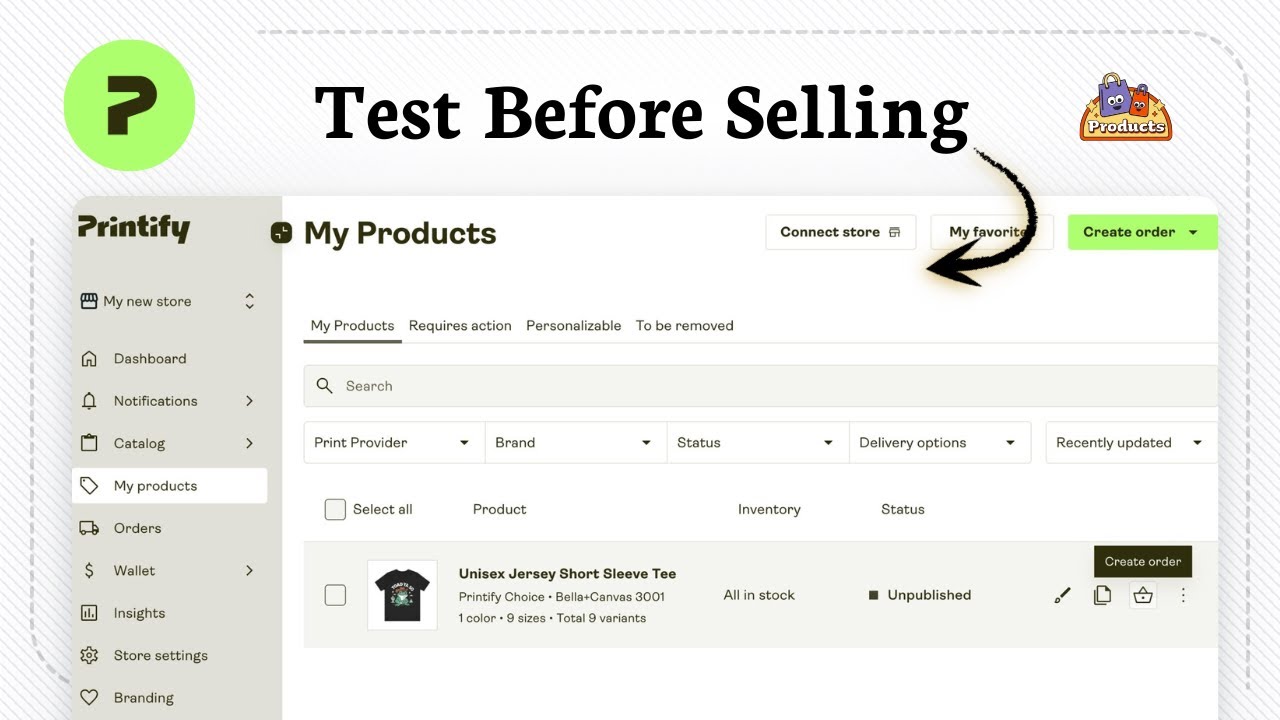
- Place a sample order through Printify using the creator’s shipping details, so they can test the product quality firsthand.
- Share content angles, product positioning, and key selling points – avoid overly scripted videos so creators can create content in their own style
- Track creator performance to identify which products, creators, and content styles generate the most sales
Tracking ROI from TikTok affiliate marketing
Tracking performance helps sellers understand which creators, products, and content styles actually generate profitable results. Instead of focusing only on views or viral videos, monitor metrics tied directly to conversions, affiliate sales, and long-term profitability.
Creator performance | Product performance | TikTok Shop metrics |
|---|---|---|
Views | Conversion rate | Product clicks |
Engagement rate | Revenue per creator | Affiliate GMV |
Affiliate link clicks | Profit after commission | Top-performing creators |
Common TikTok affiliate marketing mistakes POD sellers make
Even sellers with good products can struggle with affiliate marketing on TikTok if the creator experience feels risky or unprofitable. Here are some of the most common mistakes to avoid when running an affiliate plan:
- Low commissions: Small commission rates make it harder to attract creators, especially when competing against brands offering better earning potential.
- Weak products: Trendy marketing only goes so far if product quality, pricing, or customer experience doesn’t hold up.
- No samples: Creators are less likely to trust or recommend products they haven’t tested themselves.
- Over-controlling creators: Strict scripts and forced talking points often make videos feel unnatural and less effective on TikTok.
- Not tracking ROI: Without proper performance tracking, sellers can’t identify which creators, products, or campaigns actually generate profitable results.
Sell on TikTok with Printify
Printify makes it easy to start selling through TikTok affiliate marketing without managing inventory. With print-on-demand fulfillment, we print the products only after you make the sale. Printify automatically handles production, packaging, shipping, and delivery, helping sellers focus more on creators, content, and sales.
Here’s why Printify is a solid option for TikTok sellers:
- 100% free to start with no upfront inventory costs
- Global shipping with local production for faster delivery times
- 90+ TikTok-ready products, including bestsellers like t-shirts, hoodies, and sweatshirts
- Beginner-friendly Product Creator for designing products and creating mockups
- 24/7 support whenever you need help managing your brand
TikTok Affiliate Marketing FAQ
Final thoughts
TikTok affiliate marketing gives sellers new monetization opportunities through creators, organic content, and performance-based partnerships. Other platforms simply can’t match this at scale.
The brands that succeed focus on high-quality content, reliable fulfillment, and connecting creators with products that already fit their audience and TikTok profile. Get those three right, and your brand will stay relevant as TikTok keeps reshaping how people shop.
When you’re ready to start selling, try Printify and launch custom products without managing inventory yourself. Create items, partner with creators, and let Printify handle fulfillment from production to delivery.