

Wondering how to start an embroidery business without buying pricey machines? Custom embroidery is one of the fastest-growing print-on-demand segments, and personalized gifts, branded workwear, and monogrammed accessories are selling faster than ever. This guide walks you through research to launch, so your new business starts strong.
You don’t need a warehouse of sewing machines or a shelf of embroidery supplies. With Printify, you design, we stitch, and you never touch a single needle. Here’s exactly how to start an embroidery business from home, step by step.
Why start an embroidery business?
The embroidery world is booming. Machine embroidery is no longer limited to factories. Home-based operations are turning designs into income with almost no overhead. Personalized gifts, corporate logo wear, and monogrammed towels are driving demand across Etsy, Shopify, and beyond.
Small-business embroidery ventures fit the moment, since starting a profitable embroidery business today doesn’t require a large loan, a dedicated machine, or a garage full of embroidery equipment. Print on Demand skips the machines entirely, so a Print Provider handles fulfillment, stitching, and shipping while you focus on creativity. Embroidery is a smart way to turn a creative skill into a thriving business.
1. Research the embroidery market

Before you invest a cent, understand who you are selling to. Market research helps you spot a profitable niche before you commit money or time.
Find a niche
Look at popular categories: custom hats, personalized gifts, workwear, pet accessories, or event favors. Each niche has its own ideal customer, so pick one that matches your interests and skills. A focused niche also makes marketing easier, since you are speaking directly to the right audience instead of everyone at once.
Study other businesses
Look closely at other businesses already selling in your space. Note their pricing, their designs, and how they talk to potential clients. Tools like eRank and Google Trends can show you what’s trending, while reading reviews reveals what customers love (and what frustrates them). Spotting these gaps is often the fastest path to new customers.
Talk to your audience
Ask your followers directly. Run a quick poll on social media or send a short survey to learn which designs and products your ideal customer actually wants. This feedback shapes everything that follows, from your product lineup to your marketing message.
Write a business plan
Comprehensive business plans are critical for startup success. Put your niche, target customer, pricing, and costs on paper. This will force you to spot gaps early and give you a reference point as your embroidery business grows.
What is embroidery? is worth a read here too. It’ll help you talk confidently with customers and set realistic expectations about turnaround and pricing.
2. Learn the embroidery basics

Even if a Print Provider handles the actual stitching, understanding the basics of embroidery gives you an edge. It helps you troubleshoot issues and speak the same language as your manufacturing partner, which adds up to smarter decisions for your business.
Machines: Single-needle vs multi-needle
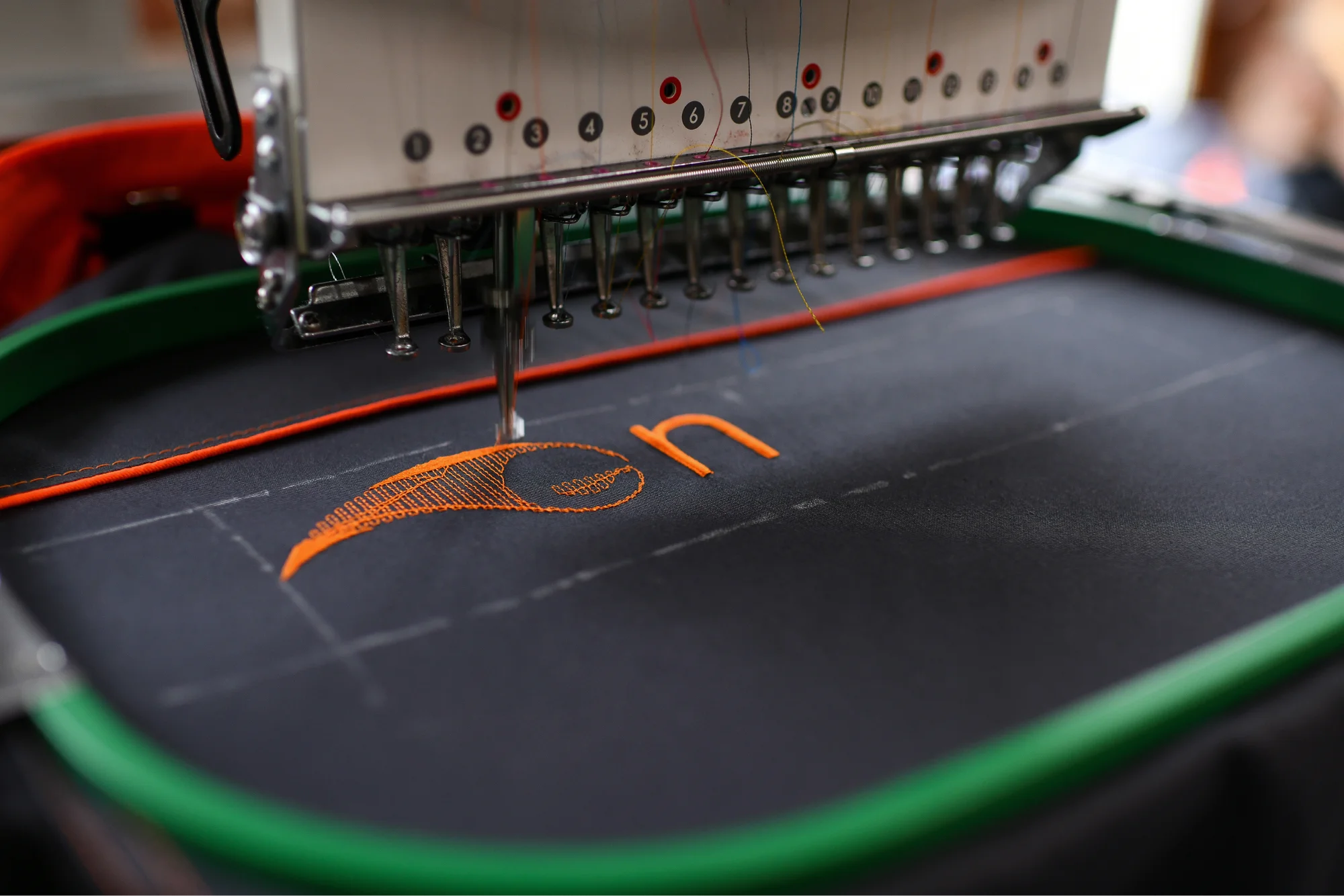
Machine embroidery relies on two main machine types. Knowing the difference helps you pick the right tools and offer embroidery services with confidence. A single-needle machine stitches one thread at a time and suits detailed work, while a multi-needle machine holds several spools at once, switching thread colors automatically. That’s ideal for complex and bigger designs with several colors.
Most professional shops rely on multi-needle machines because they cut production time and shorten the learning curve for new operators. Either way, every machine embroidery project comes down to the same basics: a stable machine, sharp needles, and high-quality thread.
Prefer to skip owning a machine? Print on Demand gives you access to machine embroidery without plugging one in – the Print Provider’s machines create every stitch while you focus on the design.
Needles and thread
Embroidery needles come in different sizes and points, each affecting stitch quality. Sharp needles suit woven fabrics, ballpoint needles are specifically designed for knits, and heavier needles push through canvas, denim, or thick workwear. Keep a mixed set of needles on hand so a dull needle never derails a project mid-stitch.
High-quality threads – typically polyester or rayon – resist fraying and keep colors vibrant wash after wash. Cheap thread breaks more often, slows the process, and leads to inconsistent, unprofessional results. Stocking the right needles and threads is one of the simplest ways to protect your stitching quality from day one.
Stabilizers: Tear-away, cut-away, and wash-away
Stabilizers hold fabric steady during stitching, and picking the wrong type is one of the most common mistakes new embroidery business owners make. Stitching straight through the wrong stabilizer is a fast way to ruin an otherwise good design.
- Tear-away stabilizer suits woven fabrics and is simply torn off once stitching finishes.
- Cut-away stabilizer stays permanently behind the design, providing support for stretchy knits and higher stitch counts.
- Wash away stabilizer dissolves in water, ideal for delicate items like lace or sheer fabric.
Understanding when to use each one is a small detail that makes a big difference in professional results.
Digitizing software and embroidery files
Digitizing software converts artwork into embroidery files – the stitch-by-stitch instructions a machine reads to create your design. This step used to require expensive software with a real learning curve, but Printify handles the digitizing for free when you place an order, saving you the cost and complexity entirely.
Newer digitizing tools also come with more features, like automatic stitch-density adjustments, that make it easier to create clean designs from day one.
Common embroidery mistakes to avoid
A few small errors catch almost every new embroidery business off guard. Skipping a test stitch wastes thread and time. Using the wrong needle for the fabric, ignoring different hoop sizes, and forgetting to check the machine tension are common mistakes with real consequences.
Quick tip
Test your machine, your needles, and your stabilizer together before a big batch – a small habit that protects your reputation as your business grows.
3. Gather the right tools and supplies
If you plan to embroider in-house, you’ll need the right tools: a reliable machine, embroidery needles, high-quality threads, stabilizers, and a hooping station for easy access during stitching. Add scissors, a seam ripper, and a work surface for your supplies and materials.
Starter kits are budget-friendly, but costs add up. Embroidery machines alone run from about $500 for an entry-level single-needle model to $14,000 or more for a professional-grade, multi-needle machine. Add materials, thread, and maintenance, and that’s before you sell a single item.
That’s why many embroidery entrepreneurs skip the equipment and leave manufacturing to a print-on-demand partner instead – no upfront investment in machines, software, or supplies required. Outsourcing frees up time to create new designs instead of managing tools and materials yourself.
4. Choose your custom embroidery products

The right product lineup can make or break a new business. Focus on items that show off embroidery designs clearly and appeal to your target audience.
Clothing and t-shirts
T-shirts, hoodies, and polos embroidered with a logo or creative design are a reliable seller for almost any custom clothing line. These pieces work equally well for corporate branding, small teams, or fashion-forward personal brands.
Accessories and custom hats
Custom hats, caps, tote bags, and backpacks are quick to produce and simple to personalize. They make great low-cost entry points for new customers who aren’t ready to commit to a full outfit yet.
Home and gifts
Monogrammed towels, embroidered blankets, and personalized gifts round out a catalog nicely, especially around holidays and special occasions. These items also tend to have a longer shelf life in customers’ homes, keeping your brand visible long after the sale.
Workwear and uniforms
Embroidered polos, jackets, and quarter-zips featuring a company logo are one of the most consistent revenue sources for embroidery business owners serving corporate clients and local teams.
Pricing matters here, too. Printify automatically suggests pricing based on the product and your sales channel, taking the guesswork out of covering costs and protecting your margin.
5. Use Print on Demand to skip the equipment

You don’t need to own a machine to run a profitable embroidery business. With custom embroidery through Printify, you design, and a trusted Print Provider handles the rest – production, stitching, packing, and shipping. These embroidery services free you up to focus on design and marketing instead of machines.
How the process works
Once you upload your design, Printify’s system automatically converts it into a stitch file. New designs typically take up to 36 hours to digitize; after that, repeat orders skip the process entirely and move straight to manufacturing. This means your embroidery orders go from concept to customer without you ever touching a needle, a spool of thread, or a single machine.
Why this matters for embroidery entrepreneurs
Skipping in-house equipment removes nearly every barrier to entry: no machines, no embroidery supplies, no maintenance, and no learning curve on stitching mechanics. Test new embroidery designs quickly, without risking money on materials that might not sell.
6. Brand your embroidery business
Strong branding turns one-time buyers into happy customers who come back and refer others.
- Stay consistent. Use the same logo, colors, and tone across your store, packaging, and social media so customers recognize your brand instantly.
- Show professional mockups. Realistic previews of your embroidery designs build trust before a customer ever touches the product.
- Build credibility. A clean, simple website signals that you run a serious, professional operation.
- Collect social proof. Reviews and testimonials from happy customers reassure those still deciding.
- Engage your audience. Ask questions, reply to comments, and use feedback to guide your next embroidery projects.
7. Set up your online store
Your online store is where potential clients become paying customers. Printify integrates with Shopify, Etsy, Amazon, TikTok Shop, and more, so your embroidery designs, pricing, and orders sync automatically.
To help your store perform well:
- Optimize for SEO. Use tools like Google Keyword Planner to find the exact steps customers use to search for embroidered products.
- Write clear, honest descriptions. Mention fabric, thread type, stitch count, and any customization options.
- Upload quality mockups. Clear images with easy access to size and color options help new customers make faster decisions.
- Keep navigation simple. Organize your catalog by product type so shoppers find what they want quickly.
8. Promote and market your business

Getting noticed takes consistent, honest promotion – not just a big budget.
Share your work
Post photos and short videos of your embroidery projects on Instagram, TikTok, and Pinterest. Consistency builds recognition and keeps your embroidery designs in front of new customers over time.
Offer standout services
Small extras – name personalization, gift packaging, or rush turnaround – help you stand apart from other businesses selling similar products. These added services show customers you care about the details, not just the sale.
Encourage reviews
Ask satisfied buyers to leave feedback and share photos. Make it easy: send a quick follow-up message after delivery with a direct link to your review page. Specific, photo-backed reviews build more trust than any ad, since new customers can see real stitching quality up close before they buy.
Start small and adjust
Test a handful of embroidery designs and products before scaling. Watching what sells (and what doesn’t) helps you avoid the common mistakes that trip up many new business owners.
9. Expand and scale your business
Once your embroidery business feels steady, look for ways to grow. Add complementary products – blankets, bags, or home decor – that appeal to your existing customer base and increase average order value.
As your business grows, keep testing new embroidery designs, refining your pricing, and listening to customer feedback. A profitable embroidery business rarely stays still; it evolves as trends, tools, and customer tastes change.
Start your embroidery business with Printify

Ready to put all of this into action? Here’s your step-by-step embroidery business launch plan with Printify.
Step 1: Sign up
Create a free Printify account to unlock the full catalog. Among more than 2,000 products, you’ll find t-shirts, hoodies, hats, towels, and home goods ready for embroidery.
Step 2: Choose a product
Browse our Catalog and pick a base item that fits your niche and your ideal customer, whether that’s apparel for everyday wear or something more like monogrammed towels for gifting.
Step 3: Design and preview
Upload your artwork and use the Product Creator to preview how your embroidery designs will look once stitched. This step helps you catch placement issues before you publish anything.
Step 4: Connect your store and publish
Connect your shop with Shopify, Etsy, and Amazon. Products, prices, and orders update automatically, so you can focus on marketing instead of manual updates.
Step 5: Launch and grow
Once your shop goes live, keep creating new embroidery designs, testing products, and building customer relationships. Printify and its Print Providers will handle production and shipping behind the scenes.
FAQ
Conclusion
Learning how to start an embroidery business doesn’t require a workshop full of machines or years of stitching experience. Research your niche, understand the basics of thread, needles, and stabilizers, choose products your ideal customer will love, and let a print-on-demand partner handle the rest.
Whether you dream of running your own machine embroidery setup one day or simply want to create and sell without ever touching a machine, the path is the same. With the right tools and a bit of consistency, your new business will grow into a genuinely successful business – one stitching project at a time.