

Every hour you spend hand-drawing a custom dog portrait for a single $16 order is an hour you'll never scale — and it's the exact reason your store is stuck while the emotional-personalization market explodes. The fix is to stop drawing per order and build one system instead: a curated library of hand-drawn breed vectors plus a master template that drops in any customer's dog name and breed on demand. In the next few minutes, you'll learn how to lock a single aesthetic, build your 30-breed library, connect Printify to auto-fulfillment, and turn a $16 blank into a $36-plus personalized product that buyers don't comparison-shop.
Selling "Dog Mom" shirts successfully in 2026 means moving away from static, overused graphics and building in dynamic personalization. When customers customize the text (their dog's name) and choose from a curated library of breed vectors, you tap into the deep emotional bond of pet ownership — and that bond erases price resistance completely.
Why custom art per order fails
If you're redrawing every dog by hand, you don't have a business — you have a job that pays by the hour. Here's exactly where that model breaks down, and why the fix isn't working harder.
The time trap
You're an artist, not a factory. When every order requires a fresh drawing, your income is permanently capped at the number of hours you can physically work. You can't sleep, get sick, or take a weekend without your revenue stopping cold. The solution is to separate your creative work from your fulfillment work — draw once, sell forever.
The margin problem
Competing on generic paw-print tees at $16 to $19 is a race to the bottom you can't win. Marketplaces like Amazon and Zazzle are flooded with near-identical clip-art designs, so buyers filter by price alone. When your product looks like everyone else's, price is the only thing left to compete on — and someone will always go lower.
The fulfillment bottleneck
Manual order processing kills your turnaround time. Every order that needs you to open a file, type a name, resize art, and export a print-ready PNG is a chance for a typo, a delay, and a bad review. Slow, error-prone fulfillment is the fastest way to sink your store ratings.
The real opportunity
Emotional personalization — the dog's name plus its breed — is what unlocks $36 to $60 price points. Nobody haggles over a shirt that says their dog's name. The combination of a specific breed vector and a specific name turns a generic tee into a one-of-a-kind keepsake, and keepsakes don't get comparison-shopped.
Part 1: The breed library architecture
Never draw per order
Do NOT draw every dog from scratch per order. That single habit is what caps your income and buries you in manual work. Instead, invest your creative energy once into a reusable library, then let a template do the assembly on every future sale.
Action: Treat your art as inventory. Build it once, then sell it an unlimited number of times with zero additional drawing.
Build your 30 breed vectors
Cover the breeds people actually buy for. Start with the highest-demand breeds so you can serve the largest share of buyers on day one:
- Golden Retriever
- French Bulldog
- Corgi
- Goldendoodle
- Pitbull
- German Shepherd
- Dachshund
- Labrador
- Poodle
- Shih Tzu
Round the list out to 30 with popular mixes and regional favorites. Each vector should be clean, scalable, and instantly recognizable at a glance.
Pick one aesthetic capsule
Consistency is what makes a shop look like a brand instead of a bin of random designs. Choose a single aesthetic — minimalist line-art or modern retro — and keep every vector visually matched to it.
Action: Decide now: line weight, level of detail, and whether faces are simplified or detailed. Apply that same rule to all 30 breeds so they look like one collection.
The master template method
This is the engine of the whole system. Set up a locked artboard where the layout, typography, and placement never move — you simply "drop" the buyer's chosen breed vector and their custom name text into fixed positions.
Action: Build one master template per placement (left-chest, center-front). Lock everything except the two swappable elements: the breed graphic and the name text. Assembly then takes seconds, not an afternoon.
File prep checklist
Print quality is one of Printify's four promises, and it starts with your files. Before anything goes live, confirm:
- Transparent PNGs so there's no white box around your art.
- Correct DPI (300 DPI at print size) for crisp, professional results.
- Print-ready dimensions matched to each blank's print area.
- Consistent sizing across breeds so every shirt looks balanced.
Part 2: The non-cheesy aesthetic rule
What to kill
Loud comic fonts, clip-art paw prints, and cliché slogans are the exact reason competitors all blend together. If your design looks like a novelty gift-shop tee, it gets priced like one. Cut anything that screams "cheap merch."
What to build
Design apparel she'd actually want in her closet. Lean into:
- Clean varsity-style lettering for a sporty, elevated feel.
- Vintage "hotel-key" typography for a retro, collectible look.
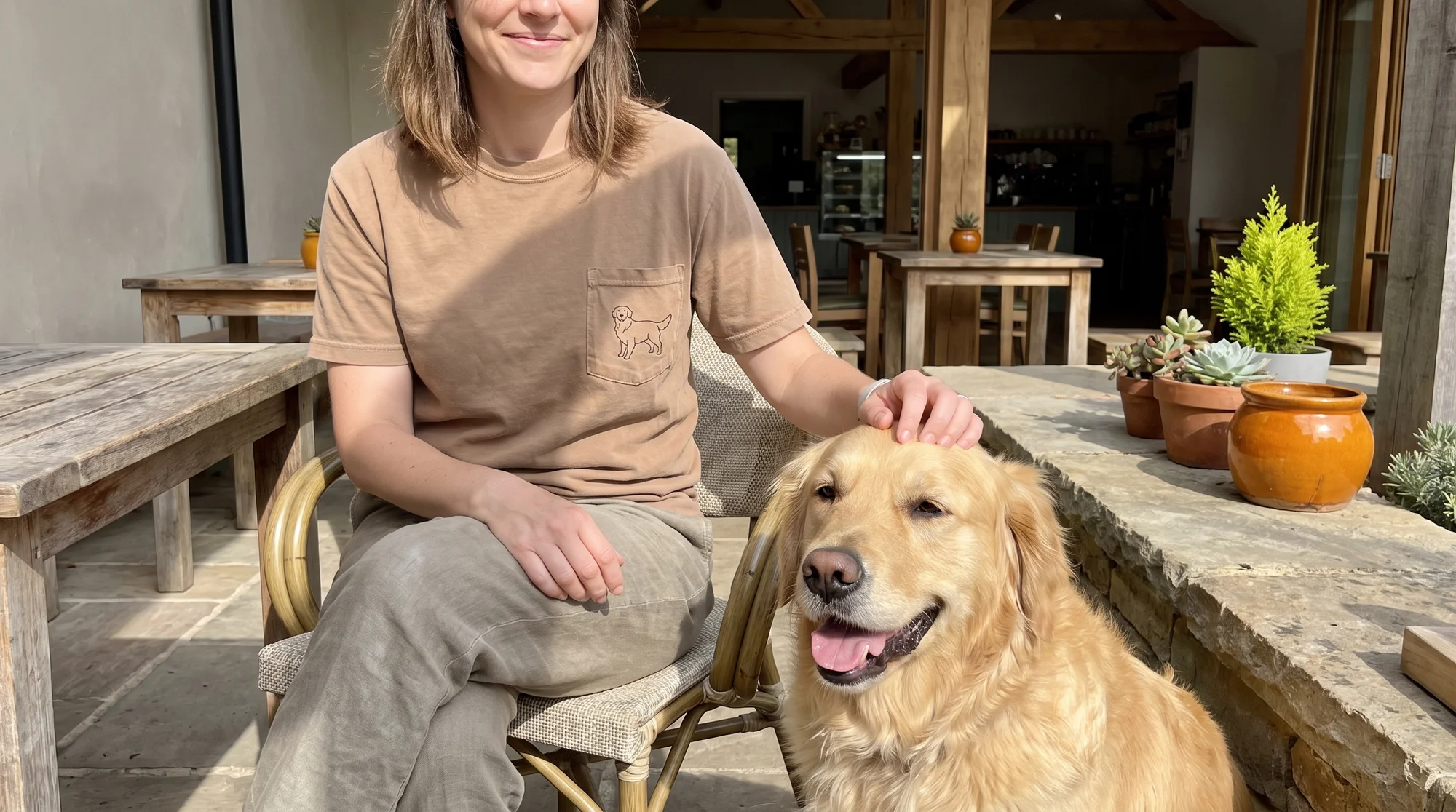
- Minimalist left-chest pocket placements for understated, everyday wear.
The lifestyle test
Ask one question of every design: would she wear it to a chic coffee shop, a weekend run club, or brunch? If the answer is no, cut it. This single filter keeps your line premium and on-trend.
Your gap analysis advantage
Here's your edge. The embroidery and photo-portrait crowd delivers emotion but moves slowly and can't scale. The generic graphic crowd moves fast but has no emotional pull. Your "coffee shop aesthetic plus breed vector" system beats the portrait crowd on speed AND the generic crowd on emotion — you own the profitable middle nobody else is serving well.
Part 3: The auto-fulfillment pipeline
Store setup
You need a storefront that talks to your production. Connect your Shopify or Etsy store to Printify so orders flow straight into fulfillment without you copying anything by hand.
Action: Open your Printify account, connect your sales channel, and confirm the integration is live before you list a single product.
Enabling true personalization
The whole system hinges on capturing the buyer's dog name and breed choice at checkout — and getting them onto the shirt without you touching the file. Third-party personalization apps like Hello Custom or Splat let customers enter a name and pick a breed at checkout, then feed that data into your fulfillment flow.
Note: Hello Custom and Splat are external, third-party platforms — not Printify tools. Pair them with Printify's own Product Creator and Printify API to build and route your personalized orders.
Mapping to premium blanks
Your blank has to match the premium price and the relaxed lifestyle look. Two blanks in the Printify Catalog do exactly that:
- Comfort Colors 1717 Garment-Dyed Tee — soft, lived-in, and beloved by the exact "coffee shop aesthetic" buyer you're targeting. Its premium feel justifies premium pricing.
- Gildan 18500 Hoodie — cozy, familiar, and perfect for the weekend run-club and brunch crowd.
The end-to-end flow
Here's the magic when it's all connected:
- Customer selects their breed.
- Customer types their dog's name.
- The order routes automatically to Printify.
- Your Print Provider prints and ships it — zero manual touch from you.
This is the freedom the whole system was built for: personalized orders fulfilling themselves while you sleep.
The margin math explained
Sample cost breakdown
Let's make the money real with round numbers (always confirm current rates in your Printify account):
- Comfort Colors 1717 blank plus printing: roughly $14–$16
- Platform and transaction fees: roughly $2–$4
- Your sell price: $36–$44
That leaves a healthy margin on a single tee — and profitability is one of the four promises this model is built to deliver.
Why personalization equals premium
Buyers don't comparison-shop a shirt with their own dog's name on it. There's no competing listing for "Bella the Corgi," so price stops being the deciding factor. Emotion sets the price, not the market.
Scaling volume without labor
One template library equals unlimited SKUs. Adding a new customer's name costs you nothing and takes seconds. You can sell one shirt or a thousand this month with the same amount of design work — that's how you break the "hours-for-dollars" trap for good.
7-day launch roadmap
Days 1-2: Lock aesthetic and vectors
Pick ONE aesthetic capsule, then source or build your 30 breed vectors in that consistent style. Everything downstream depends on this foundation, so don't rush the style choice.
Days 3-4: Build templates and mockups
Create your master templates with locked layouts, then generate product mockups on the Comfort Colors 1717 using Printify's Product Creator and Mockup Generator.
Days 5-6: Connect Printify and personalization
Connect Printify to your Shopify or Etsy store, then set up your Hello Custom or Splat personalization flow to capture name and breed at checkout.
Day 7: List, test, and launch
Publish your listings, place one test order end-to-end to confirm the name and breed inject correctly, then open the doors. Speed is one of the four promises — your buyers get their order fast, and you get orders that run themselves.
FAQ
Where do I get breed vectors legally?
You have three legal routes: commission an artist to build your set with full commercial rights, buy a licensed vector pack that permits commercial use, or draw them yourself. Printify's Shutterstock Integration gives you access to licensed imagery inside your account. Whatever you choose, always confirm you hold commercial-use rights before selling.
Do I need design skills?
No. The whole point of the master template method is that the hard design work happens once. After that, you're assembling — dropping a pre-made vector and a name into a locked layout. If you buy or commission your vectors, you can run the entire system with basic tools and Printify's Product Creator.
How does the dog name print automatically?
At checkout, a third-party personalization app like Hello Custom or Splat captures the name and breed the customer enters. That data flows into your fulfillment setup, gets placed onto your template, and routes to Printify to print and ship — with no manual editing from you.
Why Comfort Colors 1717?
Because your buyer isn't shopping for cheap. The Comfort Colors 1717's soft, garment-dyed, lived-in feel matches the premium "coffee shop" lifestyle look your designs are built around. A premium blank justifies a premium price and protects your margins — a cheap blank undercuts the whole positioning.