

Your last three clip-art faith designs got buried on page 12 of Etsy while a brand selling a plain "Grace" tee on a heavyweight blank racks up 152 reviews at $34 a pop. The fix is to stop treating faith apparel like church merch and start building it like community-identity streetwear on premium blanks. This playbook walks you through the exact five steps: design three proven pillars, source heavyweight blanks that justify your price, protect your payouts from IP takedowns, launch on Etsy and TikTok Shop, and let Printify auto-route every sale to fulfillment.
Why faith tees are slept-on margin
Faith apparel is one of the most misunderstood niches in Print on Demand. Most sellers still slap centered clip-art crosses on lightweight tees, price them at $19, and wonder why nobody buys. Meanwhile, a wave of modern faith brands is quietly commanding $30–$44 per garment. Here's why the gap exists and how you close it.
From clip-art to community identity
The problem: Buyers no longer want obvious "church merch." They want apparel that signals identity the same way any streetwear brand does.
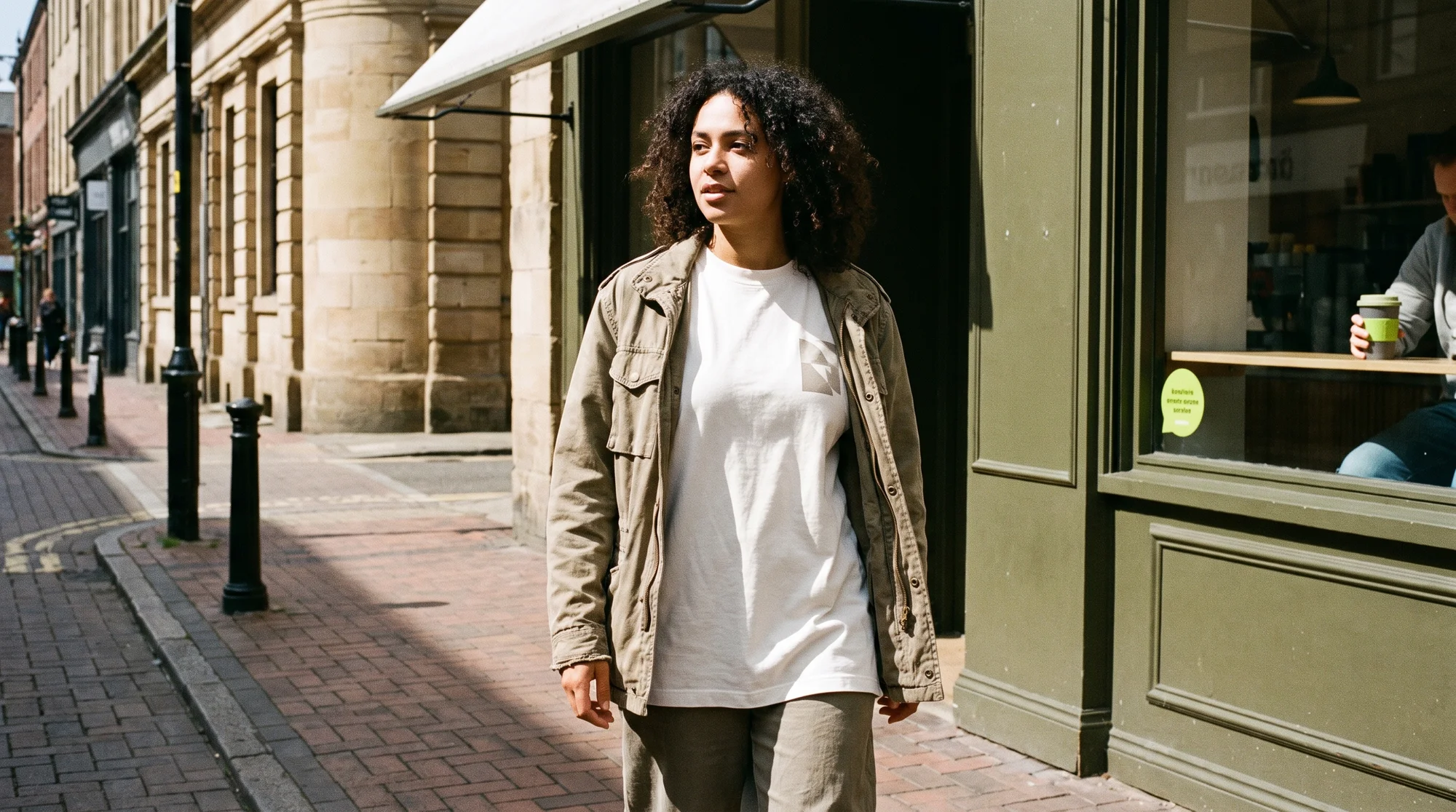
The solution: Design faith tees as streetwear first, faith second. Think heavyweight blanks, minimalist typography, and subtle references that reward a second look. Your customer wears it to a coffee shop, not just to service.
This shift is the whole game. When your tee reads as premium streetwear, you compete on aesthetics and quality, not on who can print the cheapest cross.
The margin math that matters
The problem: Racing to the bottom on price kills your business before it starts.
The solution: Anchor your retail at $34+ on a base cost of $10–$13. That's $12–$20 of profit per garment, before you stack any add-ons.
Run the numbers:
- Retail: $34–$44
- Base cost: $10–$13
- Profit per garment: $12–$20
Sell 20 garments over a weekend drop and you've cleared $240–$400 in profit from a single design session. That's profitability built on premium perceived value, not volume desperation.
What the competition proves
The problem: You're likely benchmarking against the wrong sellers.
The solution: Look at where the money actually is. On Amazon, faith tees are a $12–$17 acid-wash graveyard racing to the bottom. But standalone brands like Elevated Faith, In God We Must, and Dear Heart command $30–$44 on heavyweight blanks with hundreds of reviews.
The lesson is clear: the premium lane is wide open, and it rewards brand and blank quality over cheap graphics. That's exactly the lane the Printify Catalog lets you enter this weekend.
Step 1: Design the 3 selling pillars
Generic clip-art is why your designs get buried. The fix is to build every design around one of three proven pillars. Treat these as templates, and you can produce a full drop in a single session.
Pillar 1: Minimalist typography
The problem: Busy, cluttered graphics read as amateur and cheapen your price.
The solution: Go clean. Use a single word — Grace, Faith, Redeemed — in a sharp sans-serif or arch font.
Action steps:
- Pick one word per design.
- Center it or arch it across the chest.
- Keep the color palette to two tones max.
Pillar 2: Vintage bootleg streetwear
The problem: Flat, centered prints look like every other clip-art tee.
The solution: Lean into distressed textures, boxy fits, and enlarged back-prints paired with a small front-chest logo. This is the layout that reads as "real brand."
Action steps:
- Design a large graphic for the upper back.
- Add a small, subtle chest mark for the front.
- Apply a light distressed texture for that vintage-wash feel.
Pillar 3: Subtle scripture citations
The problem: Full verses in decorative fonts feel dated and preachy.
The solution: Use the citation itself as the design — Romans 8:31, Psalm 46:10 — set in clean, aesthetic typography. It's understated, and it invites conversation.
Action steps:
- Choose a verse reference, not the full text.
- Style it minimally, like a streetwear tagline.
- Let the meaning stay a quiet signal, not a shout.
Speed tip: 4-piece drop in one session
Use the three pillars as fixed templates. Create one minimalist typography piece, one bootleg back-print, and two scripture citations. That's a cohesive four-piece drop finished in a single afternoon.
Step 2: Source blanks worth $34+
You can't sell a $34 tee on a $6 lightweight blank. The garment does half the selling. Choose heavyweight, garment-dyed cotton and your price feels obvious the moment a customer touches it.
Why lightweight tees kill margin
The problem: Thin, basic tees feel cheap and instantly cap what buyers will pay.
The solution: Move to mid-to-heavyweight cotton. Heavier fabric signals durability and quality, letting you charge premium prices while protecting margin.
The heavyweight winners
The problem: Not every blank supports a streetwear price point.
The solution: Build on these three proven blanks from the Printify Catalog:
- Comfort Colors 1717 Garment-Dyed Tee — the go-to for that lived-in, premium wash.
- Shaka Wear Max Heavyweight Tee — thick, boxy, and built for streetwear cuts.
- Lane Seven Deluxe Heavyweight Hoodie — the premium anchor for your collection.
Each one delivers the quality your customers can feel and the selection to build a full range.
Base-cost vs retail breakdown
| Blank | Base cost | Suggested retail | Profit per unit |
|---|---|---|---|
| Comfort Colors 1717 Tee | $10–$13 | $34–$38 | $12–$20 |
| Shaka Wear Max Tee | $11–$14 | $36–$40 | $15–$22 |
| Lane Seven Heavyweight Hoodie | $22–$26 | $58–$68 | $26–$40 |
Exact costs vary by Print Provider and print size — always confirm in the Printify Catalog.
Stack AOV with collection drops
The problem: One-off tees leave money on the table.
The solution: Offer matching sets — tee, hoodie, and crewneck in the same design. Customers who love one piece buy the collection, which lifts your Average Order Value with zero extra ad spend.
Action steps:
- Publish each design across the tee, hoodie, and a Gildan 18000 crewneck.
- Group them as a matching collection.
- Promote the set as a bundle.
Step 3: Protect your payouts from IP takedowns
One DMCA takedown can freeze your fulfillment and your payments. The good news: faith and scripture content is safe territory when you design it yourself. Know the boundaries and you scale without fear.
Mistakes that trigger takedowns
The problem: A single infringing listing can trigger an automated takedown or account closure.
The solution: Never do any of these:
- Copy exact character art from any brand or studio.
- Use trademarked names in your tags or titles (Marvel, Star Wars, Harry Potter).
- Upload ripped movie stills or licensed photos.
IP bots scan your metadata automatically. Keep it clean and original.
Why scripture is safe territory
The problem: Sellers wrongly fear all religious content is risky.
The solution: Scripture text and faith concepts are public domain and free to use. Your original typography and layout of "Grace" or "Romans 8:31" belongs entirely to you.
Legal safe harbors
The problem: You want to reference culture without crossing a legal line.
The solution: Build inside these safe vectors:
- Public domain — works with expired copyright are free to use.
- Subculture trope design — reference aesthetics, palettes, and generic tropes, not trademarked assets.
- Fair use parody — transformative, commentary-driven art.
Note: simple phrases and basic typography can't be copyrighted, which is exactly why the minimalist faith niche is so open.
Lock your brand
The problem: A copycat could steal your brand name once you gain traction.
The solution: Protect the right assets:
- Trademark (USPTO Class 025) protects your brand name, logo, and tagline on apparel.
- Copyright protects your original illustrative artwork from direct copying.
Printify's custom branding features — printed neck labels, hang tags, and branded inserts — help you capture the real-world specimens a trademark filing requires while building an elite brand.
Step 4: Launch on Etsy and TikTok Shop
Speed is your edge. The goal is to design once and let one system run everything. That system is Printify.
Set Printify as your master system
The problem: Editing product data in two places breaks your sync and freezes orders.
The solution: Make Printify your single source of truth. Every edit — SKUs, variations, pricing — happens in Printify and pushes cleanly to your store.
Why editing SKUs in Etsy breaks fulfillment
The problem: Manually deleting SKUs, changing variations, or marking orders fulfilled without tracking in Etsy severs the webhook link.
The solution: Never touch product data inside Etsy. When the connection breaks, orders stop routing to your Print Providers and your fulfillment freezes.
Action steps:
- Make all changes in Printify only.
- Let Printify push updates to Etsy automatically.
- Leave order status and tracking to the integration.
Etsy shop-section SEO
The problem: Vague section names like "Misc Tops" tell search engines nothing.
The solution: Use clean, keyword-rich section names. Etsy generates indexable URLs per section, so "Comfort Colors Faith Tees" ranks in Google far better than a generic label.
Action steps:
- Name sections by product type and niche (Faith Hoodies, Scripture Tees).
- Assign new designs to the right section as you publish.
- Keep silos tight so each category page ranks.
TikTok Shop: highest organic reach
The problem: You need eyes on your drop without a big ad budget.
The solution: TikTok Shop delivers the strongest organic reach for impulse streetwear buys. Order a sample batch to film the garment drape, print texture, and stretch recovery — the details that sell heavyweight blanks on video.
Action steps:
- Order samples of your core blanks.
- Film close-ups of print texture and fabric weight.
- Run a 15-minute stream discount code to drive urgency.
Step 5: Auto-sync every sale to fulfillment
Once your drop is live, the whole point is to stop touching it. Printify's integration handles fulfillment so you can design the next drop instead of managing orders.
How Printify routes every order
The problem: Manual order processing steals the time you should spend creating.
The solution: Printify's Etsy integration routes every incoming sale straight to your Print Providers automatically. Payment, print, ship — hands-off. That's the speed promise in action.
Scale safely on core blanks
The problem: Growing your catalog usually means more admin.
The solution: Publish new designs onto your core blanks — Comfort Colors 1717 Tee, Lane Seven Hoodie, Gildan 18000 Crewneck — directly from Printify without ever opening your store admin. New products drop into your existing shop sections instantly.
Your weekend launch checklist
- Design a four-piece drop using the three pillars.
- Build on Comfort Colors 1717, Shaka Wear Max, and Lane Seven Hoodie.
- Confirm your base cost vs retail hits $12–$20 profit per garment.
- Keep all designs original and IP-safe.
- Set Printify as your master system.
- Create keyword-rich Etsy shop sections.
- Order samples for TikTok Shop content.
- Publish and let the integration run.
The weekend drop timeline
- Friday night: Design your four-piece drop in one session using the three pillars.
- Saturday morning: Publish each design across your core blanks in Printify, set retail at $34+, and assign them to keyword-rich Etsy sections.
- Saturday afternoon: Confirm Printify is your master system and let listings push to Etsy and TikTok Shop.
- Sunday: Film sample footage for TikTok Shop, run a limited discount code, and go live. Every sale now routes to fulfillment automatically.
That's a full faith streetwear brand, launched in a weekend, running while you sleep.