


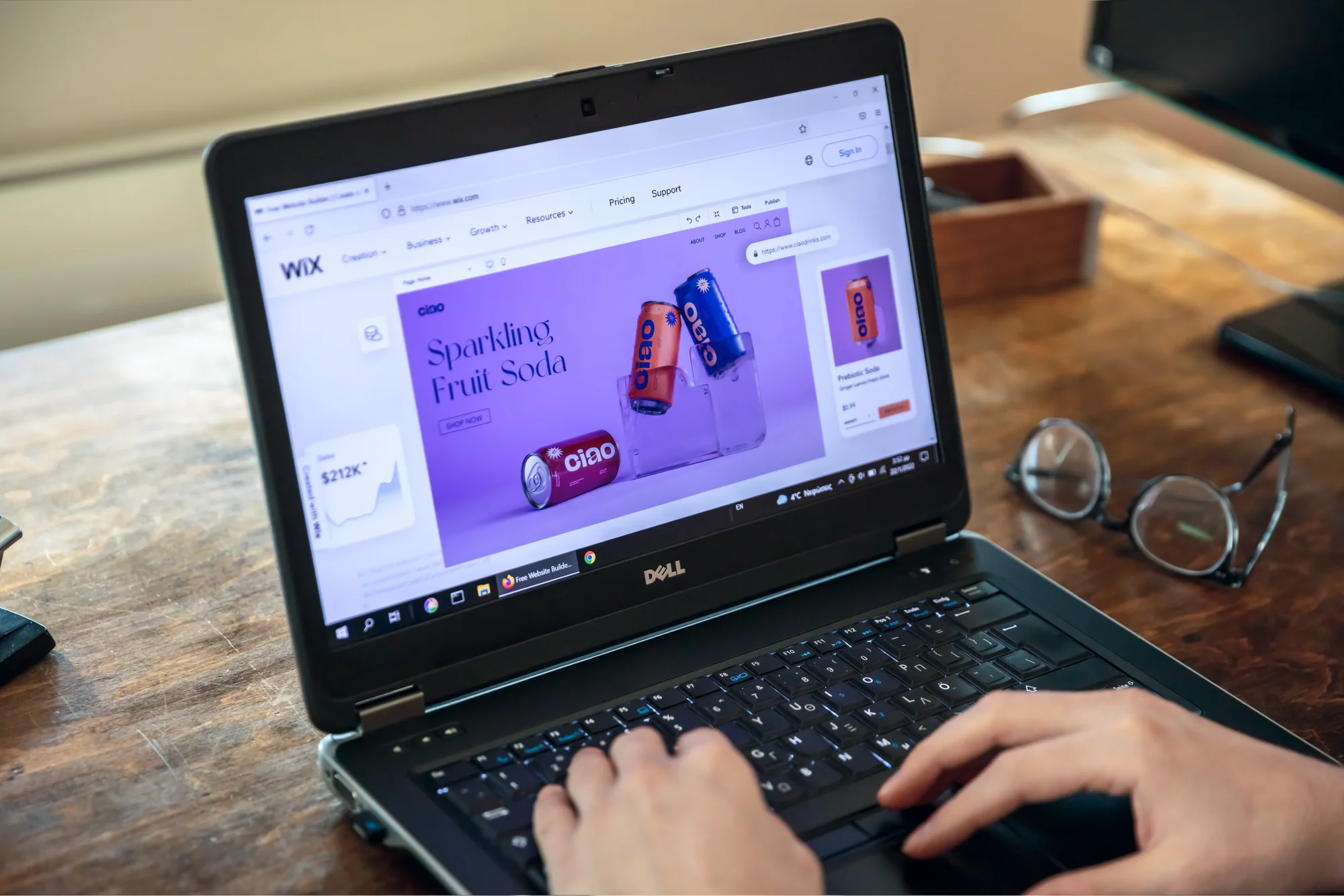
Wix has a reputation problem that the data no longer supports. For years, marketers dismissed it as a toy website builder with weak search engine optimization (SEO). In 2026, that narrative is simply outdated:
- Wix websites regularly outrank poorly configured WordPress installs. Google’s own search advocate has publicly stated the platform works fine in search. And the built-in SEO tools now rival anything on competing content management systems.
If you already have a Wix site – or you’re deciding whether to build one – this guide covers every lever you can pull with Wix SEO to rank higher, from technical setup and content strategy to AI search visibility and local search performance.
Key takeaways: Wix SEO in 2026
- Wix is good for SEO when set up correctly – the platform handles server-side rendering, automatic sitemaps, and image optimization out of the box.
- The Wix SEO setup checklist walks you through Google connection, indexing, and on-page SEO basics in a single workflow.
- New WIX SEO tools – including an AI SEO assistant and an AI visibility tool – track both traditional rankings and mentions in ChatGPT, Gemini, and Perplexity.
- Structured data markup, canonical tags, and clean URL slugs are fully configurable without writing code.
- Connecting to Google Search Console through the Wix dashboard causes an average 15% traffic increase over 12 months.
Is Wix good for SEO? What the 2026 data says
The “Wix is bad for SEO” argument dates back to a time when the platform rendered pages entirely in JavaScript and search engines struggled to crawl the content. Wix solved this years ago with server-side rendering (SSR). Today, the concern is a myth.
According to the HTTP Archive Core Web Vitals Technology Report, 52% of Wix sites now achieve good Core Web Vitals scores, placing the platform fourth among major content management systems. That figure beats unoptimized WordPress installations on mobile – not because Wix is inherently faster, but because it handles infrastructure automatically.
WordPress performance depends entirely on your hosting quality, caching plugins, and image settings. Miss one step, and your scores drop. Wix manages all of that at the platform level.
Google’s algorithms don’t care which website builder you use. They evaluate content quality, page experience, and relevance – not whether your site runs on Wix, WordPress, or custom code.
What actually determines whether a Wix site ranks:
- Content quality: Does it answer the user’s question comprehensively?
- Page experience: Does it load fast, work on mobile, and avoid intrusive pop-ups?
- Technical fundamentals: Are pages indexed, properly tagged, and internally linked?
- Topical authority: Does the site publish enough useful, interlinked content on a given subject?
Navigating the Wix 2026 SEO tools and features

Wix has built a layered set of SEO tools directly into the dashboard. You don’t need third-party plugins to cover SEO basics or even Wix advanced SEO workflows. Here’s what’s available and how to use each SEO feature effectively.
The AI SEO assistant
The AI SEO assistant monitors your site continuously and surfaces recommendations based on what it finds. It flags indexing blocks – pages set to noindex when they shouldn’t be, missing meta descriptions, and thin content – and delivers real-time suggestions tied to specific pages.
In practice, this means you don’t need to run manual audits. The assistant prompts you when a page is underperforming, when you haven’t published new content in a while, or when a site inspection is overdue. Treat it as a standing to-do list for your SEO progress, not a one-time setup tool.
AI Visibility Overview
This is a 2026 addition that tracks how often your site or brand is mentioned in large language models (LLMs), including ChatGPT, Gemini, and Perplexity. As more users turn to AI-powered search for product recommendations and informational queries, organic search traffic alone no longer tells the full story of your online visibility.
The AI visibility tool shows which sources those AI platforms reference when discussing your category, how frequently your site appears in AI-generated answers, and where gaps exist. Use this data to identify content topics where AI systems are citing competitors but not you – then fill those gaps with well-structured, authoritative pages.
The Wix SEO setup checklist
The personalized SEO checklist is the fastest path from a new Wix site to one that search engines can actually find and rank. Answer three questions about your site type and goals, and Wix generates a custom, step-by-step plan.
The Wix SEO setup checklist covers:
- Connect to Google Search Console: Verifies your domain and automatically submits your XML sitemap. Google Search Console integration is available directly from Site & Mobile App > SEO & GEO in your Wix dashboard.
- Set your site title and meta description: The homepage title tag should be under 60 characters and lead with your primary keyword.
- Confirm search engine indexing is enabled: In your SEO settings, verify the Let search engines index your site toggle is on.
- Add a custom domain: A branded domain improves credibility signals and SEO.
- Complete page-level SEO: Title tags, meta descriptions, and URL slugs for key pages.
- Submit for rapid indexing: Once connected to Google Search Console, your homepage is automatically submitted for fast indexing.
Did you know?
A Google case study on Wix found that users who connected their Search Console account through the Wix dashboard experienced an average 15% increase in organic traffic over the following 12 months. These sites also experienced a 15% increase in gross product value – money earned in a specific period.
Technical Wix SEO: Speed, mobile, and crawlability

Technical SEO is the foundation on which everything else is built. If search engines can’t reach your pages efficiently, no amount of great content will get you ranking.
Core Web Vitals and site speed
Wix’s SEO infrastructure is built on server-side rendering. That means: Wix builds your pages on the server before sending them to the browser. Visitors and search engines see your content instantly, without any loading lag. This directly improves Largest Contentful Paint (LCP), which is a primary Core Web Vitals metric that measures how fast your main content appears.
Wix also handles automatic image optimization. Every image uploaded to a Wix website is automatically converted to WebP – a smaller, faster-loading format – and served through a global content delivery network. For most site owners, that takes care of the biggest speed drag without touching a single setting.
To keep Core Web Vitals scores high on your Wix site:
- Limit the number of third-party apps installed – each one adds code bloat that slows your page down.
- Avoid autoplay videos or heavy animations at the top of the page.
- Enable lazy loading (images load only as visitors scroll to them) and optimize images before uploading.
- Test mobile performance separately in Google’s PageSpeed Insights – mobile and desktop scores differ on content-heavy pages.
Advanced URL control
Clean URL slugs are a small but consistent on-page SEO signal. In the Wix editor, every page has an editable URL slug under Page SEO settings. Keep slugs short, descriptive, and keyword-relevant – for example, /custom-t-shirts rather than /page-1 or /product-id-48392.
When you update a URL, Wix automatically creates a permanent redirect (a 301 redirect) from the old address to the new one, so link equity from existing backlinks isn’t lost. You can also set up bulk redirects to multiple pages at once, which is useful when restructuring a large site or migrating from another platform.
Customizable URLs also stay clean on dynamic pages – like filtered and sorted product listings – so you don’t end up with duplicate content.
Robots.txt and XML sitemaps
Every Wix website automatically generates and maintains an XML sitemap at yourdomain.com/sitemap.xml. The sitemap updates in real time as you publish or remove pages, and it’s submitted to Google automatically when you connect Search Console.
The robots.txt file and per-page noindex controls let you choose exactly which pages Google crawls. Pages like thank-you pages, internal search result pages, and duplicate location variants can be excluded from the index in your page SEO settings – so search engine crawl budget is focused on pages that actually matter for rankings.
Ranking content in the AI era: Beyond keywords

Keyword targeting alone no longer drives rankings. In 2026, Google evaluates topical authority, entity relevance, and how thoroughly a site covers a subject. Keyword density alone doesn’t move the needle anymore.
Topic clusters and topical authority
A topic cluster is a group of interlinked pages that collectively cover a subject in depth. One central pillar page covers the broad topic; multiple supporting pages cover specific subtopics in detail, each linking back to the pillar and to each other.
Internal links between cluster pages tell search engines how the content is related and build the authority of the cluster as a whole.
- For example, a Wix website selling custom apparel might build a topic cluster around “custom t-shirts” – with a pillar page covering the category and supporting pages covering sizing guides, design tips, fabric types, and printing methods.
- Each page reinforces the others through internal links, and the cluster signals to search engines that this site is a genuine authority on the subject.
Build your cluster structure before you publish, not after. Map out the pillar topic, identify five to ten supporting subtopics based on keyword research, and create internal links as you write.
The “first 10 seconds” rule
Users and search engines both evaluate a page within seconds of loading. If your Wix page leads with a vague intro or buries the answer below the fold, users bounce – and high bounce rates send negative engagement signals to Google.Structure every page so the primary answer, key definition, or core value is visible without scrolling.
Important
Use a clear H1, a concise intro that directly addresses the search query, and supporting details below. This is especially important for informational pages targeting featured snippets: Google pulls the most direct, concise answer to a query, not the most elaborate one.
AI-enhanced metadata
Wix’s native AI meta tag creator generates three title tag and meta description variations for any page. Select the option that best includes your target keyword in a natural, conversational way – because in 2026, a growing share of search queries are phrased as questions or full sentences rather than isolated keywords.
Example:
- A title like “How to start a print-on-demand business with Wix – step-by-step guide” will outperform “Wix Print on Demand” for long-tail, high-intent search queries common in AI-assisted search.
Write meta descriptions as direct answers to the implied question behind the query, not as promotional copy. Promotional copy in the description doesn’t lead to clicks – a clear, specific answer does.
How to get cited in AI search: GPT and Google AI Overviews

Getting featured in traditional search engine results is no longer the only goal. Google AI Overviews, ChatGPT browsing, and Perplexity all surface content in response to user queries. And their citation logic favors content with clear structure, verifiable facts, and explicit entity signals.
Structured data markup
Structured data markup helps search engines understand what your content is about – think of it as labeling your pages so Google and AI systems can read them clearly. Wix supports JSON-LD structured data natively, with default markup applied automatically to product pages, blog posts, and local business pages. Override the defaults or add custom markup through your SEO settings.
The most valuable structured data types for Wix merchants:
- Product schema – adds price, availability, and review data to product listings in search results.
- FAQ schema – makes question-and-answer sections eligible for expanded rich results and AI Overview citations.
- Article schema – signals publication date, author, and content type to both search engines and AI systems.
- Local Business schema – communicates location, hours, and contact details to Google and map-based search.
Structured data markup doesn’t guarantee a featured snippet or AI citation, but it significantly increases the chances that search engines understand and surface your content correctly. Use Google’s Rich Results Test (a free tool) to verify your markup after adding it.
Entity-based SEO
An entity is a uniquely identifiable thing: a business, a person, a product, a location. Search engines and AI systems use these to build a picture of what your site is about – and the clearer that picture, the more confidently they’ll recommend or cite you.
Practical steps for entity-based SEO on Wix:
- Use your brand name consistently across all pages – in headings, alt text, and meta descriptions.
- Create a dedicated About page with structured information about your business.
- Build a Google Business Profile and ensure the name, address, and phone number match your Wix site exactly.
- Get cited on third-party sites, directories, and press coverage – external references reinforce entity signals.
Question-based headings
AI Overviews and featured snippets are triggered by questions. Structure your content headings as direct questions – “What is structured data markup?”, “How do I connect Wix to Google Search Console?” – and answer each in the first paragraph below the heading.
This tells search engines and AI systems exactly which section answers which query, making citation selection easier and increasing the chance your content appears in an AI-generated answer.
Dominating local search with Wix

For businesses that serve customers in a specific area, local search visibility often matters more than general organic rankings. The integrated Wix SEO features will improve local search performance.
Google Business Profile integration
Your Google Business Profile is a standalone entity in Google’s knowledge graph that directly affects whether you appear in Google search map packs and local search results.
- Wix allows you to sync your business information – name, address, phone number, hours, and category – directly from the Wix dashboard to your Google Business Profile. This eliminates the most common local SEO error: inconsistent business data across platforms.
- Keep your profile updated with current hours, photos, and service descriptions. Businesses with complete, active Google Business Profiles appear more frequently in local search. Encourage customers to leave reviews and respond to all of them – review engagement is a local search ranking signal.
Accessibility as a ranking factor
Wix’s accessibility wizard helps site owners meet Web Content Accessibility Guidelines (WCAG) standards. This is an SEO signal that many website owners overlook.
Making your Wix site accessible for users with disabilities – proper heading structure, sufficient color contrast, keyboard navigation support, and descriptive alt text – provides Google with richer, more structured data for indexing.
Heading hierarchy (H1 → H2 → H3), semantic HTML structure, and alt text on every image all contribute to both accessibility compliance and how clearly search engines interpret your site content. These are also foundational technical SEO elements that improve your Wix site’s eligibility for rich results.
Wix SEO compared
Feature | Wix SEO (2026) | Shopify (2026) | WordPress SEO (2026) |
Ease of use | Excellent – built-in SEO features require no plugins or coding | Good – solid defaults, but app store required for advanced SEO capabilities | Steep learning curve – requires plugin selection, configuration, and maintenance |
Maintenance | Low – platform handles hosting, speed, and sitemap updates automatically | Low to medium – some manual configuration needed | High – hosting, plugins, updates, and security all require active management |
Customization | High – full control over meta tags, schema, redirects, robots.txt, and URL slugs | Medium – limited URL structure flexibility; no subfolder blog natively | Very high – full code access, unlimited plugin options |
Speed and Core Web Vitals | Strong – SSR and WebP conversion are automatic; 52% of sites score “Good” | Strong – fast by default for standard stores; app and code bloat can reduce performance | Variable – depends entirely on hosting and plugin stack; unoptimized installs frequently underperform |
The honest comparison:
- WordPress offers the highest ceiling for customization but demands the most from the site owner.
- Shopify is strong for pure eCommerce but limited for content-heavy sites.
- Wix delivers the best out-of-the-box SEO functionality for merchants who want strong search performance without managing a technical stack.
Create and sell custom products with Wix and Printify

A well-optimized Wix site drives traffic. Printify turns that traffic into revenue. Connect Printify to your Wix store and sell custom products – apparel, accessories, home décor, and more – without holding any inventory. Every order is printed and shipped directly to your customer.
Here’s how to get started:
- Create your Wix store: If you don’t have one yet, follow our guide on how to create a Wix website and choose a plan that includes eCommerce functionality.
- Create a free Printify account: Sign up at Printify – no upfront cost, no subscription required to start.
- Connect Printify to Wix: In your Printify dashboard, go to My Stores, select Add a new store, and choose Wix. Authorize the connection.
- Design your products: Use the Product Creator to upload your designs and generate mockups. Choose from hundreds of products across dozens of Print Providers.
- Set your prices: You pay the base cost and keep everything above it. Set your margins based on your market.
- Publish to your Wix store: Push products directly from Printify to your Wix store. Product pages are created automatically with images and descriptions.
- Optimize each product page: Add keyword-rich title tags, meta descriptions, and alt text for each product image using Wix’s page SEO settings.
- Drive traffic with SEO: Apply the strategies in this guide to rank your product and category pages in Google search.
Browse Wix templates to find a storefront design that matches your brand before you launch.