


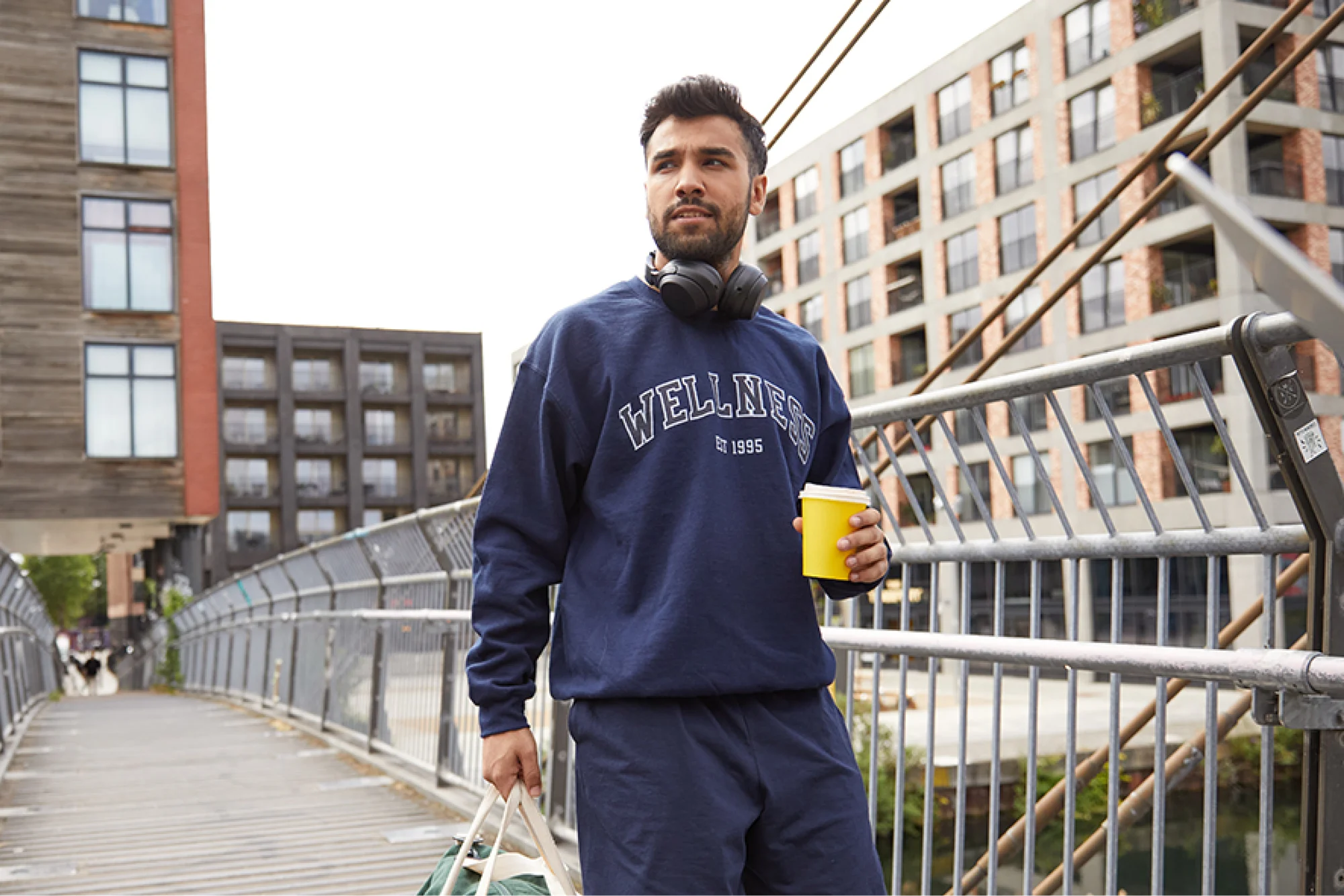
Streetwear started on skate ramps and hip-hop stages and now drives one of the fastest-growing segments in global fashion retail. If you sell clothing online – or plan to – understanding where streetwear trends continue to evolve tells you exactly which products to design, stock, and drop next.
This guide breaks down the eight biggest streetwear clothing trends shaping culture in 2026, how Gen Z is rewriting the rules in real time, and how Print on Demand (POD) gives independent brands a low-risk path into the market.
What is streetwear fashion in 2026?
Streetwear is a fashion style characterized by casual, comfortable clothing rooted in skateboarding, hip-hop, and urban subcultures. Unlike traditional fashion, which flows top-down from runway designers, streetwear builds bottom-up from community spaces, independent labels, and social media feeds before reaching mainstream retail.
In 2026, the definition widened even further. Streetwear now absorbs outdoor technical gear (gorpcore), performance athleisure, minimal luxury aesthetics, and gender-neutral silhouettes. The common thread: clothing built for everyday wear that holds its own as a style statement.
Globally, the streetwear market reached $218 billion in 2026 and is projected to reach $265 billion by 2031, driven by youth adoption, social media amplification, and the growing role of independent and customized clothing brands. The fashion industry moves in cycles, but streetwear creates its own demand and sets its own pace.
The biggest streetwear trends in 2026
These current streetwear trends span eight distinct directions. Here’s what each one looks like and why it sells.
Techwear goes mainstream

Techwear – clothing built from performance fabrics with functional hardware – crossed from niche subculture into mainstream streetwear between 2023 and 2025. By 2026, water-resistant shells, ripstop cargo pants, and utility vests sit alongside everyday fashion staples like t-shirts rather than reading as standalone costumes.
Breathable materials, articulated cuts, and multi-pocket silhouettes pull double duty. They’re functional during a workout or commute and still read as style-conscious on the street. Neon accents and metallic finishes give technical pieces their edge. The category pairs naturally with modern polo shirts in structured, performance-fabric versions that bridge smart-casual and streetwear aesthetics.
Retro revival with a modern twist

Nostalgia cycles run faster than ever when TikTok drives discovery. In 2026, Y2K references – low-rise cuts, baby tees, metallic finishes – sit alongside ‘90s sport references like matching tracksuits, modern polo shirts, and sports team graphics. Neither era dominates. The approach takes classic pieces and gives them a fresh twist through updated silhouettes, pastel colors, or vibrant prints.
Graphic tees with retro-style typography and collections inspired by specific decades consistently sell well. Back-print tees, in particular, are gaining popularity. A clean front with a statement piece on the back reads as intentional design rather than mass production.
Minimal branding and quiet streetwear

Not every 2026 streetwear consumer wants a huge logo across their chest. A significant segment has moved toward quiet streetwear – monochromatic palettes, understated silhouettes, and minimal branding that signals quality through fabric and cut rather than graphic presence or oversized accessories.
Neutral earth tones, sky blue, slate, and off-white anchor these wardrobes. A well-cut heavyweight tee with a soft touch finish, tailored trousers, structured trench coats, or a slim-profile bucket hat can carry everyday outfits without shouting for attention or sacrificing style.
Shorter lengths on tees and outerwear add a contemporary proportion, and minimalist embroidered marks or tonal prints create unique designs that hold their own without maximalist graphics. This aesthetic appeals to consumers experiencing fast-fashion fatigue.
Athleisure matching sets
Coordinated tops and bottoms in the same color or print have made a strong comeback, driven by the athleisure crossover and the slow fashion sustainability conversation around buying fewer, more cohesive pieces.
Biker shorts paired with crop hoodies, tank tops with wide-leg sweatpants, and oversized styles matched to graphic tees form complete looks that need no additional styling.
Workout gear that doubles as everyday wear lands exactly where this trend lives, and the format shows what fashion offers when function and style share equal weight.
Bold graphics and back-print tees

While quiet streetwear earns one lane, maximalist fashion holds the other with eye-catching graphics, bright colors, and full-back prints. Floral patterns, ethnic patterns, and culturally grounded artwork carry real meaning for the communities that wear them.
Graphic tees and back-print shirts sell as statement-making pieces precisely because printing techniques like direct-to-garment (DTG) and direct-to-film (DTF) now reproduce complex artwork and vibrant prints at accessible price points. Bold colors and high-contrast compositions perform particularly well as social media thumbnails, making them naturally suited to the TikTok-driven discovery loop.
Sustainable and gender-neutral streetwear
Sustainability expectations have shifted from optional to baseline for Gen Z and Millennial streetwear consumers.
Slow fashion, sustainability, and gender-neutral silhouettes connect around a shared product logic: fewer, better pieces with longer life cycles.
Brands moving toward organic and recycled fabrics, longer production runs, and gender-neutral sizing can extend a garment's potential audience without adding SKUs or upfront costs for unsold inventory.
Gorpcore and technical streetwear

Gorpcore means outdoor gear worn deliberately as everyday style. The trend moved from niche aesthetic to mainstream streetwear staple by 2025 and continues gaining popularity through 2026.
Trail sneakers (Salomon, HOKA) are showing up in offices and cafés. Technical shells, fleece layers, and cargo silhouettes integrate into urban outfits that never visit a hiking trail.
Breathable materials, durable construction, and multi-functional pockets meet the practical demands of city life while the visual language signals an outdoorsy, intentional lifestyle.
Brands like Patagonia, Arc'teryx, and The North Face exert major influence on the aesthetic, though independent brands can enter through personalized jackets, custom leather jackets with technical detailing, and embroidered outerwear that brings unique designs to the category.
How Gen Z is changing streetwear culture

Gen Z reshaped streetwear from the bottom up.
TikTok aesthetics move faster than seasons
Gen Z fashion no longer follows a twice-yearly runway calendar. A thrifted jacket, a DIY print, or a ten-second styling clip can generate a full micro-trend in days. 39% of female Gen Z consumers report being most likely to buy a product after seeing it on TikTok, making it a direct sales channel with measurable purchase intent.
Thrifting and vintage culture are the default, not the exception

Two in five items in the average Gen Z closet are secondhand. Platforms like Depop, ThredUP, and Vinted have made secondhand shopping the default, with pre-loved pieces valued for their unique designs and cultural context.
Limited-run custom drops and one-of-a-kind pieces carry a stronger appeal for this audience than always-available catalog staples.
Personal identity over trends
Gen Z treats clothing as self-expression rather than as trend adoption. Most actively seek out new and independent brands instead of defaulting to established names, and many feel traditional brands fail to accurately represent them.
Customization adds what mass-market streetwear clothing cannot: a custom graphic, an embroidered detail, or a limited drop built around a specific community can turn a blank garment into a recognizable identity.
Sustainability expectations are non-negotiable
For Gen Z, choosing a brand with transparent production and eco-conscious materials is a pre-requisite for brand trust. Organic cotton, recycled polyester, and circular take-back programs function as entry criteria, not marketing features.
Community-driven fashion and independent brands
Streetwear builds credibility through community, and revenue follows. Independent brands that build around a specific subculture, sport, city, or music scene earn credibility in ways large fashion industry players can’t manufacture.
Custom apparel functions as both a product and community signal: drops for a local skate crew, merchandise runs for music collectives, or collections inspired by a neighborhood's visual language.
How to start a streetwear brand with Printify

Print on Demand removes the main barrier to launching a streetwear brand: upfront costs. With Printify, designs go live without bulk orders, warehousing, or minimum quantities. Here’s how it works.
Step 1: Define your aesthetic and audience
Decide which lane your brand occupies: bold graphic tees for a subculture community, quiet minimal streetwear or slim fit jeans for a premium buyer, or gorpcore-influenced technical pieces. Clarity here informs every product decision downstream.
Step 2: Choose your streetwear products
Printify's Streetwear category covers the full range – custom t-shirts, cropped hoodies, oversized tops, sweatpants, tank tops, and more. In short, custom clothing across dozens of blanks.
Select products that match your silhouette strategy and serve as the perfect canvas: oversized heavyweight tees for bold graphic work, premium fleeces for the gorpcore lane, matching set separates for athleisure.
Step 3: Create your designs
Use Printify's Product Creator to upload artwork directly. For graphic tees and back-print designs, DTG printing handles vibrant colors and photographic detail. For embroidered bucket hats and structured caps, embroidery produces the texture and dimensional quality that defines premium streetwear accessories.
Step 4: Set up your store
Printify integrates with Shopify, Etsy, WooCommerce, and other platforms, so you can sell clothing online without building fulfillment infrastructure. Orders route directly to production and ship to customers.
Step 5: Drop strategically
Streetwear culture runs on scarcity and timing. A limited run of 50 custom hoodies for a specific event, community, or cultural moment typically generates more engagement than a permanent catalog listing. Use POD to test designs at low volume before scaling what works.
FAQ
To summarize
Streetwear fashion in 2026 moves in multiple directions at once – oversized and structured, maximalist and minimal, technically functional and culturally expressive, but the trends align around one consistent signal: consumers want everyday fashion that reflects a specific identity.
Print on Demand removes the inventory risk that used to gate entry into the fashion industry. Custom apparel designed around a real community, aesthetic lane, or cultural moment competes on meaning rather than price.
Whether the target customer gravitates toward gorpcore technical pieces, bold graphic tees, or quiet minimal basics, Printify's Catalog covers the full streetwear product range without upfront costs.