


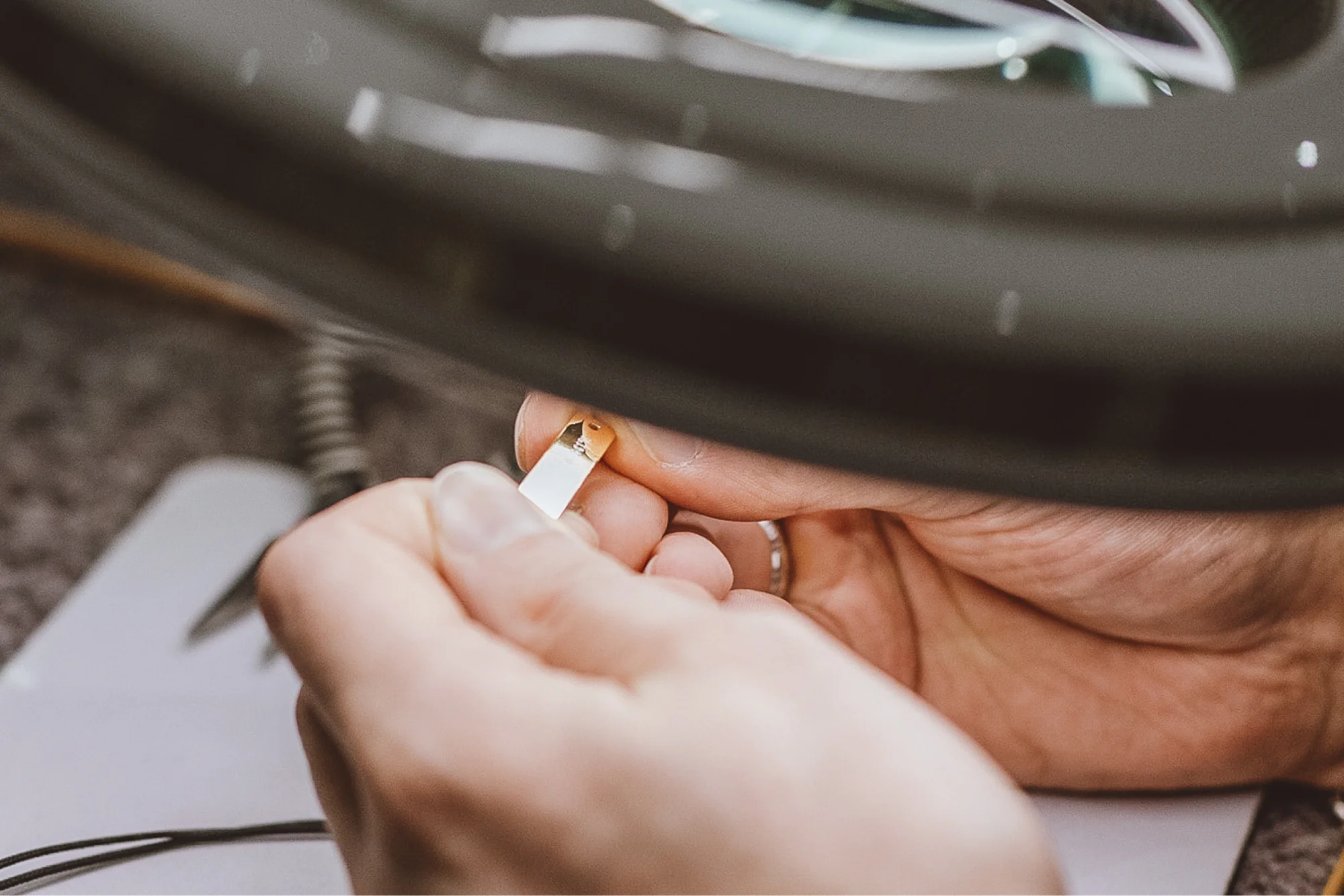
The difference between etching vs engraving comes down to how the image gets into the surface. Traditional etching uses acid to bite exposed areas of a metal plate. Engraving uses sharp tools to physically cut the design.
Both techniques belong to intaglio printing – a family of printmaking methods where ink sits in recessed lines rather than on a raised surface. Today, the same split carries over to laser etching vs laser engraving on custom products.
This guide will explain the difference between engraving and etching – the process, tools, line quality, and uses of each – so artists, students, and print-on-demand sellers can choose the right method.
Etching vs engraving at a glance
| Factor | Etching | Engraving |
|---|---|---|
| Process | Chemical – acid bites exposed areas of the plate | Mechanical – a tool physically cuts the material |
| Main tools | Acid-resistant wax, etching needle, acid bath | Burin and other sharp tools |
| Line quality | Softer, freer, more like drawing | Crisp, controlled, often tapered |
| Traditional materials | Copper, zinc, iron | Copper, zinc, silver, gold, wood, stone, glass |
| Physical effort | Lower – the artist draws through a soft coating | Higher – the engraver cuts the surface directly |
| Depth control | Time in the acid | Hand pressure and tool angle |
| Best suited to | Expressive marks, loose forms, tonal effects, layered textures | Fine detail, precise lines, lettering |
| Printing family | Intaglio printing | Intaglio printing |
The sections below explain each technique, then look at the engraving vs etching differences in more depth.
What is etching?

Etching is a printmaking technique where an artist draws through an acid-resistant wax or varnish coating – called the ground – on a metal plate. The exposed metal reacts with acid, creating recessed lines that later hold ink.
Copper and zinc are the most common plate materials, though traditional printmakers have also worked with iron and other metals.
How the etching process works
- Prepare the plate – Polish the metal surface, then cover it with the ground.
- Draw the design – Use an etching needle to scratch through the wax, exposing the metal underneath.
- Etch the exposed areas – Place the plate in an acid bath. Historically, printmakers used nitric acid; studios today may use other etchants.
- Control line depth – Longer exposure bites deeper, creating darker, heavier lines. The etcher can cover finished areas and return the plate to the bath to build different depths, tones, and textures.
- Remove the ground – Clean the remaining coating off the printing plate.
The plate is now ready for the printing process, which is the same for etching and engraving – we’ll get into that more later.
What is etching used for?
Etching suits a painter or illustrator who wants the freedom of a hand-drawn line without carving every groove into metal. Because the needle moves through soft wax rather than the plate itself, the motion feels familiar.
Common applications include:
- Fine-art prints – Portraits, landscapes, illustrations, and expressive artworks.
- Detailed line work – Fine lines, cross-hatching, and layered textures.
- Tonal printing – Related methods, such as aquatint, add shaded areas alongside etched lines.
- Decorative metalwork – Patterns, lettering, and ornamental surfaces.
- Industrial components – Chemical etching produces thin, complex metal parts, screens, and meshes for electronics, engineering, and precision manufacturing.
What is engraving?

Unlike etching, engraving creates recessed lines by physically incising a hard material. An engraver pushes a burin – a steel tool with a sharp, angled tip – through a polished metal plate, removing material to form the matrix, the incised plate that holds ink.
European print engraving originated in the 15th century and developed out of goldsmithing and metalworking. Early master prints from that period still sit in museum collections such as the Museum of Fine Arts, Boston.
The technique demands considerable skill. Changing the pressure and angle of the burin changes the width and depth of each cut, so a single line can swell and taper.
How hand engraving works
- Prepare the surface – Polish or clean the metal, wood, or other suitable material.
- Transfer the design – Sketch or transfer the image onto the metal surface.
- Cut the design – Use a burin or other sharp tools, incising controlled grooves.
- Adjust depth and width – Pressure and tool angle determine how each line appears.
- Remove the burr – Hand cutting can leave a small ridge of metal along the groove, which the engraver scrapes away.
For printmaking, the plate then goes through the same printing stage as an etching. For jewelry, plaques, and other objects, the engraved mark is the finished result.
What is engraving used for?
Engraving has moved far beyond copper plates. The same idea – physically removing material – shows up across art, jewelry, industry, and product customization.
Common uses include:
- Fine-art prints – Detailed illustrations, reproductions, and portraits.
- Jewelry – Names, patterns, and decorative marks on silver, gold, and other metals.
- Metal objects – Watches, plaques, tools, awards, dog tags, and commemorative pieces.
- Wood and stone – Traditional wood engraving, stone inscriptions, and laser engraving on suitable wood types, including bamboo.
- Product personalization – Names, logos, dates, monograms, and custom graphics.
- Industrial marking – Serial numbers, labels, and identification marks.
Engraving vs etching: Key differences

The core difference is how the recessed mark gets there: etching relies on a chemical reaction, engraving on physical cutting. That one distinction shapes everything else about each technique.
Line quality
Once you know what created the mark, the visual contrast is easier to spot.
- Engraving – Burin-cut lines typically start narrow, widen as pressure increases, then taper again. The result looks crisp and deliberate.
- Etching – Lines follow the freer movement of the artist's hand, giving the image a softer or slightly wavering character.
Skilled artists can push either technique, so the method behind a finished print isn't always obvious.
Physical effort and skill
Engraving requires hand strength and steady control because the tool cuts directly into metal, which puts real stress on the hand and wrist. In etching, the artist only scratches through the soft ground and lets the acid do the cutting.
That makes etching less physically demanding at the drawing stage. Preparing, biting, inking, and wiping the plate still take technical skill.
The printing stage
For traditional intaglio printing, both techniques end in the same printing process:
- Push ink into the recessed lines.
- Wipe excess ink off the top surface.
- Lay a damp sheet of paper over the printing plate.
- Run the plate and paper through a high-pressure press.
- Lift the sheet to reveal the image – reversed from the plate.
Artists usually pull test proofs along the way to check how the plate prints before calling the work finished.
Where etching and engraving fit in printmaking
In printmaking, an artist creates an image on a prepared matrix rather than drawing directly on the final sheet. Three major families cover most methods, and etching and engraving both sit in the first.
- Intaglio printing
In intaglio printing, the recessed areas hold the ink, and damp paper is pressed into the grooves to pick it up. The family includes engraving, etching, drypoint, mezzotint, and aquatint.
One plate can produce a range of prints, though wear and later changes to the plate create different states and proofs. Artists often combine techniques – a single plate may carry etched areas, engraved details, drypoint, and aquatint.
- Relief printing
Relief printing flips the setup: the raised surface carries the ink, and carved-away areas stay blank. A woodcut is the classic example – the artist cuts away parts of a wood block, rolls ink over what remains, and presses it onto paper.
Wood engraving also belongs here, even though it's called engraving. The artist cuts fine lines into hard end-grain wood, but the ink sits on the uncut surface, not in the grooves.
- Lithography
Lithography uses a flat stone or metal plate. Instead of cutting raised or recessed forms, it relies on grease and water repelling one another.
Is an etching a print?
Yes. An etching is a specific printmaking technique, and a print is the resulting artwork – or the broader category of artworks made from a matrix. So every etching is a print, but a print could also come from engraving, relief printing, lithography, or screen printing.
Laser etching vs laser engraving

With the rise of laser technology, the terms changed meaning, but the traditional distinction still applies. Laser engraving removes material to create depth, while laser etching alters only the top of the surface.
- Laser engraving – Vaporizes material to leave a recessed mark, like a burin cutting a groove.
- Laser etching – Changes the surface through heat-induced melting or discoloration, with little or no visible depth.
The big difference from traditional methods is that there's no plate and no press. The laser marks the finished design directly on the product.
How laser engraving works
- Prepare a digital design – Upload text, logos, illustrations, or compatible image files.
- Set the laser for the material – The machine controls beam intensity, speed, and focus.
- Engrave the surface – Focused light removes or alters a controlled layer of material.
The finish depends heavily on the material. The beam may expose a contrasting surface underneath, frost glass, or change the look of a coating – so a design that engraves sharply on coated stainless steel may behave differently on glass, acrylic, leather, or wood.
At Printify, Print Providers use two types of laser engraving depending on the product:
- CO₂ laser engraving – Removes a thin surface layer. On wood and coated metals, it reproduces shading and fine detail, while on glass, it creates a frosted, high-contrast finish.
- Fiber laser engraving – Produces precise, high-contrast marks, well-suited to small areas such as jewelry, pendants, charms, and tags.
Popular laser engraving designs include names and initials, logos, monograms, dates, written text, simple illustrations, and selected photo-based graphics.
Etching vs engraving: Which to choose
- Choose laser engraving for a permanent recessed mark, exposed underlying material, or a finish you can feel.
- Choose laser etching when a surface-level mark gives the look you need without depth.
- Check compatibility first – Machines, coatings, and materials all respond differently to laser light.
- Fit the design to the product – Small engraving areas favor bold shapes and readable text over very fine detail.
Printify currently offers laser engraving on selected products and materials.
Engraved products to try with Printify

Printify's engraving range covers drinkware, kitchenware, custom jewelry, and other personalized products. Availability can change by Print Provider and market.
FAQ
Etching vs engraving: Conclusion
The difference between etching vs engraving starts with one distinction: etching uses a chemical reaction, while engraving physically removes material. Both shaped traditional printmaking, and the same logic explains laser etching vs laser engraving today.
Ready to put engraving to work? Explore the other customization methods available at Printify and start a print-on-demand business today.