


Eco-friendly home decor is made from traceable materials, backed by recognized certifications, and sourced through a documented supply chain. Sustainable home decor is often used as a catch-all term across the decor industry, so this guide breaks down the best eco-friendly home decor ideas by room and category, from reclaimed wood furniture to low-VOC paint, alongside four concrete criteria for evaluating any product instead of taking sustainability claims at face value.
It's built for anyone furnishing or refreshing a home who wants to make fewer landfill-bound purchases, improve indoor air quality, and create a more sustainable home overall. It matters because decor marketing uses the term eco-friendly more often than it defines what it means.
What actually makes home decor eco-friendly?
Eco-friendly and sustainable are used as blanket terms across the decor industry, and broad, unqualified claims like these can be difficult to substantiate under Federal Trade Commission (FTC) guidance. Product descriptions that say "eco-friendly decoration" and stop there tell shoppers almost nothing.
Instead, a product description that names “reclaimed oak” and a “water-based, low-VOC sealant” gives customers the information they need to make a decision.
Four criteria give the term something concrete to stand on.
Material sourcing
Building materials such as reclaimed wood, Forest Stewardship Council (FSC)- certified wood, recycled glass, natural stone, and organic cotton can indicate traceable origins. FSC certification indicates that the wood comes from responsibly managed forests.
Production impact
Energy consumption during manufacturing, the waste the process generates, and how long a product lasts before it breaks down or goes out of style all affect its environmental footprint.
Health and air quality
Low-VOC finishes and furniture free of harmful chemicals or added flame retardants can help reduce exposure to volatile organic compounds (VOCs) and other potentially harmful substances.
Responsible sourcing
Fair wages for the workers and artisans behind a piece and support for small businesses along the supply chain complete the picture. Recycled materials and a low environmental impact mean less if the people making the product are underpaid.
Eco-friendly home decor ideas by category

Furniture, textiles, wall art, lighting, and accents each apply those four criteria differently, since the most relevant material or certification varies by category.
Furniture
Reclaimed wood and FSC-certified wood furniture can help address a real problem: Americans discarded roughly 12.1 million tons of furniture in 2018, and about 9.7 million tons of it went straight into landfills, with less than 0.5% recycled.
A solid wood dining table or a well-made sofa on a hardwood frame costs more upfront than a particleboard equivalent, but it holds up to repairs, reupholstering, and a decade of daily use in a way that flat-pack furniture often doesn't.
Durability is the point: sustainable decor is designed to reduce the need for quick replacement and minimize waste, and not merely to use a greener material once.
Modular furniture, such as a reconfigurable sectional or a storage ottoman that doubles as seating, lets one piece serve multiple functions in a living space rather than buying separate items for each use.
Secondhand finds refinished with a coat of oil and a little patience can keep a solidly built piece out of that landfill entirely.
Look for classic shapes and simple lines rather than a trend-driven silhouette: a home decor piece designed around one moment in a style cycle is a piece that's likely to be replaced once that moment passes, which is exactly what fast-furniture cycles rely on.
Textiles
Organic cotton and other natural fibers, including linen and wool, can replace synthetic blends that shed microplastics and often rely on more water-intensive dyeing.
The Global Organic Textile Standard (GOTS) label is a clear signal here: it certifies textiles made with organic fibers under strict environmental and human-rights requirements, with independent verification across the entire production chain.
Some of the fabrics and blank products in Printify's Catalog are certified according to OEKO-TEX® STANDARD 100, one of the world's leading labels for textile safety, which verifies that they've been tested for harmful substances and meet strict human-ecological safety requirements.
Some sustainable home decor products use natural pigments and plant-based dyes on cushions, throws, and curtains to reduce synthetic dye runoff associated with conventional textile production, without necessarily sacrificing color depth. That also applies to products that aren’t made entirely from natural fibers.
Wall art and prints
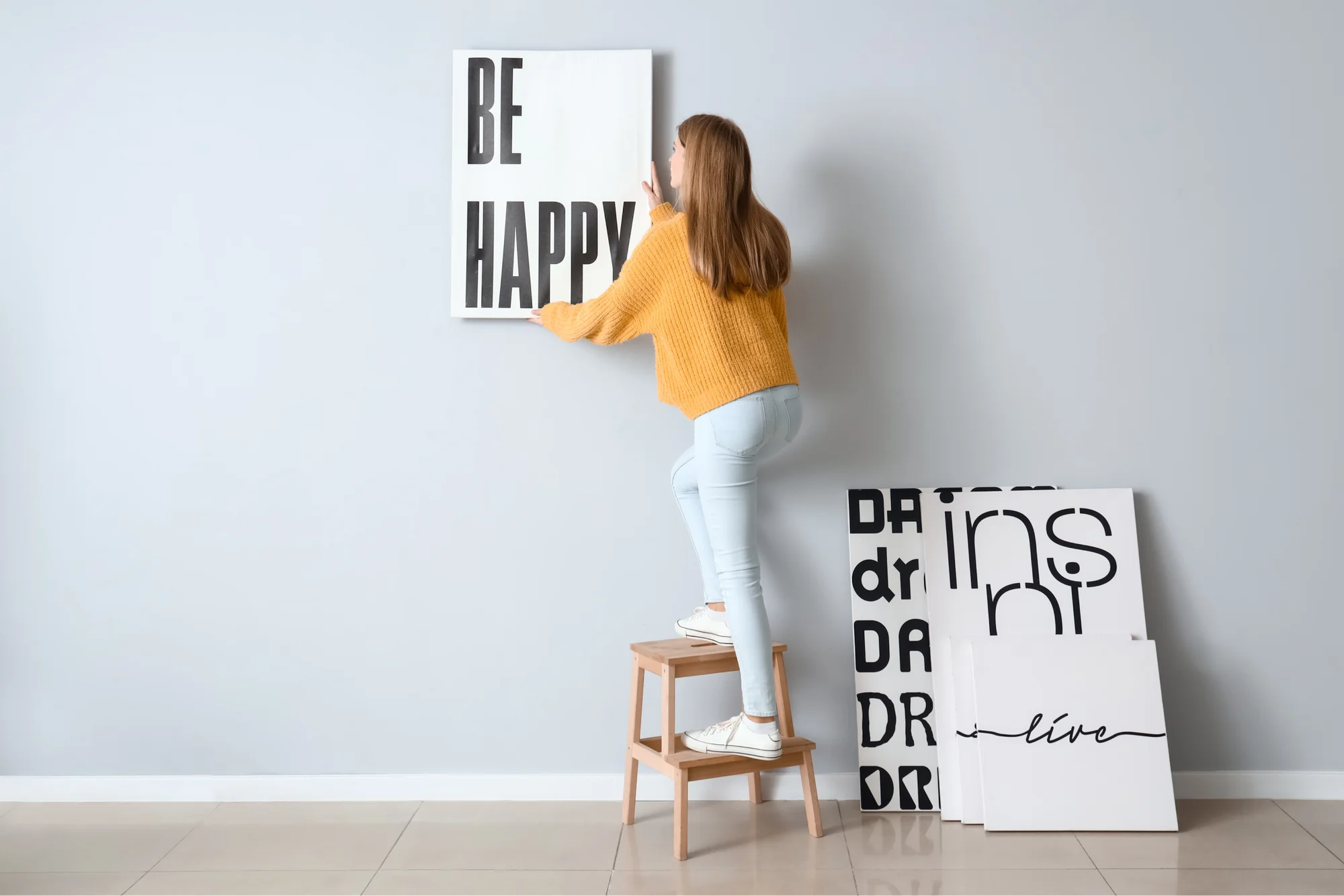
Look for wall art printed on sustainably sourced paper or canvas and framed in FSC-certified wood. Print on Demand (POD) fits naturally here: a piece is printed only after a customer places an order, which can reduce waste from unsold inventory sitting in a warehouse.
That's a specific, checkable claim about how the product gets made, distinct from a blanket “eco-friendly art” label with no supporting information.
Lighting
Light-emitting diode (LED) bulbs use at least 75% less energy than incandescent bulbs, and last much longer, which means fewer bulbs are discarded over the fixture's lifetime.
Pair LED bulbs with a layout that maximizes natural light, such as sheer curtains in a room with good daylight or mirrors angled to bounce light deeper into a space. Both approaches can help reduce the need for artificial lighting and lower energy use.
Accents
Recycled glass vases, candle holders, and decorative bowls take a material that can be recycled repeatedly without losing quality, giving it new life on a shelf, whether indoors or outdoors.
Natural stone, such as a marble tray or slate coaster, adds the same tactile warmth and texture as reclaimed wood without introducing synthetic materials.
A neutral-colored rug in wool or jute can ground a room without locking it into color trends that may look dated in three years, reducing the need for replacement.
Indoor plants like snake plants and peace lilies suit low-maintenance corners and can lift a room's mood and appearance.
Be cautious with air-quality and health-benefit claims: a review of three decades of houseplant studies found that ordinary ventilation and HVAC systems clear indoor air far faster than plants, and that a real room would need anywhere from ten to a thousand plants per square meter to match what an open window can do in minutes.
A plant earns its spot for how it looks and for the experience of caring for it.
How to spot greenwashing when shopping for eco-friendly decor
These four checks help you distinguish vague sustainability claims from meaningful evidence.
Vague claims
Claiming that a product is eco-friendly without providing information about sustainable materials, certifications, or sourcing can be too vague a claim to substantiate.
Real certifications
FSC for wood, GOTS and OEKO-TEX® STANDARD 100 for textiles, and CertiPUR-US for foam are issued by independent organizations and apply to specific eco-friendly materials or products, not simply to the brands selling them.
Material specifics
A seller who names the wood species, cotton percentage, or dye process provides more specific information to support the claim. A seller who only repeats "sustainably sourced" usually provides much less information to substantiate it.
Finish and chemicals
A strong chemical smell straight out of the packaging can indicate off-gassing. On US upholstered furniture, a California TB117-2013 label and a statement that no flame-retardant chemicals were added indicate that the flammability standard was met without them.
Buy less, buy well

The most carefully sourced materials are still subject to a disposal problem: roughly 21% of textiles produced worldwide remain unsold and end up in landfills. Home decor follows the same cycle as trends push last year's pillow covers or wall art out for this year's version.
Furniture and textiles built around that fast-turnover model follow the same logic as fast fashion: minimize upfront cost and maximize how often they’re replaced.
- Buying fewer pieces, chosen for classic shapes rather than a single season's look, does more for sustainable interior design than swapping one disposable product for a slightly greener one.
- Made-to-order decor can slow that cycle down. A POD platform prints a design only after a customer buys it, which means there's no finished product sitting in a warehouse waiting for a trend to pass. 86% of Printful's orders ship locally, too, which can reduce transportation emissions compared with shipping products longer distances.
Designing a wall art print, pillow cover, or wooden dining table accent to match a room's actual palette, rather than picking from whatever a big-box retailer stocked this season, lowers the odds it gets swapped out once trends move on, one reason the home decor market keeps growing on rising demand for sustainable products.
Create a free Printify account and sell decor made only after someone orders it, without excess inventory.
FAQ
Conclusion
Eco-friendly home decor comes down to four questions:
- Where does the material come from?
- How much does the production process cost the planet?
- Does the product affect indoor air quality?
- Do the people who made it get paid fairly?
Reclaimed wood furniture, GOTS-certified textiles, LED lighting, and recycled glass accents all meet that bar with specifics attached. A made-to-order piece, printed after you order it rather than pulled from a warehouse shelf, can help reduce excess inventory.
The next time a product description says "sustainable" or "eco-friendly," ask for the specific information that backs it up. If there's no supporting information, your room deserves a different piece.